What Are Modes & Where Do They Come From?
First, a short introduction (it's an oldy, but still does the job!)...
In a nutshell, modes can be thought of as "scales within a scale".
In the video, the major scale was what we might call our "parent scale". All of its modes (its "children" if you like!) can be used as scales in a solo, just like any other scale.
But what makes them modes is that they are derived from the interval structure of a parent scale and use that scale as a melodic and harmonic system...
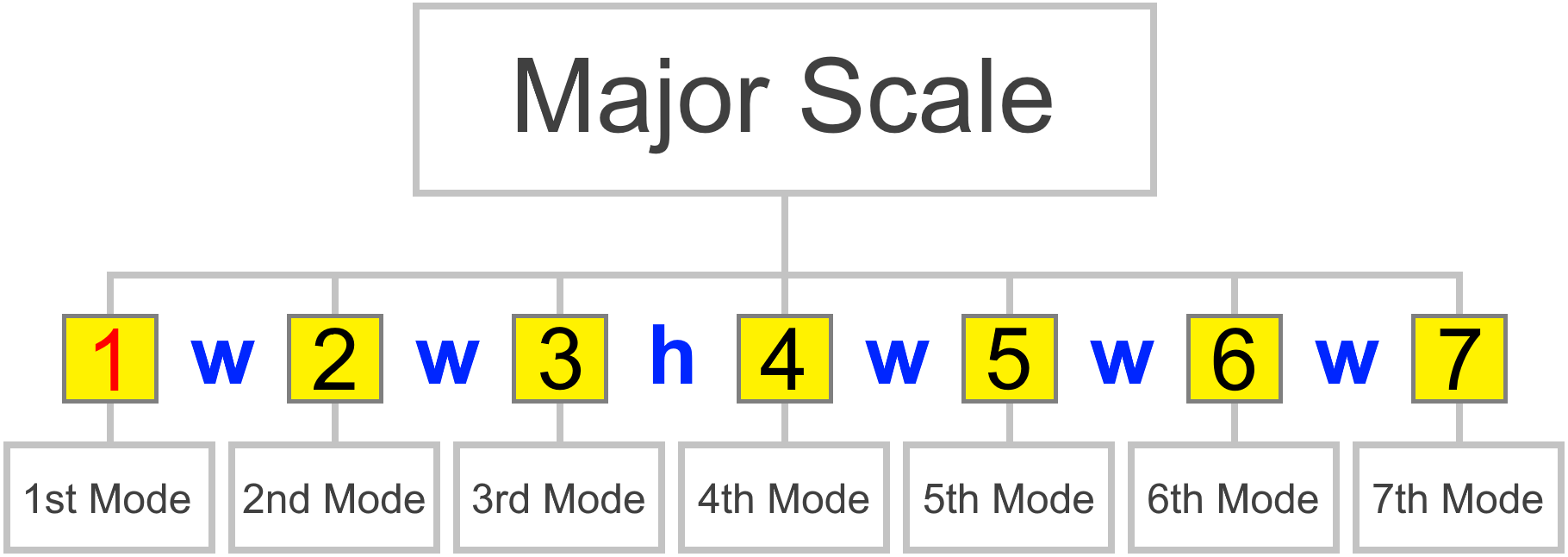
In other words, modes follow the same sequence or pattern as the parent scale, just starting on a different position or degree of that scale, which is what gives them their unique sound. We are essentially reusing that parent scale (and therefore its pattern) in a new musical context.
This is useful to know because it means we only have to learn one core pattern - the parent scale's pattern - and start it on the appropriate position to play any of its seven modes. More on that later.
That's why we call them modes of a particular scale (e.g. modes of the major scale, modes of harmonic minor etc.). It's why we refer to the "2nd mode of the major scale" or "5th mode of harmonic minor", for example.
Modes Of The Major Scale
First, make sure you're familiar with the major scale and its positions across the neck.
The major scale is made up of seven degrees (also known as a heptatonic scale).
In modal theory, each degree of the major scale marks the start (or root, if you like) of a new mode, with the same corresponding number and its own name...
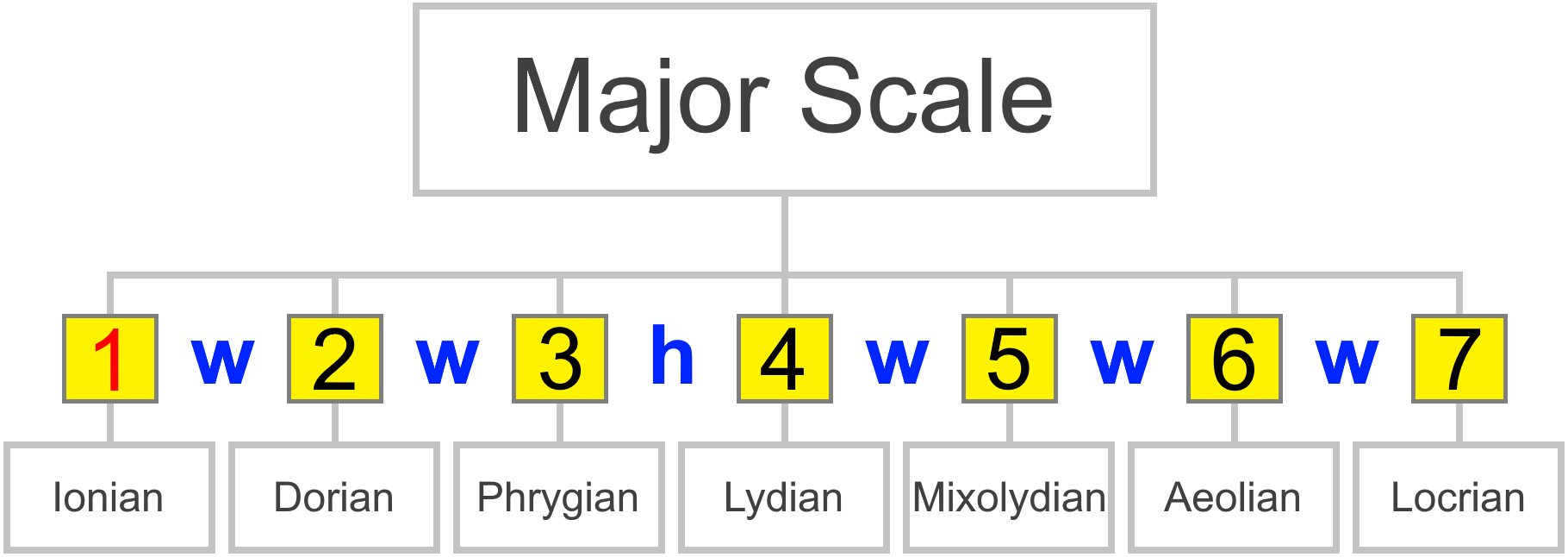
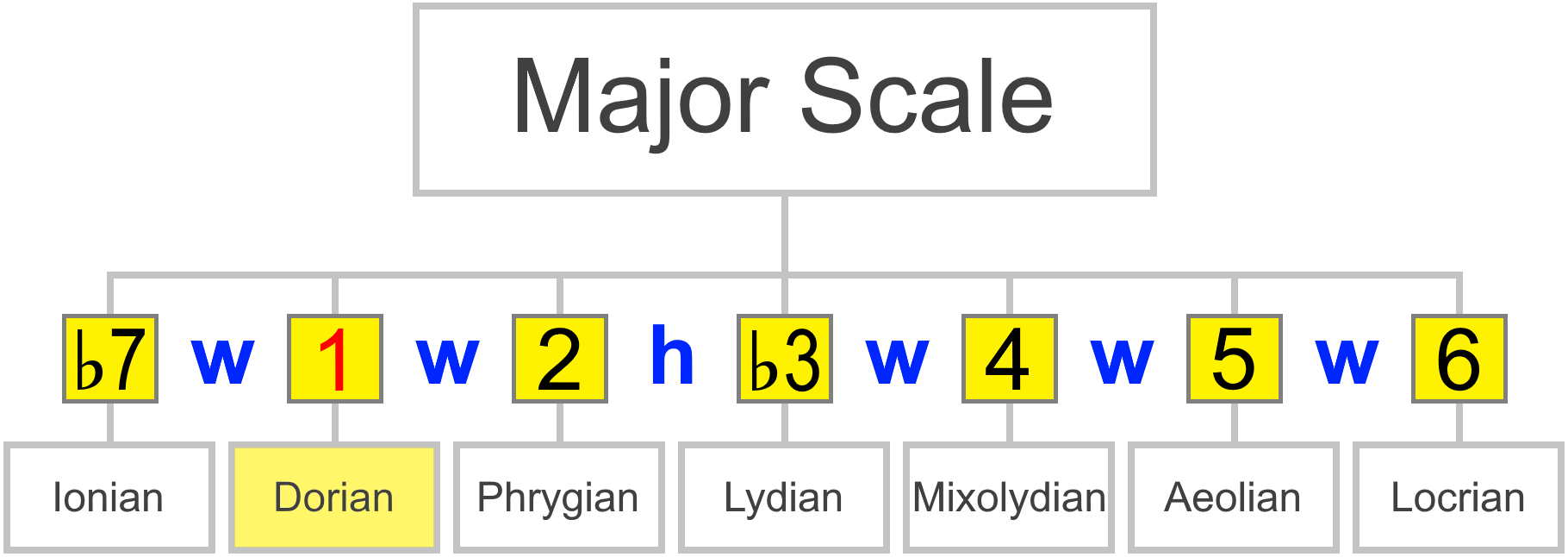
For example, the 2nd degree of the major scale also marks the root or start of its 2nd mode, named Dorian.
Play the major scale from its 2nd degree, and you will be playing the sequence of tones that make up its 2nd mode. The 2nd degree now becomes the 1 of that mode...
Play the major scale from its 5th degree, and you will be playing the sequence of tones that make up its 5th mode, Mixolydian...
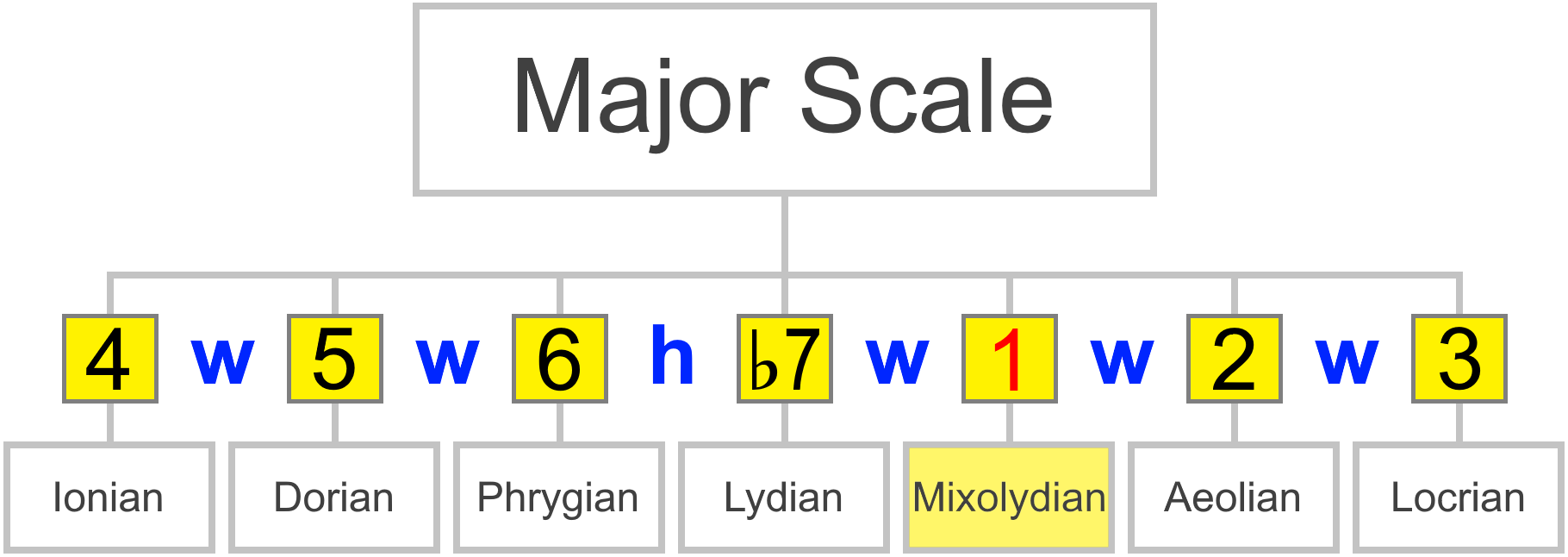
Each mode has its own unique sound, based on how the intervals of the parent scale proceed from its given degree.
However, it is only when that sequence of tones is played in context, over a backing note (e.g. bass), movement of harmony or sequence of chords centered around that same degree, that its modal colour truly shines. For example, C Dorian over C, or C Mixolydian over C. More on this later.
Let's start by getting to know each of the modes on guitar individually before pulling it all together. Remember, these can be learned like any other scale - as a particular melodic flavour for soloing over related chords. Take your time and try not to concern yourself too much with their weird names (Ancient Greek origin)!
1st Mode - Ionian
As the first mode starts on the first degree of the parent scale, it's basically the same as the parent scale. We can use the names "major scale" and "Ionian" interchangeably.
In Relation To Parent Scale

Basic Pattern
(Same as the first position major scale box)
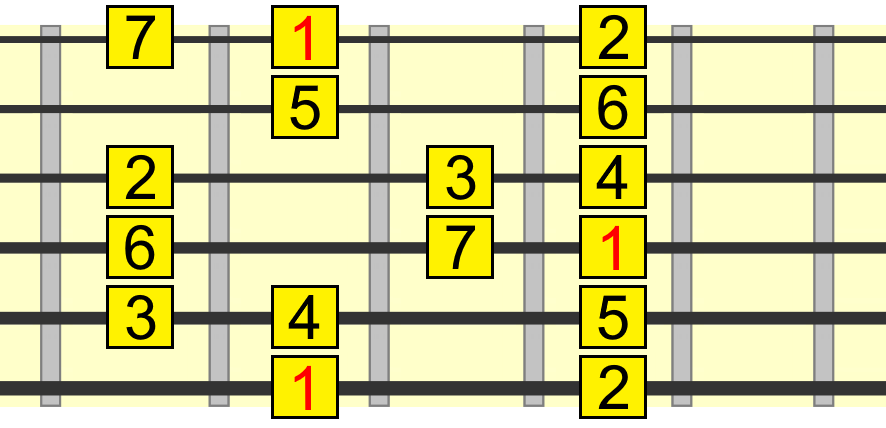
Example (A Ionian)
2nd Mode - Dorian
Dorian is a commonly used minor mode/scale, built on the second degree of the major scale. By starting on the major scale's second degree, where its 2 becomes Dorian's 1, we create a new interval sequence (see below), which includes the minor triad (1, ♭3, 5).
In Relation To Parent Scale

Basic Pattern
(Same as the second position major scale box)
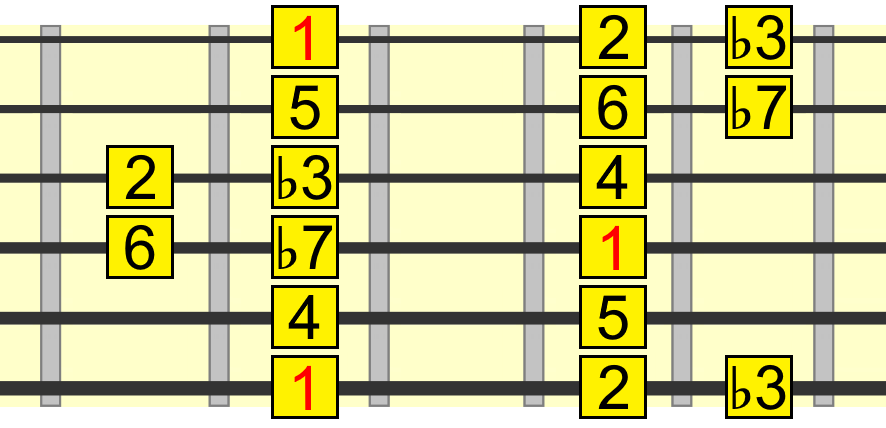
Example (A Dorian)
3rd Mode - Phrygian
Another minor mode, sometimes called Phrygian minor to distinguish it from Phrygian dominant (the 5th mode of the harmonic minor scale). It begins on the third degree of its parent major scale. Characterised by its minor 2nd (♭2) interval.
In Relation To Parent Scale

Basic Pattern
(Same as the third position major scale box)
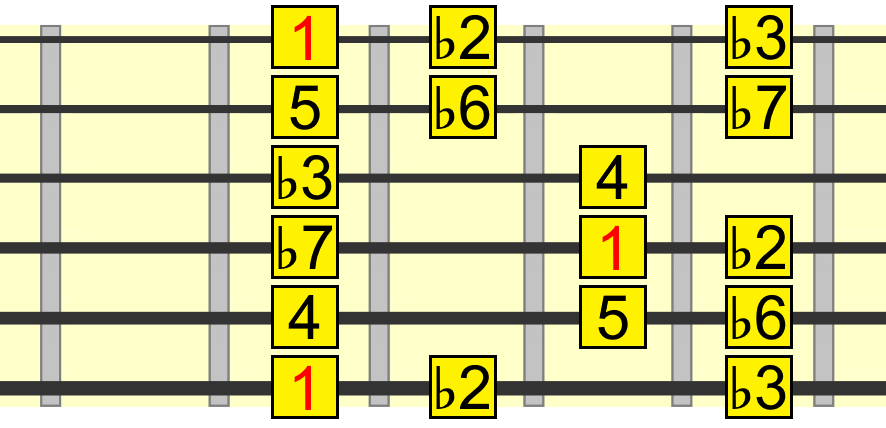
Example (A Phrygian)
Learn more about Phrygian here
4th Mode - Lydian
A major (1 3 5) mode often used as an alternative to Ionian over major and major 7th chords. It begins on the fourth degree of the major scale. Characterised by it's augmented 4th (♯4) interval.
In Relation To Parent Scale

Basic Pattern
(Same as the fourth position major scale box)
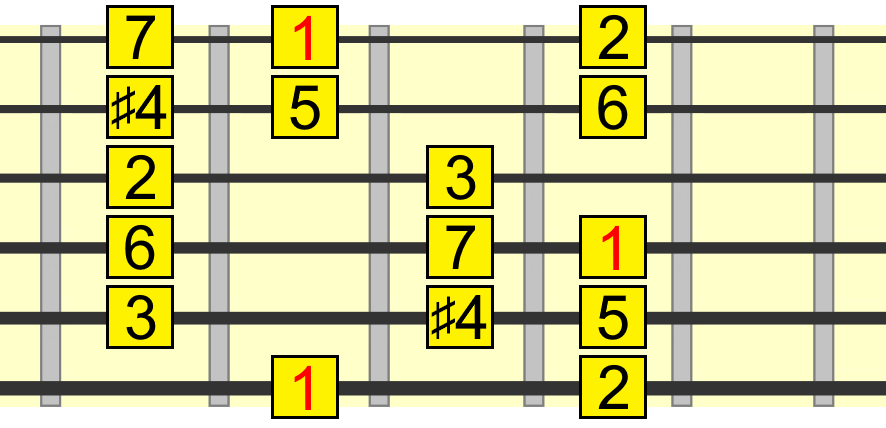
Example (A Lydian)
5th Mode - Mixolydian
A commonly used major mode compatible with dominant 7th chords (due to its ♭7 interval). Begins on the 5th degree of the major scale.
In Relation To Parent Scale

Basic Pattern
(Same as the fifth position major scale box)
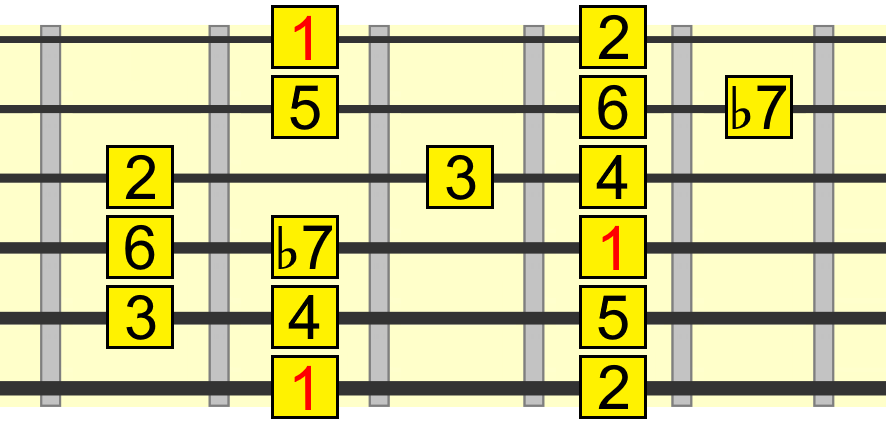
Example (A Mixolydian)
Learn more about Mixolydian here
6th Mode - Aeolian
Also known as the natural minor scale. This is our core minor key mode, probably the most commonly used mode for minor key harmony and chord progressions. It begins on the sixth degree of the major scale.
In Relation To Parent Scale

Basic Pattern
(Same as the sixth position major scale box)
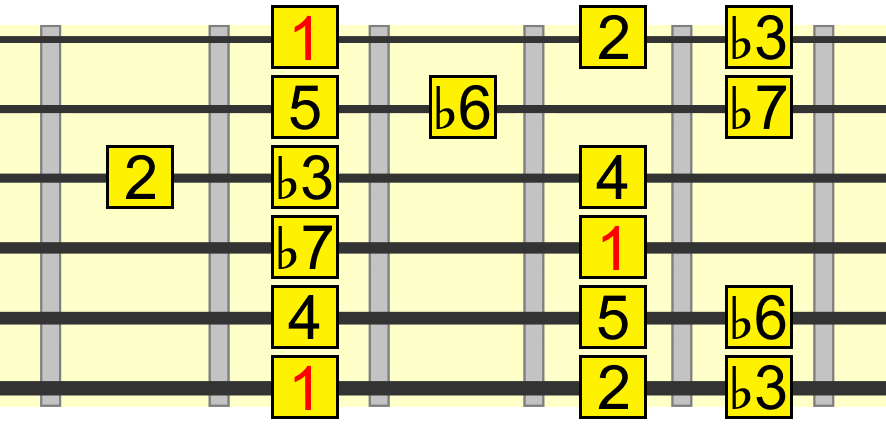
Example (A Aeolian)
7th Mode - Locrian
The "odd one out" because of its diminished (1 ♭3 ♭5) flavour. Very rarely used in a modal context (i.e. using a Locrian harmony or chord progression). Instead it's most commonly used as a scale over diminished and m7♭5 (also called "half diminished") chords. It begins on the seventh degree of the major scale.
In Relation To Parent Scale

Basic Pattern
(Same as the seventh position major scale box)
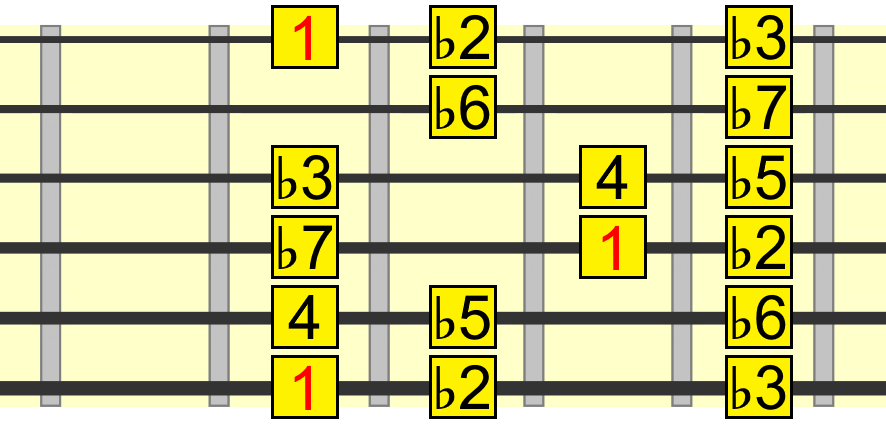
Comparing The Modes In Parallel
It's useful to notice which tones/intervals we change from one mode to get another. For example, Mixolydian can be seen as the major scale with a ♭7 (minor 7th) instead of 7 (major 7th).
Dorian can be seen as Aeolian with a 6 (major 6th) instead of ♭6 (minor 6th).
These subtle interval differences create rather significant differences in sound. Get to know each mode's unique sound (play them in parallel, i.e. on the same root) and the intervals that create it. I've provided a chord track below the diagrams to help you explore these differences...
Major Modes
Base intervals: 1 3 5 (major triad)
Defining intervals: 4 (perfect 4th), 7 (major 7th)
Base intervals: 1 3 5 (major triad)
Defining intervals: ♯4 (augmented 4th), 7 (major 7th)
Base intervals: 1 3 5 (major triad)
Defining intervals: 4 (perfect 4th), ♭7 (minor 7th)
Explore each of these mode patterns over a C major track (6th string 1 at the 8th fret for the above patterns) to get to know each major mode's unique melodic characteristics. By interchanging between them in parallel (i.e. on the same root position), you'll find it easier to hear their differences...
Minor Modes
Base intervals: 1 ♭3 5 (minor triad)
Defining intervals: 2 (major 2nd), 6 (major 6th)
Base intervals: 1 ♭3 5 (minor triad)
Defining intervals: 2 (major 2nd), ♭6 (minor 6th)
Base intervals: 1 ♭3 5 (minor triad)
Defining intervals: ♭2 (minor 2nd), ♭6 (minor 6th)
Can you also see a familiar minor pentatonic pattern within the minor mode patterns above? All we're doing is adding additional tones to minor pentatonic to make a unique mode. Seeing it this way can help you integrate pentatonic phrases/licks with more complex, seven-tone phrases. A good one to practice!
Explore these minor modes in parallel over the A minor track below (6th string 1 at 5th fret for the above patterns) to really hear their melodic differences...
Connecting Modes To Their Major Scale Pattern
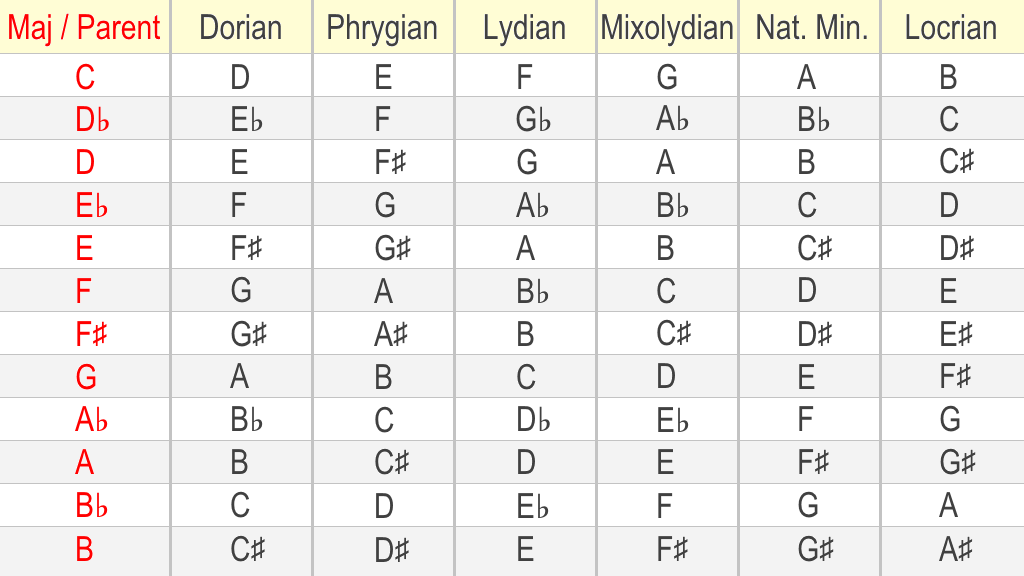
When you start to understand this intrinsic relationship between the modes, all connected to the notes of their parent scale, you realise that you're only ever really playing the major scale in a relative position.
In other words, all seven modes use the same seven notes, and therefore pattern. They just "start" from different degrees/positions of that parent scale.
For example, D Lydian uses the same seven notes and therefore pattern as its parent A major scale, just "starting" from its 4th degree...

This is because D is the 4th note of the A major scale, therefore D becomes the root of its 4th mode.
Taking another example, what would be the parent scale of C Mixolydian? We know Mixolydian is the 5th mode and therefore starts on the 5th degree of its related major scale...

The answer is F major. This is because C is the 5th note of the F major scale and therefore corresponds to the 5th mode Mixolydian...

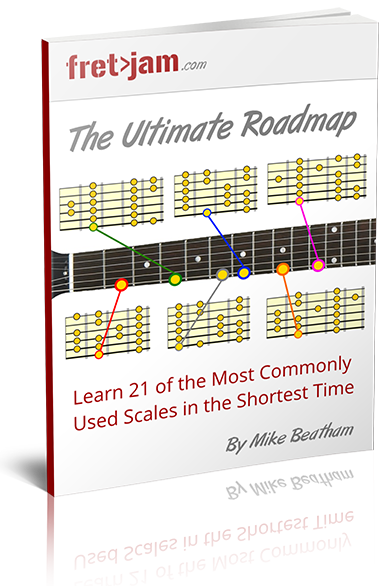
All we're doing is picking one of the major scale's degrees and making that degree the new "center" or "1" of the scale. We can visualise the pattern from that new starting position.
For more help with connecting the modes to their parent scales, my Ultimate Roadmap ebook shows you a practical, step by step process for visualising this, so you can quickly jump into the correct pattern. You can get access to this book (and lots more) by becoming a fretjam Patron here and choosing the Make the Connection membership tier.
You can also watch the video below for help with connecting modes across the neck...
Mode Intervals & Related Chords
It's also useful to learn how each mode connects to a related chord type. This will help you to identify which chords a particular mode will work over.
For example, Mixolydian would work over a dominant 7th chord but not a major 7th chord, because mixolydian has a minor/flat 7th (not a major 7th) interval.
A major chord with a #4 (augmented 4th, also called #11) is connected to Lydian, because Lydian has a #4 interval.
The individual mode lessons from earlier covered some of these mode-chord connections. But for an overview, the tables below show you which chords each mode tends to be associated with, from triads through to extended chords. The important chord tones are highlighted in the intervals column.
You can use a chord finder to help you explore these chord shapes on the neck.
Major Modes
Remember, all the major modes will work over major triads (1 3 5). If you're playing over a single major triad, for example, you can essentially choose which mode you want to play. The fewer tones in the backing chord, the broader your scale/mode options become. That also means if there's simply a bass note, or power chord (which is major/minor neutral), you can choose any mode as the accompaniment, major or minor.
When naming chords, the 2nd becomes the 9th, the 4th becomes the 11th and the 6th becomes the 13th. So a "major 13th" chord, for example, would typically include the 6th as the highest tone in the chord, making it a 13th (1, 3, 5, 7, 13).



Minor Modes
Again, you can use a chord finder to find the shapes for these chord types on the neck. Getting to know their sound along with their related mode is a great way to develop your ear skills.




Diminished Mode
Locrian is the only diminished (1 ♭3 ♭5) mode out of the seven. Therefore its related chord is diminished (called "half diminished" or m7♭5 when extended to a 7th chord)...


Connecting Mode Patterns & Chord Shapes
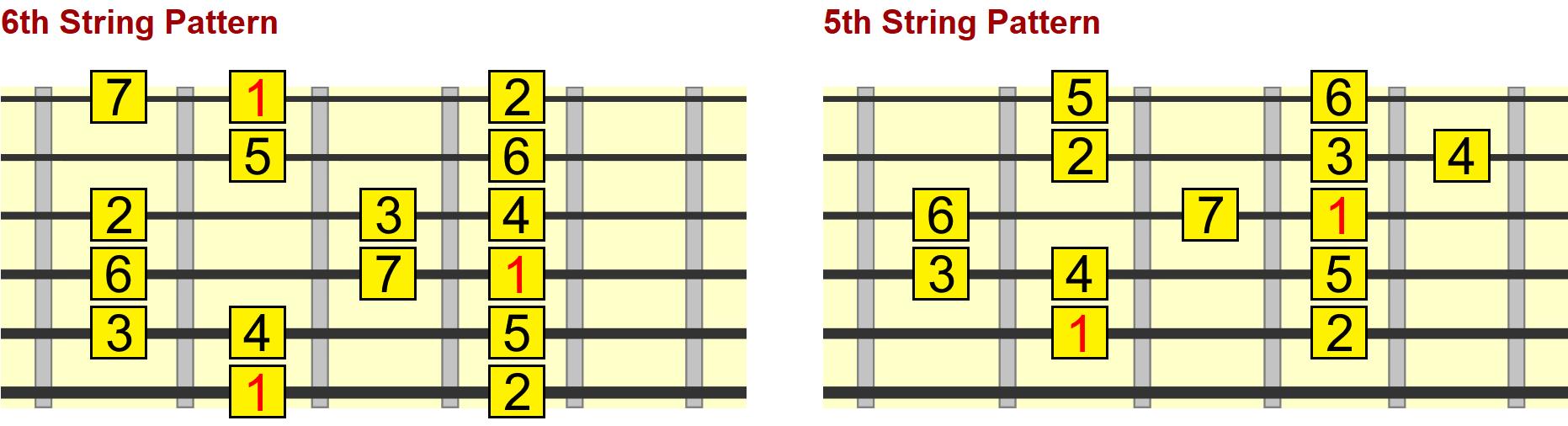
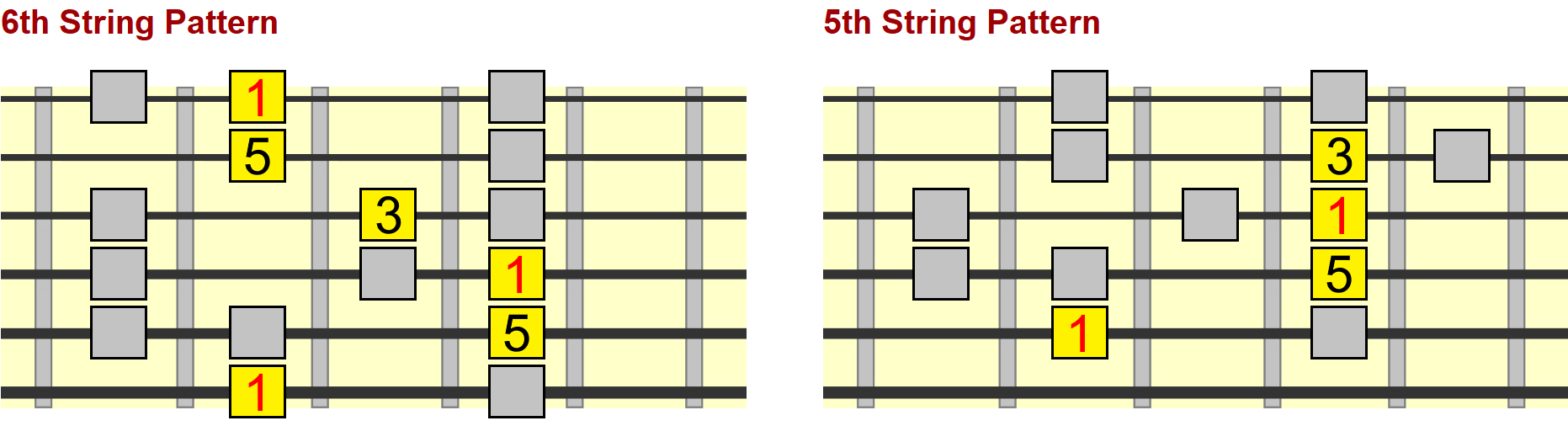
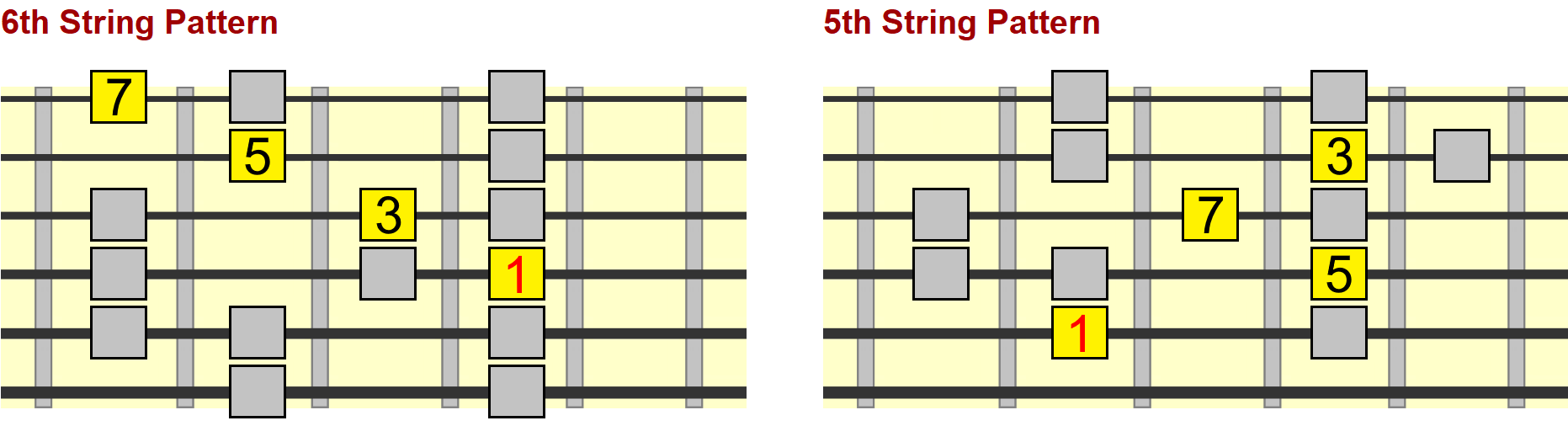
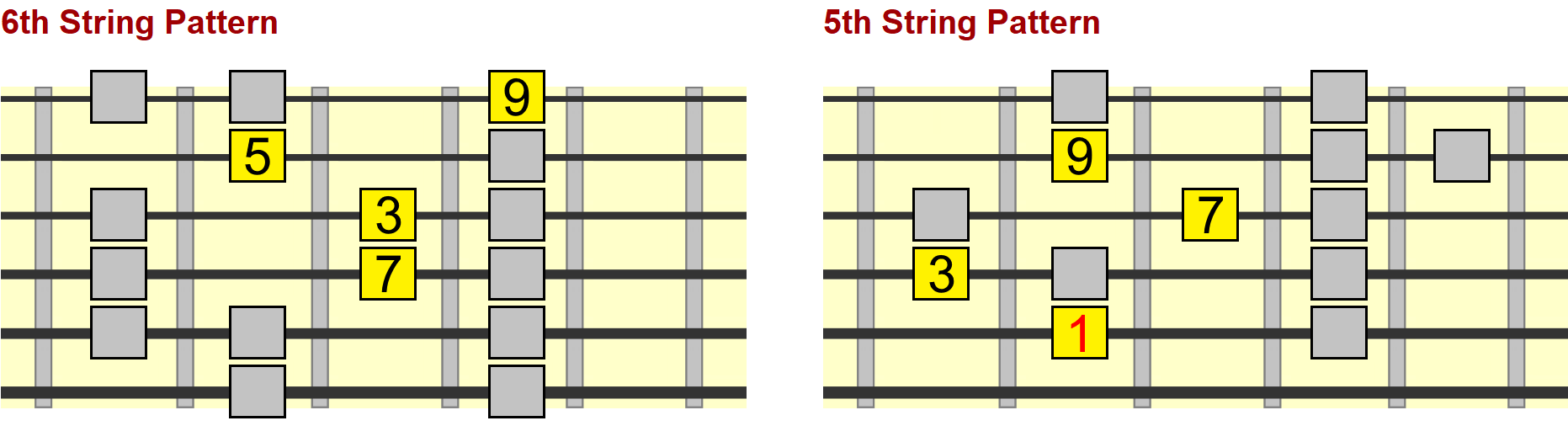
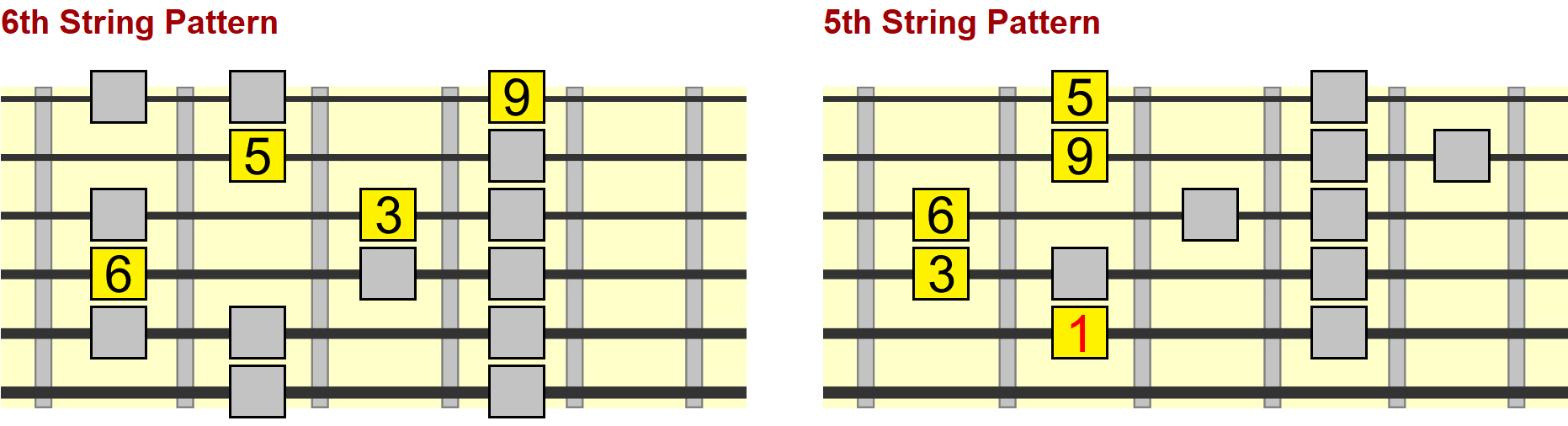
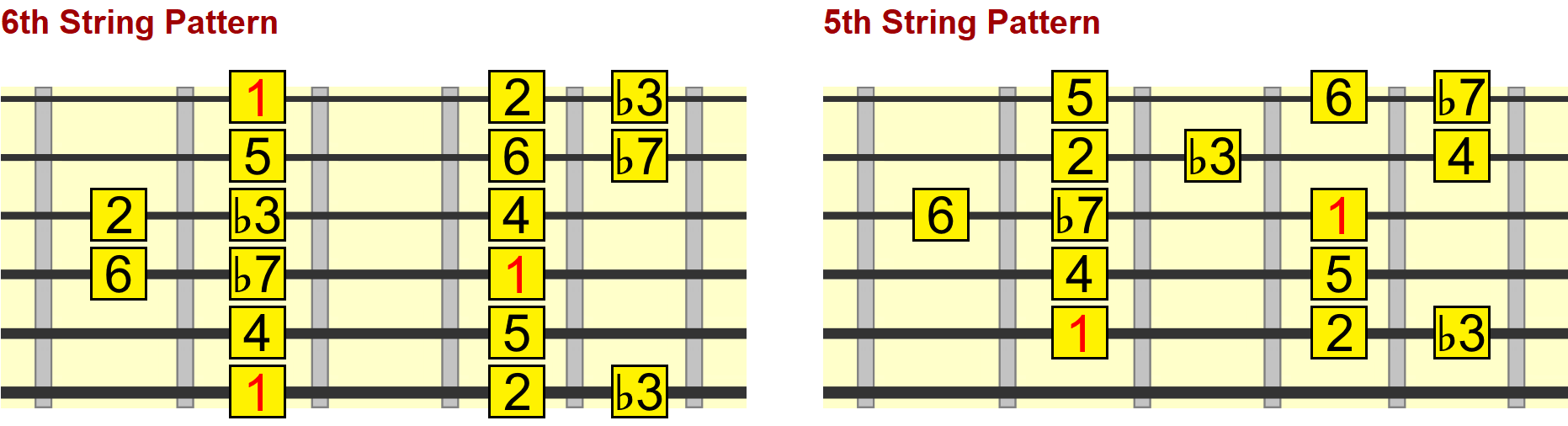
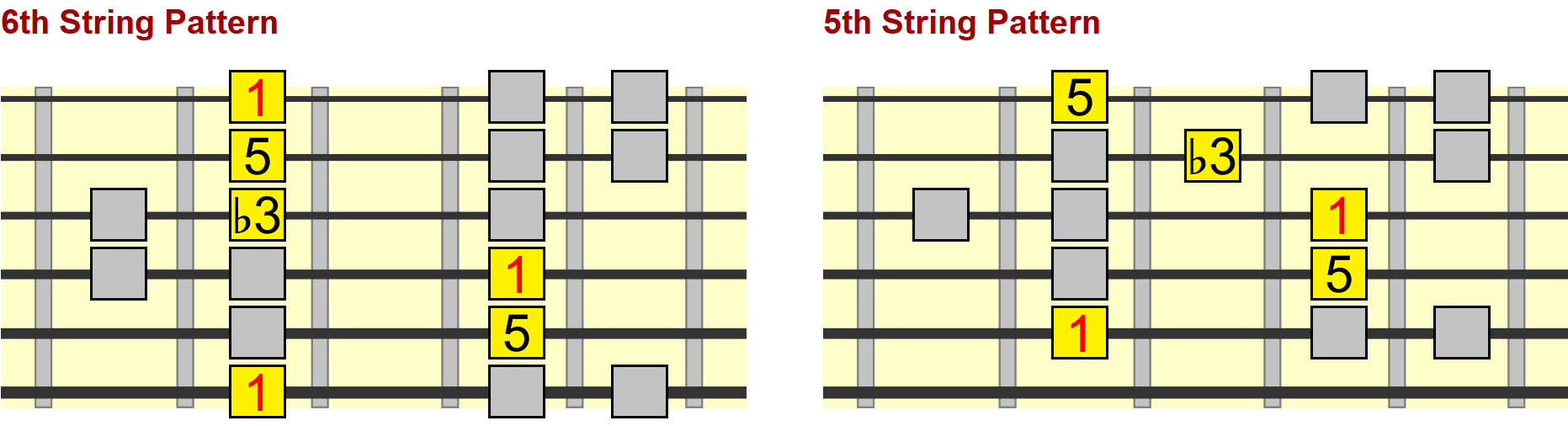
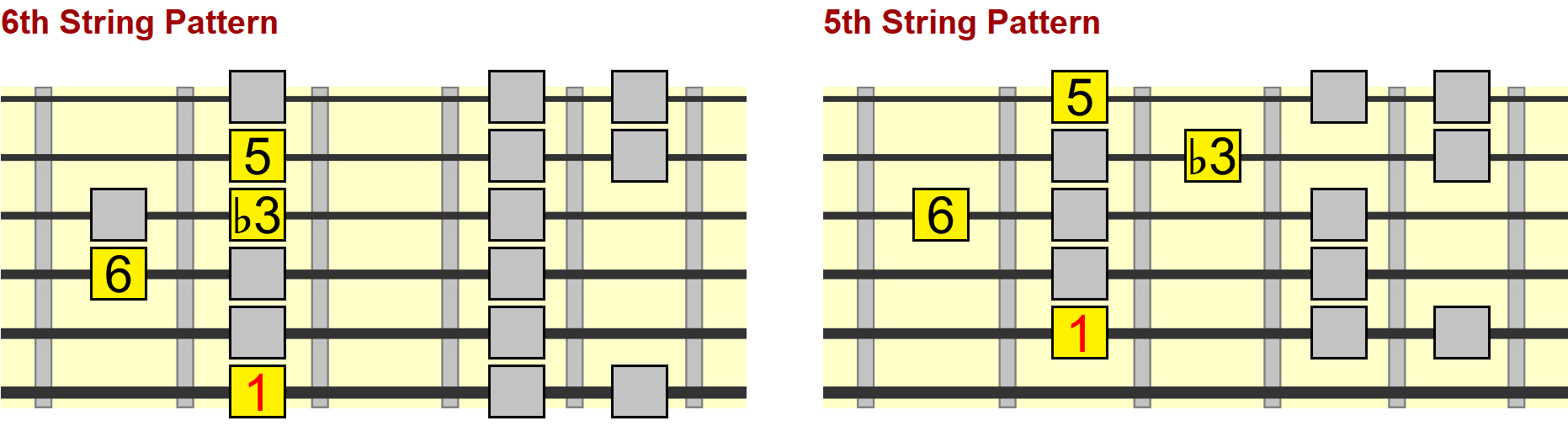
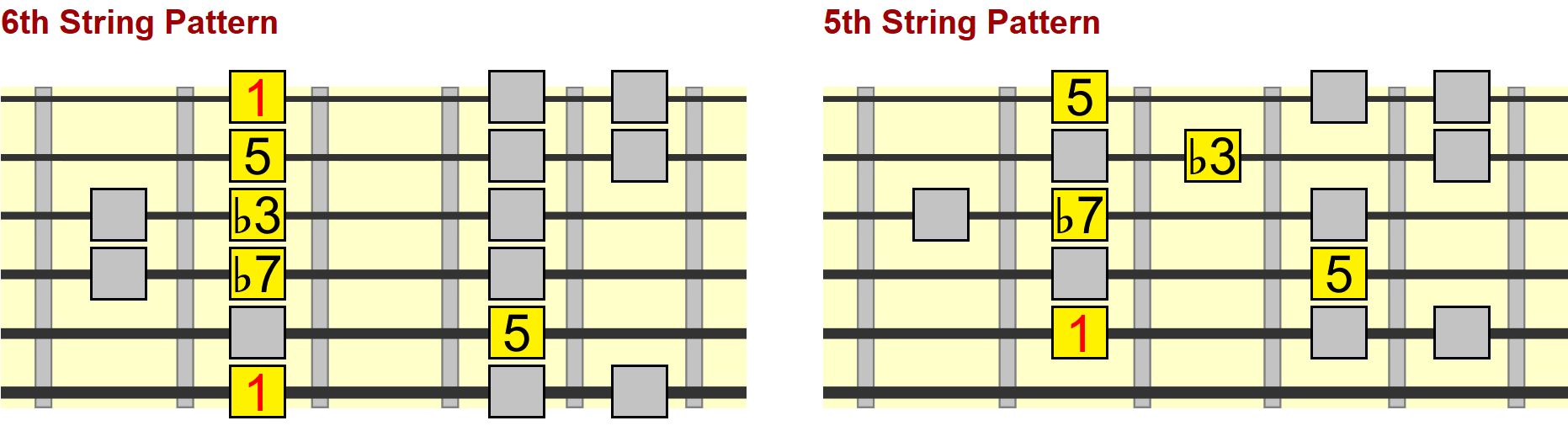
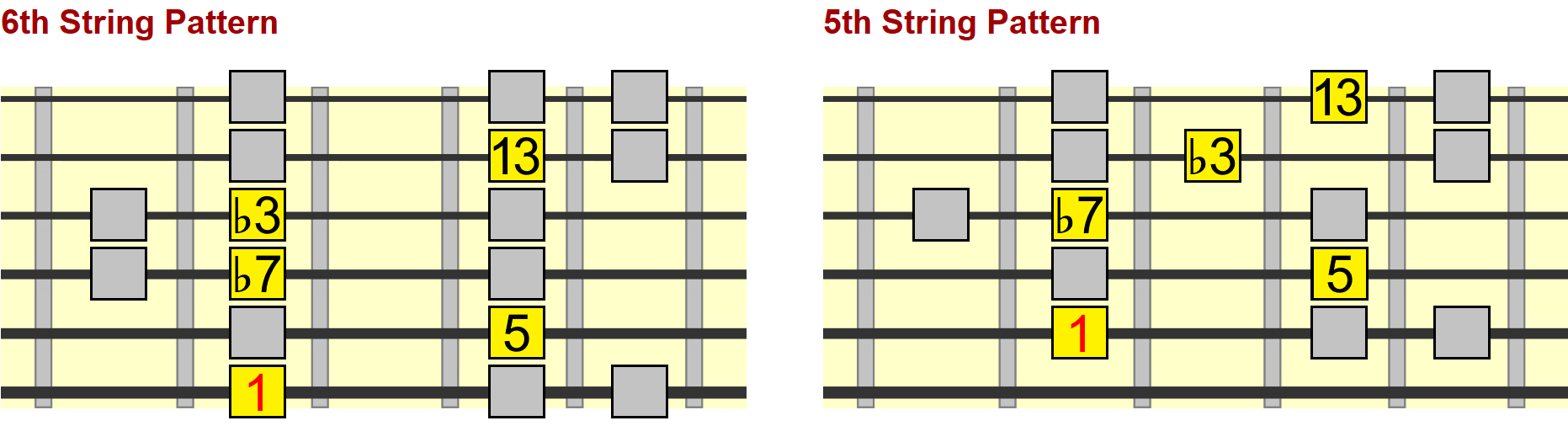
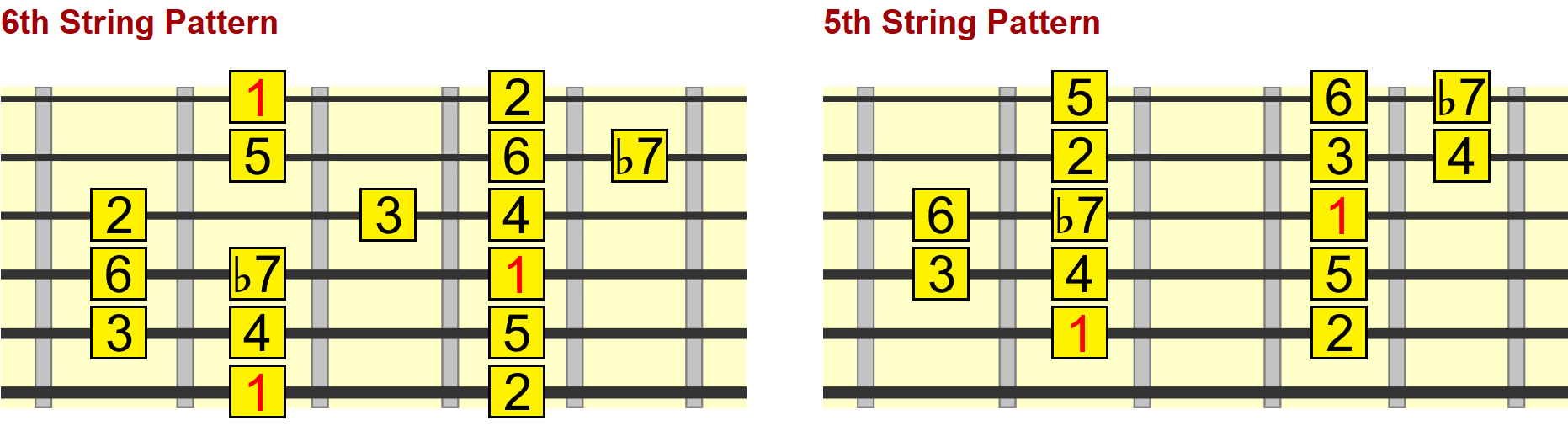
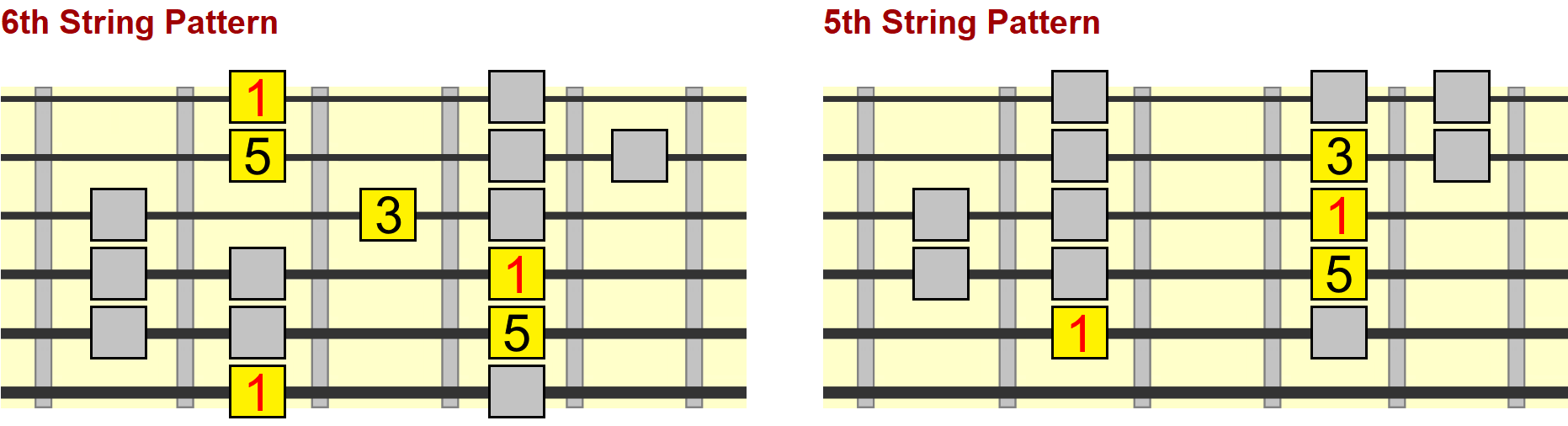
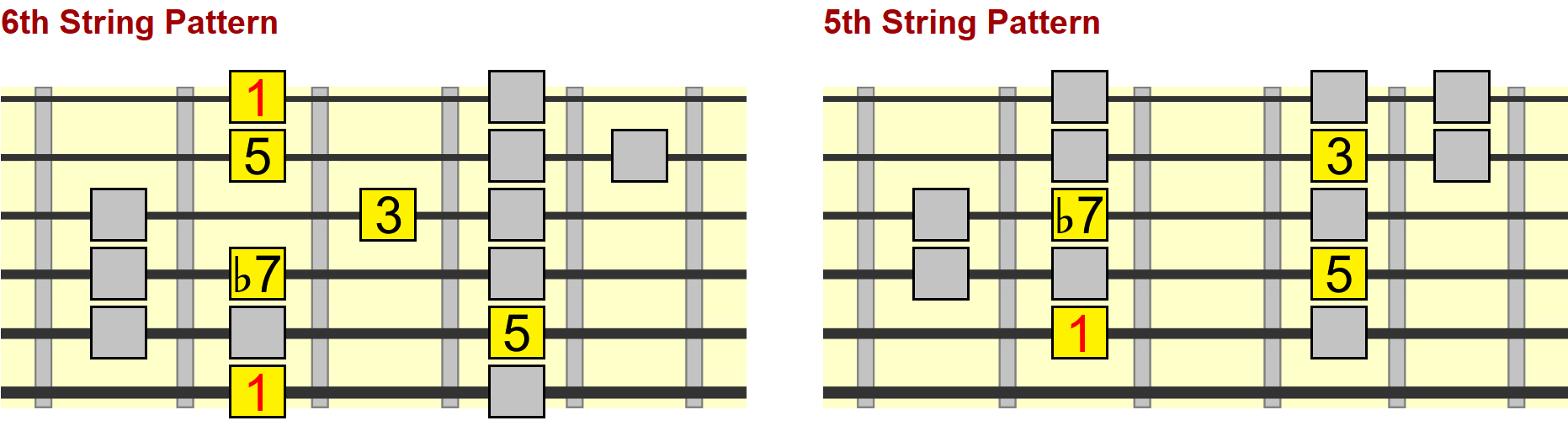
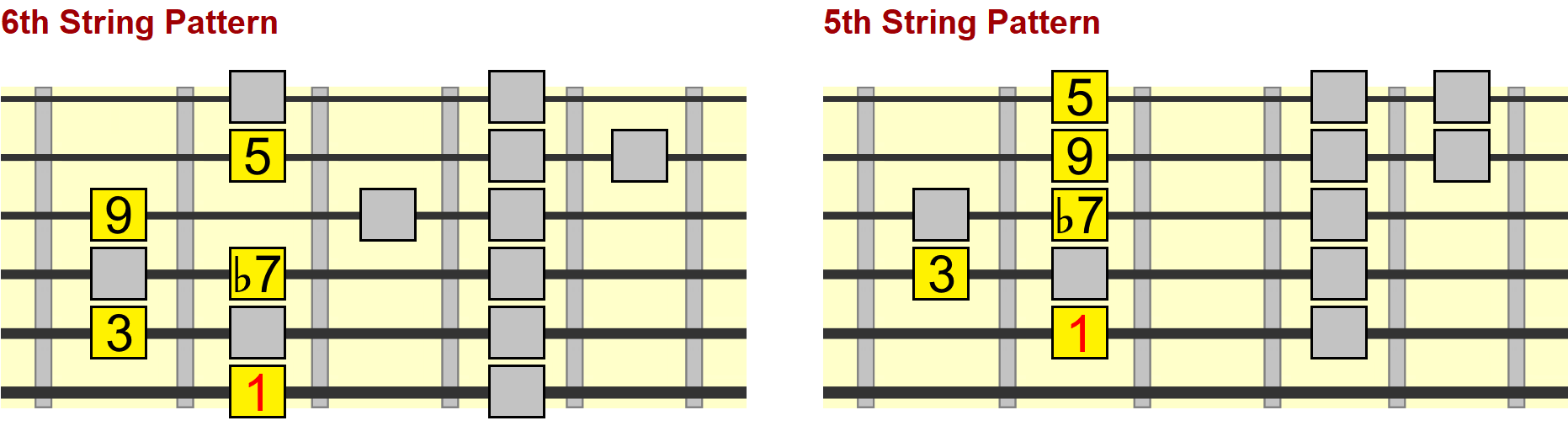
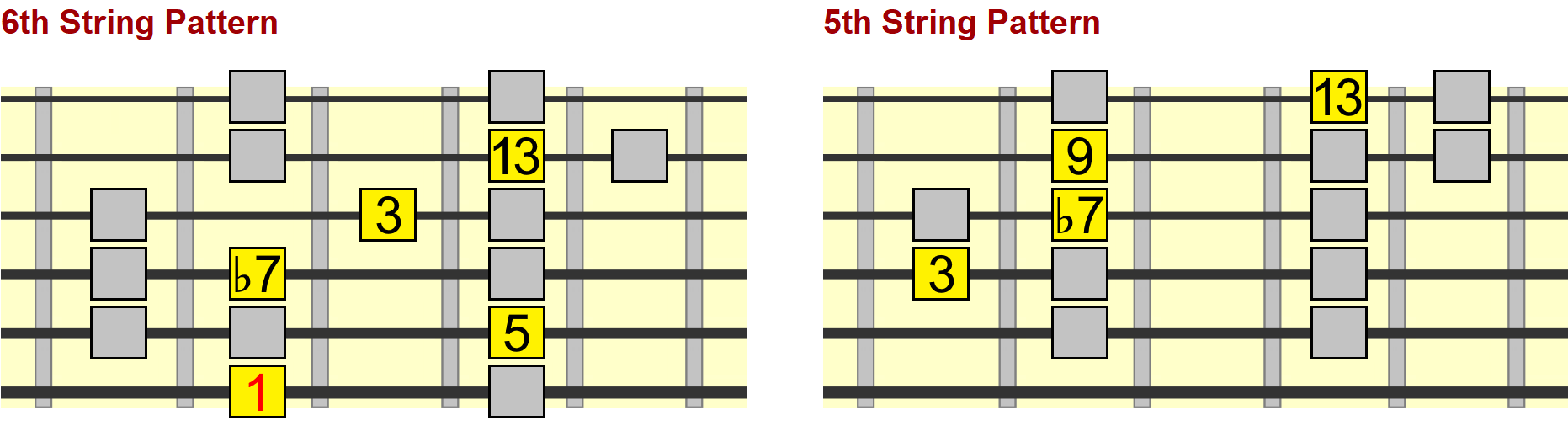
Because we're essentially using the mode's tones/intervals to form their related chords, we can visualise the mode pattern around the chord shape. Or the chord shape within the mode pattern.
Below are some examples of forming compatible chords within a mode's pattern, using two familiar root positions (6th and 5th string). This is a good first step in learning how to harmonise scales/modes and also gives you an integrated starting place for your accompaniment.
Ionian
Dorian
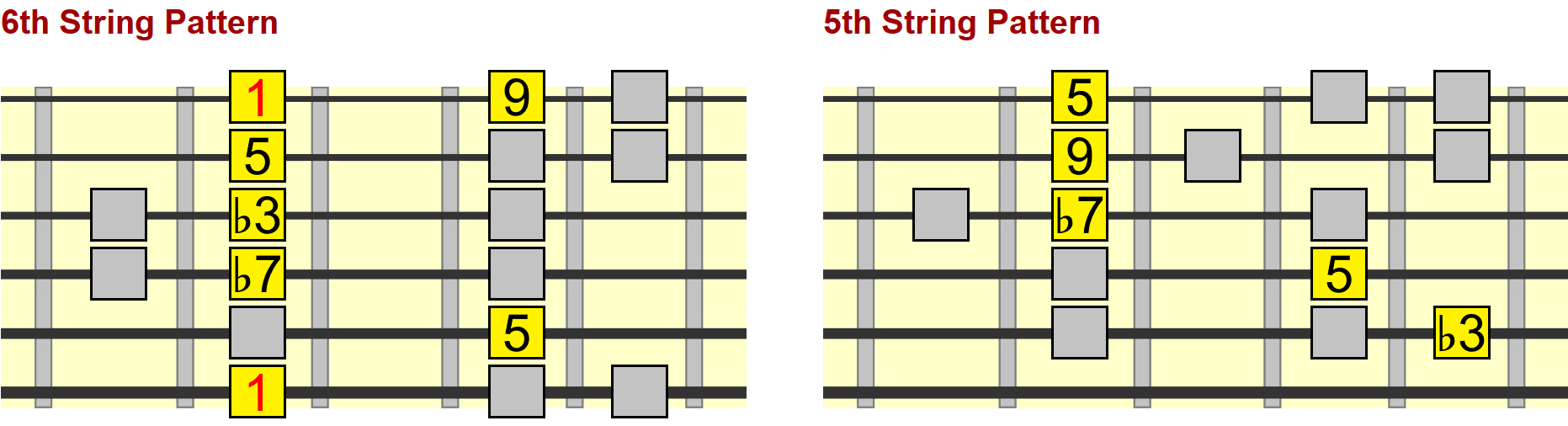
Mixolydian
My Chord Connections course includes in depth ear training, chord tracks and visual guides to help you harmonise scales/modes right across the neck. You can also get access to the Ultimate Roadmap mentioned earlier with Chord Connections.
Modal Harmony
As modes are derived from a parent scale, we can harmonise them (e.g. play multiple notes together) in the same way we would that scale. The only difference is we're changing the tonic or center of our movement to correspond with the given mode's degree.
For example, when we harmonise the major scale, it's 5th degree triad (or V) is major. This also means 5th mode Mixolydian's tonic triad is major, since Mixolydian begins on the 5th degree of the major scale.
Similarly, the major scale's 2nd degree triad (or ii) is minor. This also means the 2nd mode Dorian's tonic triad is minor, since Dorian begins on the 2nd degree of the major scale.
Ultimately, we're making one of the harmonised degrees of the major scale "home" in our movement, with the harmony from the rest of the scale flowing around that central point. That's what makes a movement truly modal.
Spend some time training your ears to modal harmony and develop the ability to recognise movements that imply a given mode.
Modal Chord Progressions
While a lot of modal music is formed through movements of harmony and melody around a fixed scale degree, it can also be formed through more defined chord changes, in a similar way the more common major and minor keys work.
For example, if you hear the chord sequence G / F / G / F etc. that would imply G Mixolydian. Why? Because G to F is like we're playing V to IV from its parent C major scale. What makes it Mixolydian is that G, the 5th degree, has become our new home in the scale. We could end on G and it would sound resolved.
Another example - Dm / G7 / Dm / G7 - this is the equivalent of playing ii to V from the C major scale. But if we don't resolve to C, rather we make Dm, the 2nd degree our home, it implies D Dorian.
Learning to recognise chord changes that move and resolve around different degrees of the major scale will save you a lot of confusion and guess work when it comes to choosing the right scale pattern and tones for your accompaniment/solo.
The tables below show you how the different modes can be harmonised in chord form, based on that mode's degree becoming the new tonic.
Ionian
Since an Ionian progression resolves to the I (1st degree) of the major scale, it's typically referred to as a standard "major key progression". In other words, most major keys are formed around the I of the major scale, making them easier to identify...

Ionian as a harmonic system is prevalent in all genres of music. It's where our common turnarounds I / IV / V and ii / V / I come from. Some examples...
C / G / F / Dm
Dm / G / C / Am (here we don't start on the tonic, but the resolution is still there)
C / Em / F / G
Dorian
A Dorian based progression would resolve around the ii (second degree) of the major scale, making its tonic minor. It's up to you whether you still think of its tonic as ii, from its parent scale, or as the new i (lower case 1 for minor) with all the other degrees adjusted relative to that...

Notice how the chord quality (e.g. major/minor and 7ths) remains the same relative to the parent scale. All we're doing is changing the tonic degree. The melody will also re-affirm Dorian as the mode if tones from that mode are used over the progression. Some examples of Dorian based progressions in D minor...
Dm / Dm / F / G
Dm / F / C / G
Dm / Em / Dm / G
The most common Dorian movement to listen out for is between its i and IV (that's ii and V in relation to the major scale). Sometimes with chords added between those two. In D Dorian that would be Dm / G (typically G7), but without resolving to C from G in order to reaffirm Dm as the center.
Phrygian
A Phrygian based progression would resolve around the iii (third degree) of the parent scale, making its tonic minor...

Phrygian progressions tend to move between its 1st and 2nd degrees (or iii and IV relative to the major scale). That's a major chord one half step/fret up from the minor tonic. This gives it what many western ears would describe as a flamenco sound, though you'll hear it occasionally in rock and popular music. Some examples...
Em / Em / F / F
Em / Em / Dm / F
Em / Em / G / F
Lydian
A Lydian based progression would resolve around the IV (fourth degree) of the parent scale, making its tonic major...

Like Phrygian, most Lydian based movements move between the 1st and 2nd degrees (or IV and V relative to the major scale) - two major chords a whole step apart, with home on the lower triad. Some examples...
F / F / G / G
F / F / G / Em
F / Dm / G / F
Mixolydian
A Mixolydian based progression would resolve around the V (fifth degree) of the parent scale, making its tonic major...

Similar to Lydian, we have a typical whole step movement between two major chords - the 1st and 7th degrees (or V and IV relative to the major scale). This time, however, the higher of the two chords is the tonic/home. A lot of popular songs use this whole step movement. Also, Mixolydian's v chord is minor - another clue that we're centered around Mixolydian. Some examples...
G / F / G / Dm
G / Dm / F / C
G / F / C
Aeolian
This is our "natural minor" key center, or the "relative minor" of the parent major key. Most minor key progressions are born out of Aeolian harmony, but we tend to just refer to it as the minor scale because of its prevalent use. It has a strong minor tonic found on the vi (sixth degree) of the major scale...

Like Ionian (the natural major key center) there are many options for Aeolian because of how the chords in the scale naturally gravitate towards its tonic. Some examples...
Am / G / F / G
Am / C / F / Dm
Am / Em / Dm
Locrian
You'll rarely hear a strict "Locrian progression". Why? Because its tonic chord - diminished - never really sounds resolved or the center of a chord progression. Due to the inherent instability of the diminished chord, it naturally wants to go somewhere. It naturally wants to resolve.
Instead, what you'll tend to hear is a loose harmonic movement around a fixed bass on the major scale's 7th degree. Regardless, here are the chord degrees we'd theoretically use for reference...

You can learn more about how to form and recognise modal chord progressions here, making different degrees of the major scale the new tonic, corresponding to that degree's mode.
Why Are These Useful To Know?
If we're essentially playing the harmonised major scale in all these examples, you might be wondering why we need to know about "modal chord progressions" at all.
The answer is simple - so you know when a progression isn't natural major or minor. So you know when to use Dorian for accompaniment instead of Aeolian, for example. Or when to use Mixolydian instead of Ionian. You'll find these kind of modal movements pop up in jam sessions and even your own songwriting, even without intending for the song to be modal!
By becoming familiar with how chord sequences can be centered around different degrees of a scale, you'll avoid the bum notes from making the assumption that "tonic major = Ionian" and "tonic minor = Aeolian". It's the relationship between the tonic and the chords played around it that determines where the modal center lies and on which scale degree we've shifted things to.
Modal Jam Tracks
Here I've selected the best backing tracks and provided guide patterns so you can jam the modes more confidently and further train your ears to their unique characteristics...
Dorian | Phrygian | Lydian | Mixolydian