Melodic Minor vs Other Minor Scales
If we compare melodic minor with two other commonly used minor scales, natural minor and harmonic minor, we can see that they all share the same interval sequence up to the 5th degree. It's the 6th and 7th degrees that distinguish these scales from one another...

Below are the three minor scales mapped out in E across the 1st string...
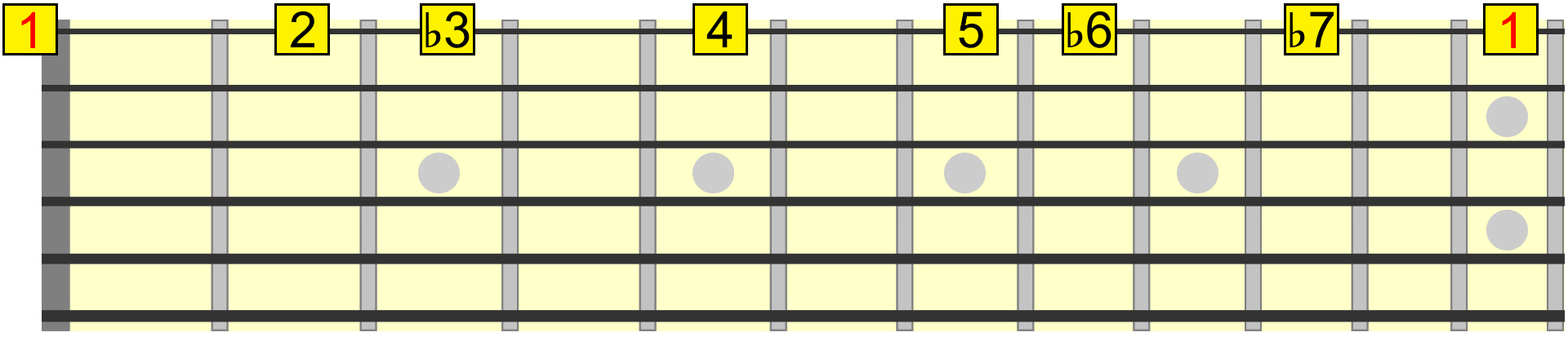
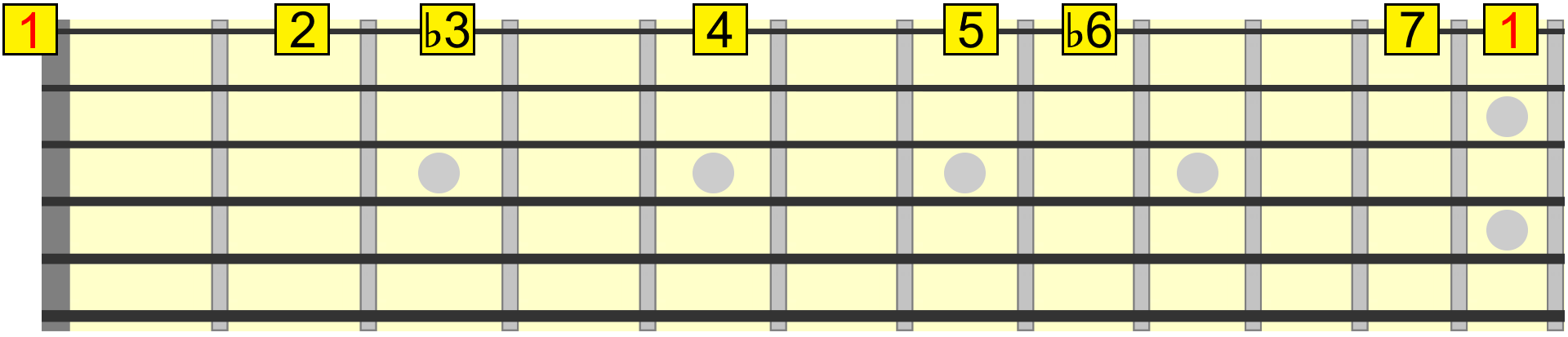
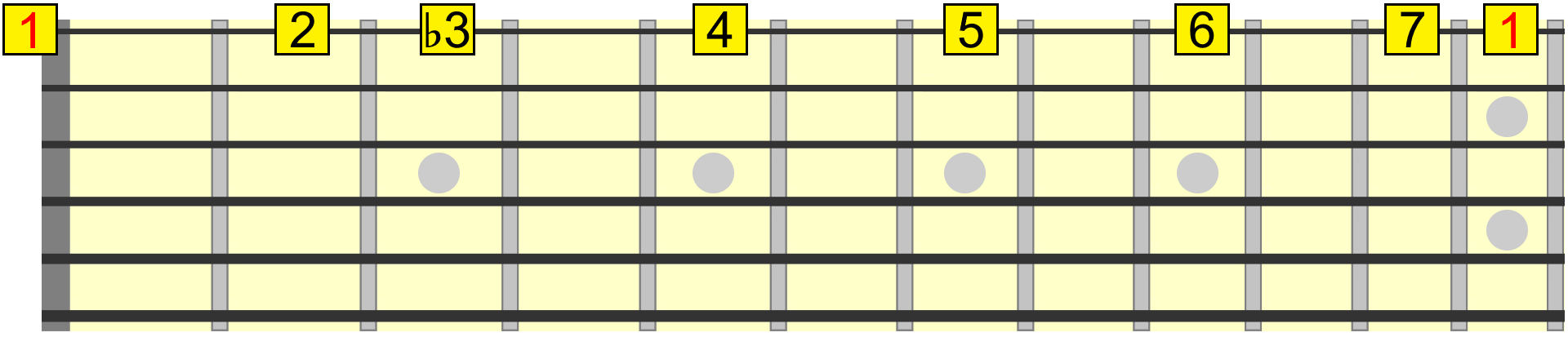
Explore these minor scales over the E minor track below. Take some time to really feel them!
So it's the combination of the major 6th (6) and major 7th (7) interval, formed around the minor triad (1 ♭3 5), that gives melodic minor its uniquely haunting minor sound.
Start by exploring it across a single string against a minor chord track. For example, B melodic minor over B minor...
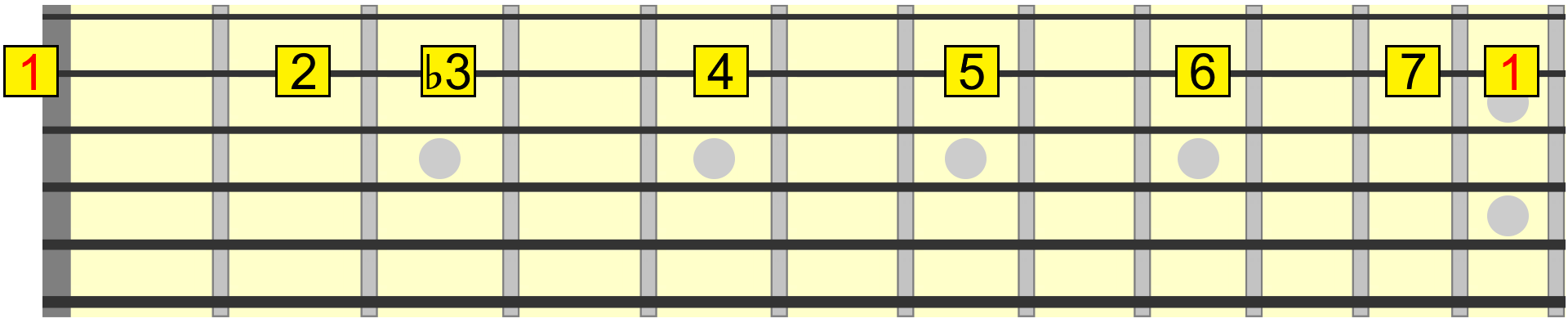
Example
B Minor Track
Melodic Minor Chord Connection & Basic Patterns
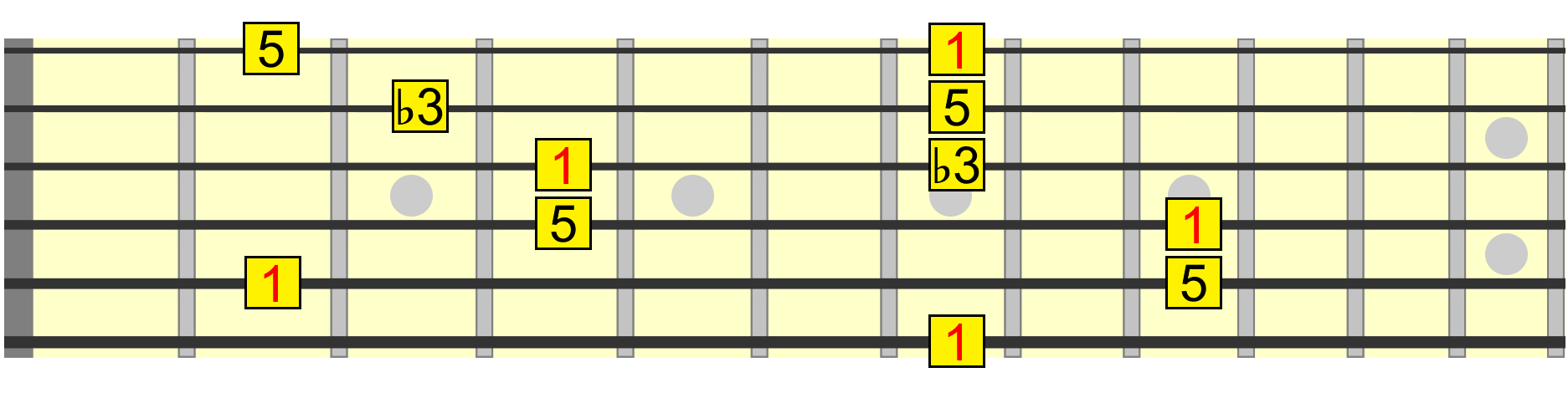
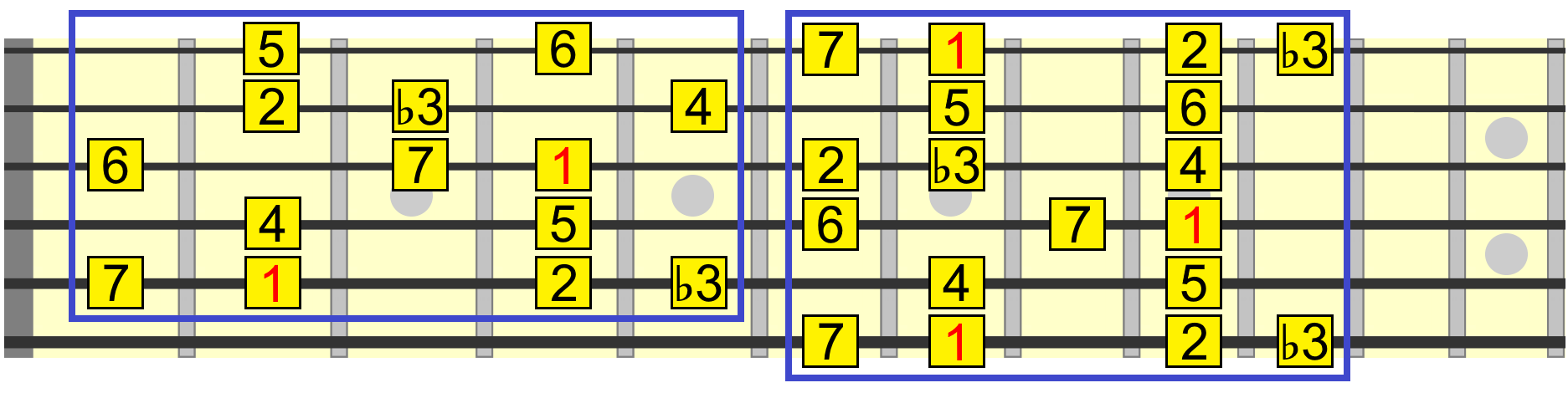
Like other minor scales, melodic minor's tonic or root triad is minor, so it will work over basic minor chords. Here I'm playing box patterns built around the familiar 5th and 6th string minor barre chord shapes (sometimes referred to as "A shape" and "E shape" respectively)...
The scale's major 7th interval tells us it also connects to minor chords with a major 7th, also known as a minor major 7th chord (1 ♭3 5 7) e.g. Bm(maj7) or BmM7...
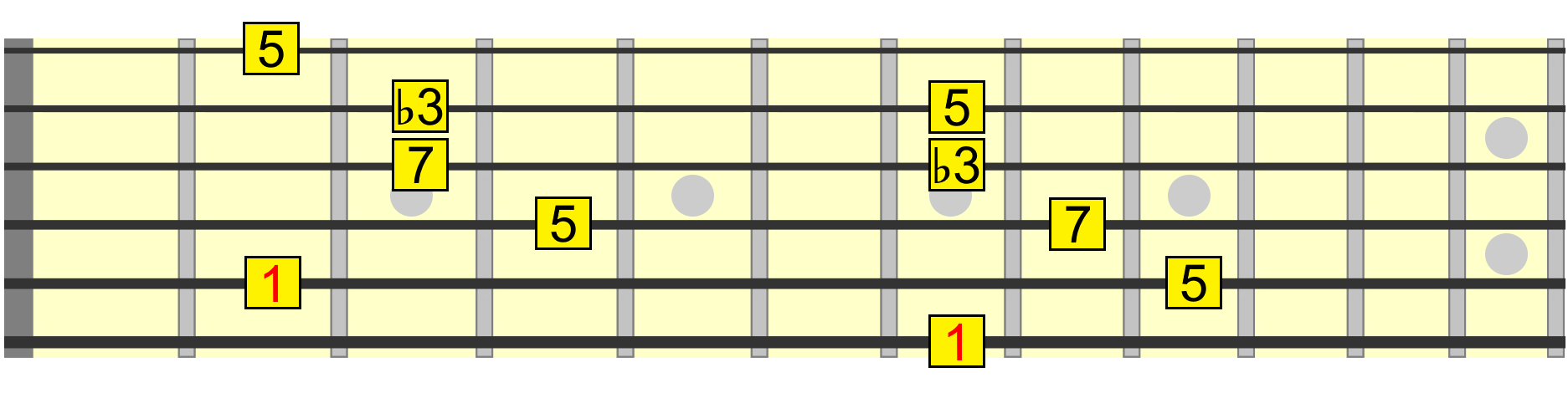
Composers typically make a choice between harmonic and melodic minor over minor major 7th chords, as both scales use a major 7th, and are therefore sometimes used interchangeably. But melodic minor's natural 6th is often favoured for its brighter contrast against the dark, tense major 7th.
It's a good idea to train your ears to this distinction so you can make your tone choices more consciously and evoke the desired feeling.
We'll look more at connecting the scale to chords later.
Over Minor Triads In Progressions
There are instances of a basic minor triad whereby melodic minor offers us some additional colour. For example, in minor keys, melodic minor could replace the standard natural minor scale over the tonic chord.
In this A minor key example, I play A melodic minor over the Am tonic and then change to A natural minor over the other chords (G and Dm)...
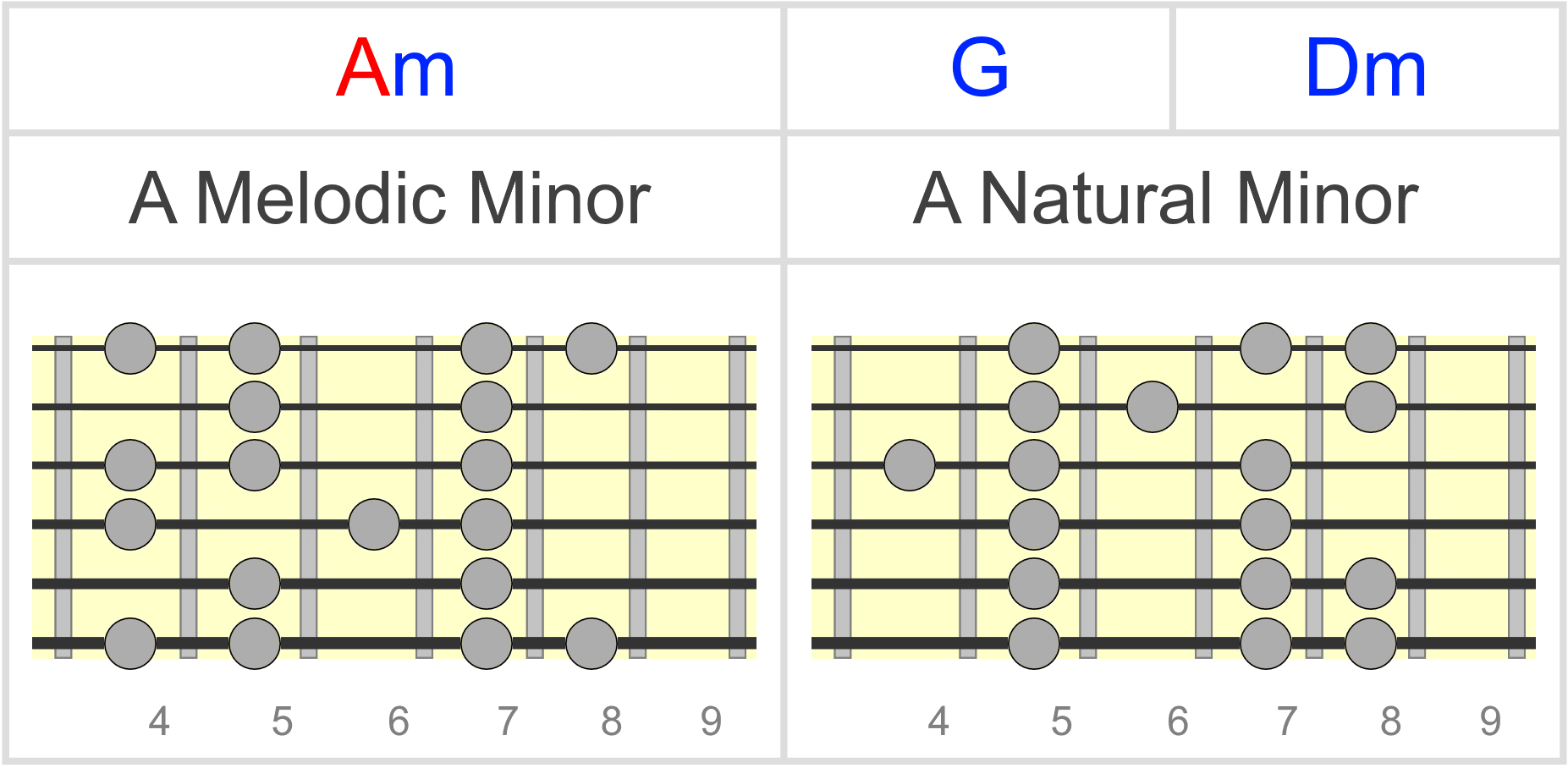
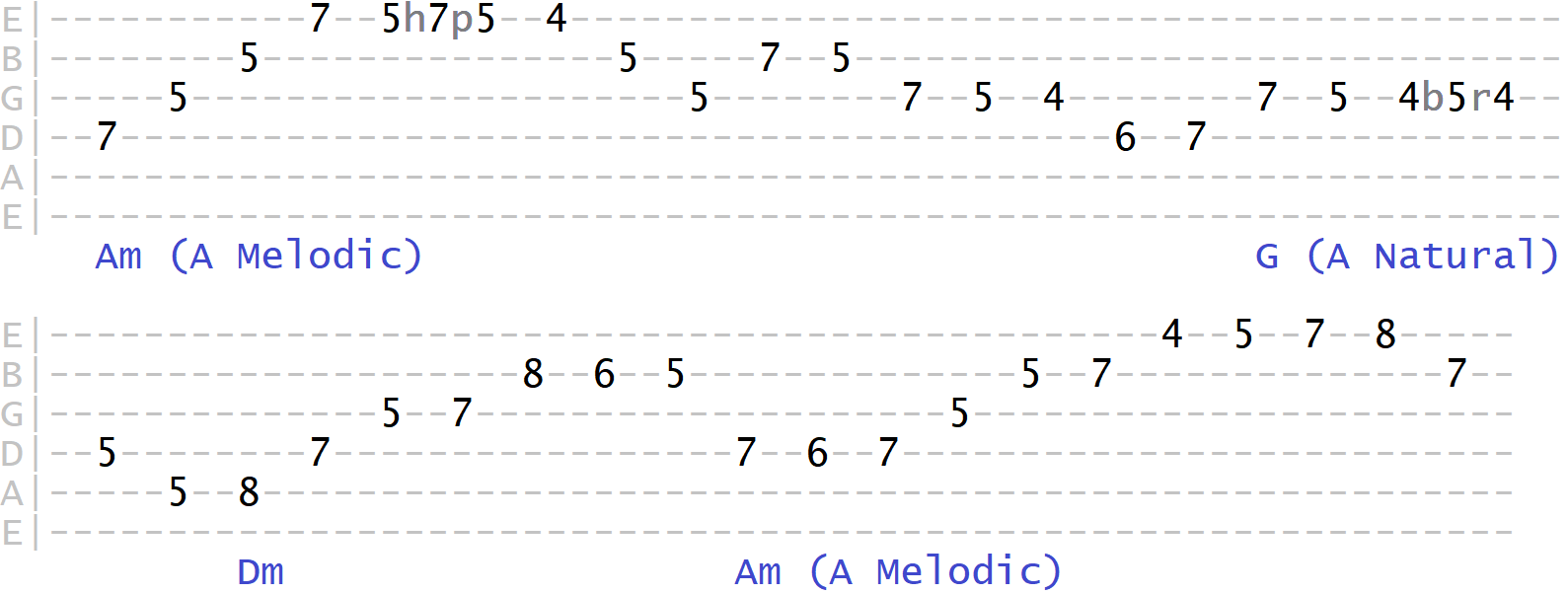
While natural and harmonic minor are almost always used on the tonic position of a key, melodic minor can also be positioned on other degrees to good effect.
For example, in major keys the 4 (IV) chord is often played as minor (iv), which we can complement with melodic minor.
For example, in C major, F minor would be our modified 4 chord, and therefore we'd switch from the C major scale to F melodic minor over F minor...
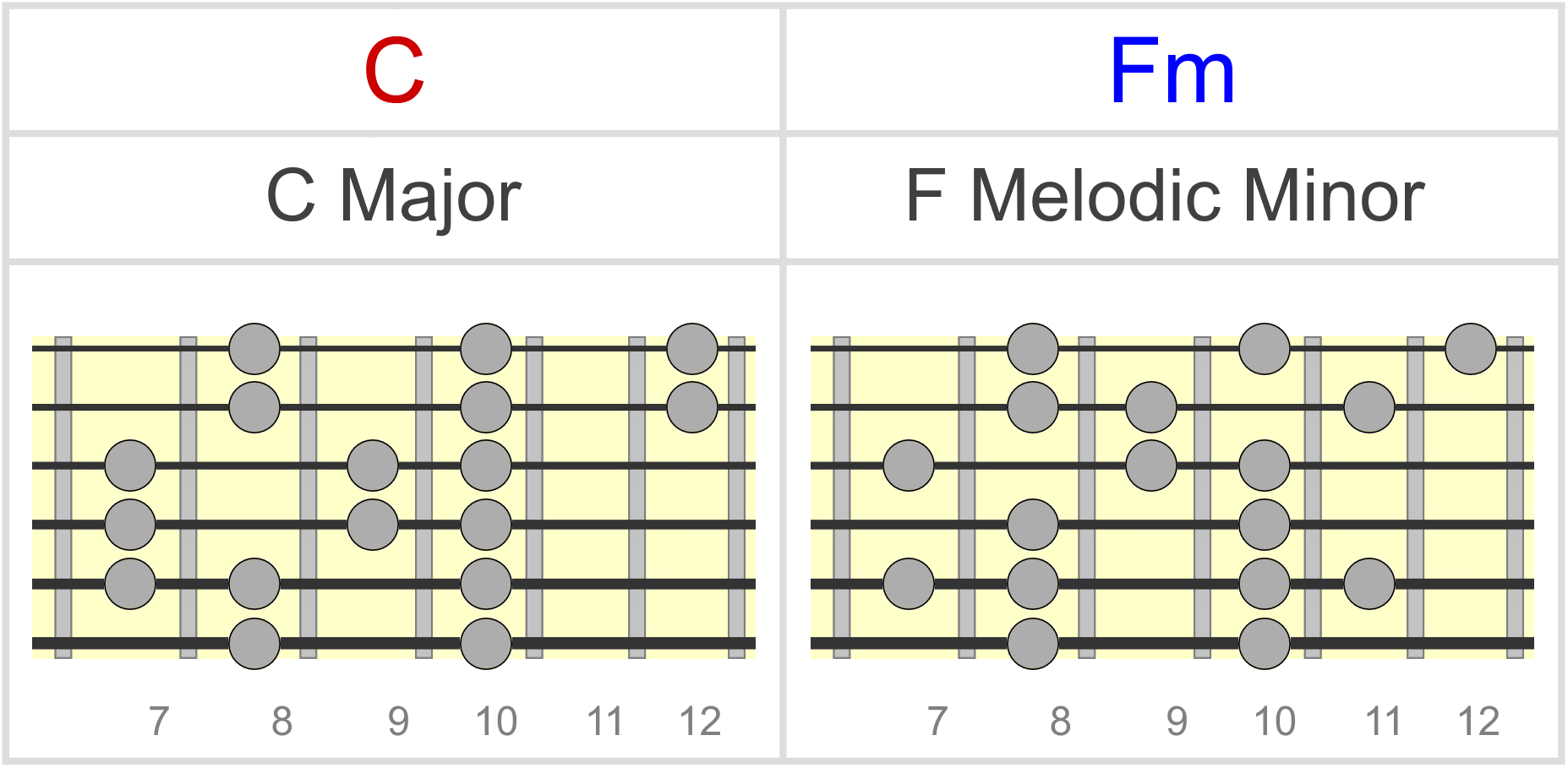

We'll look more at using melodic minor over chord sequences shortly.
Melodic Minor Patterns
Like other scales, melodic minor has a roadmap that can be broken up into various patterns.
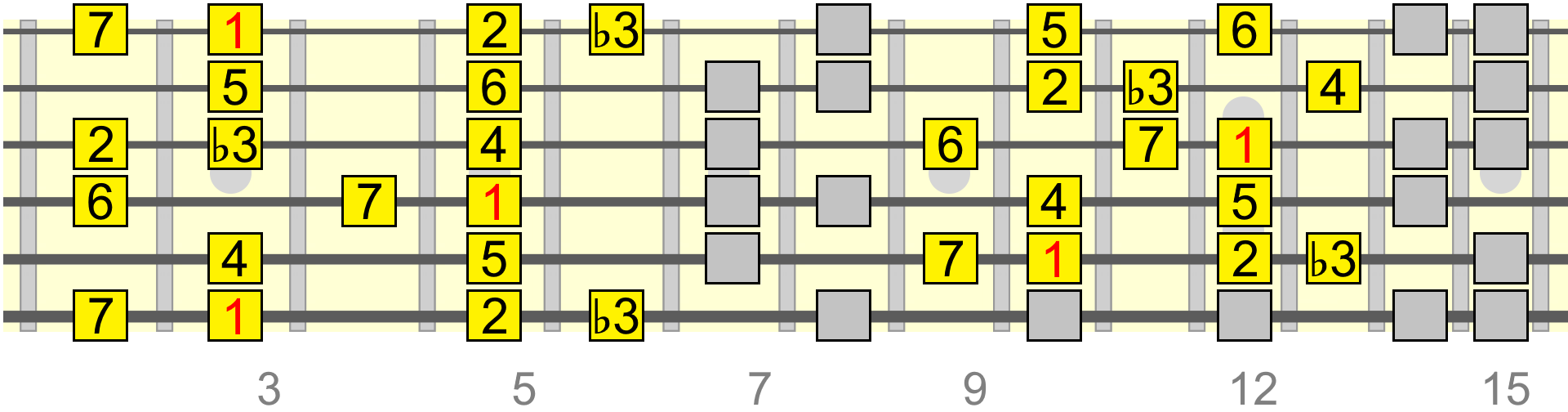
Here we have G melodic minor mapped out across the neck...
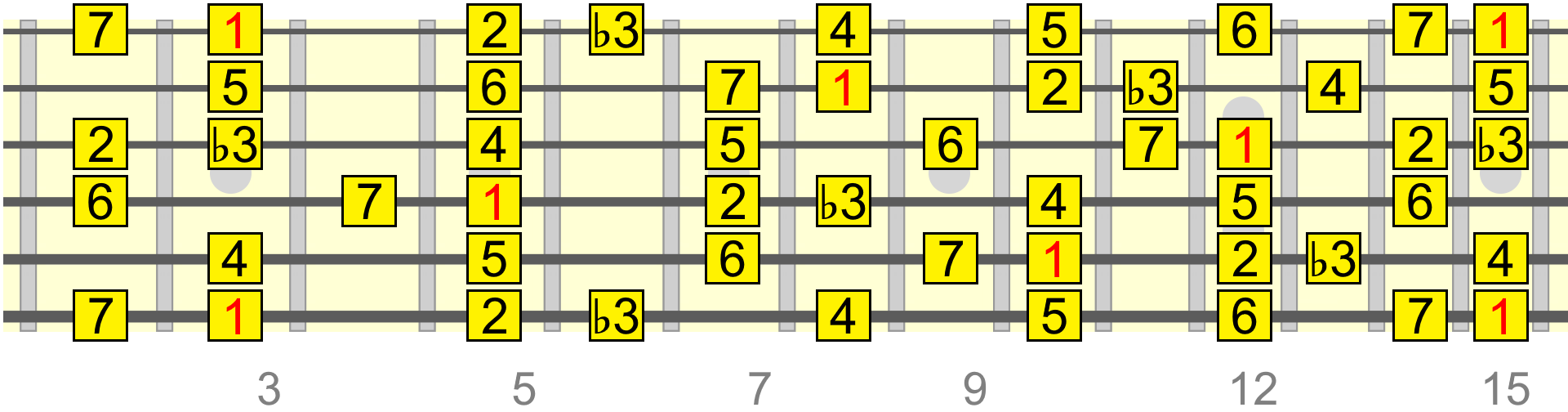
Chord Shape Patterns
From earlier, we can identify the two patterns built around the tonic minor chord shapes on the 6th and 5th strings. These are good initial reference positions for getting your bearings...

Example
G Minor Track
"Box" Patterns
We can also divide up the large roadmap into 4 condensed box patterns, which, once memorised can be used to link up different areas of the neck...
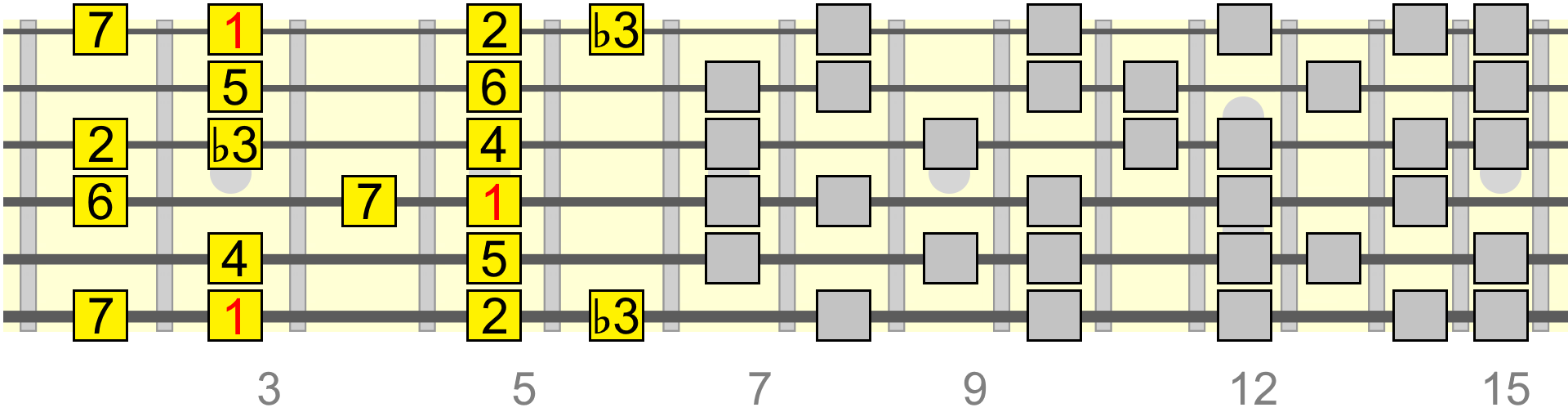
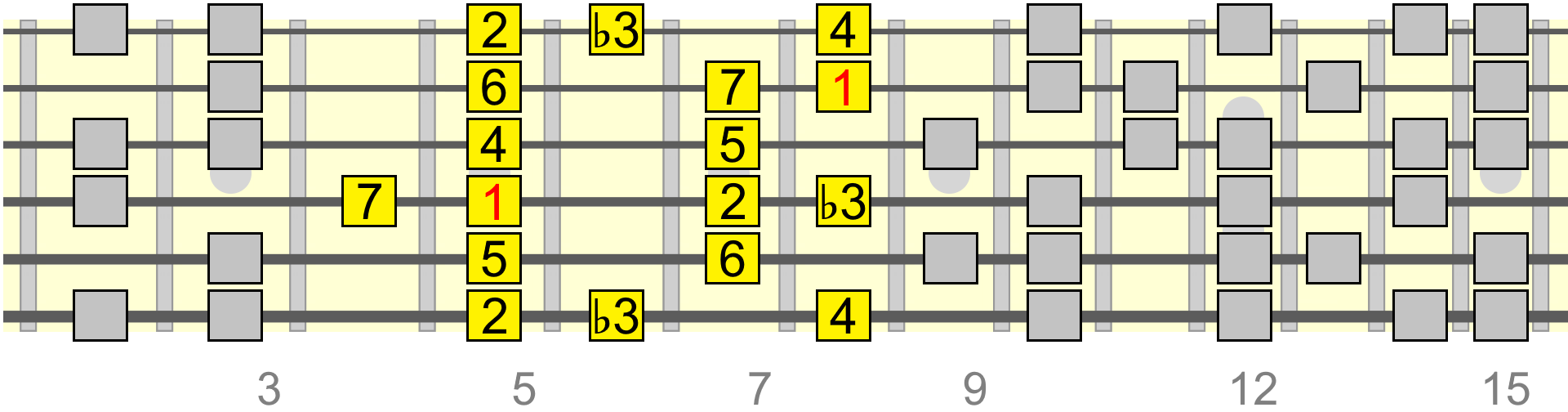
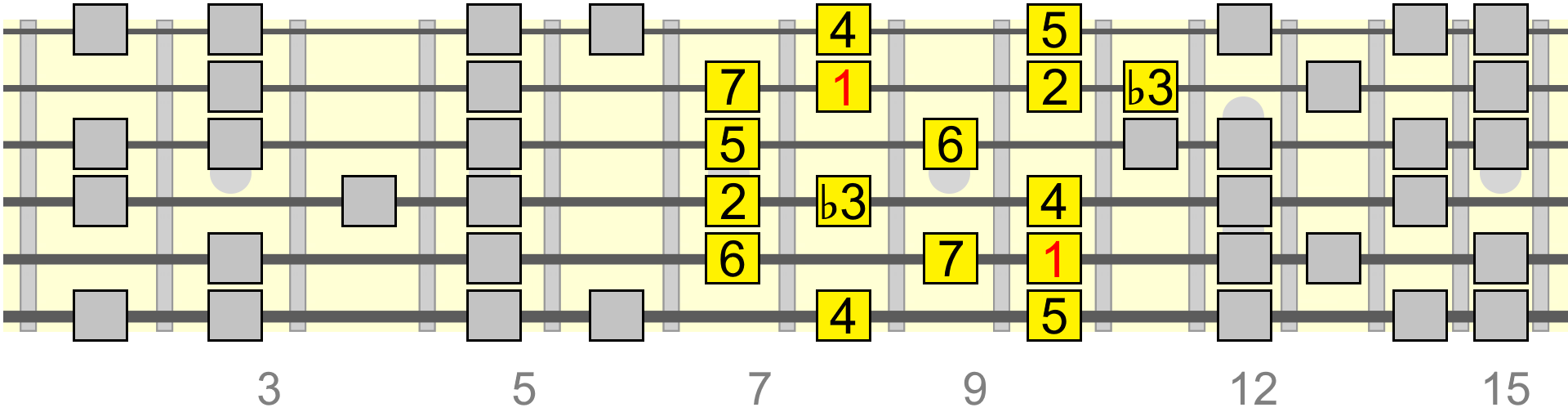
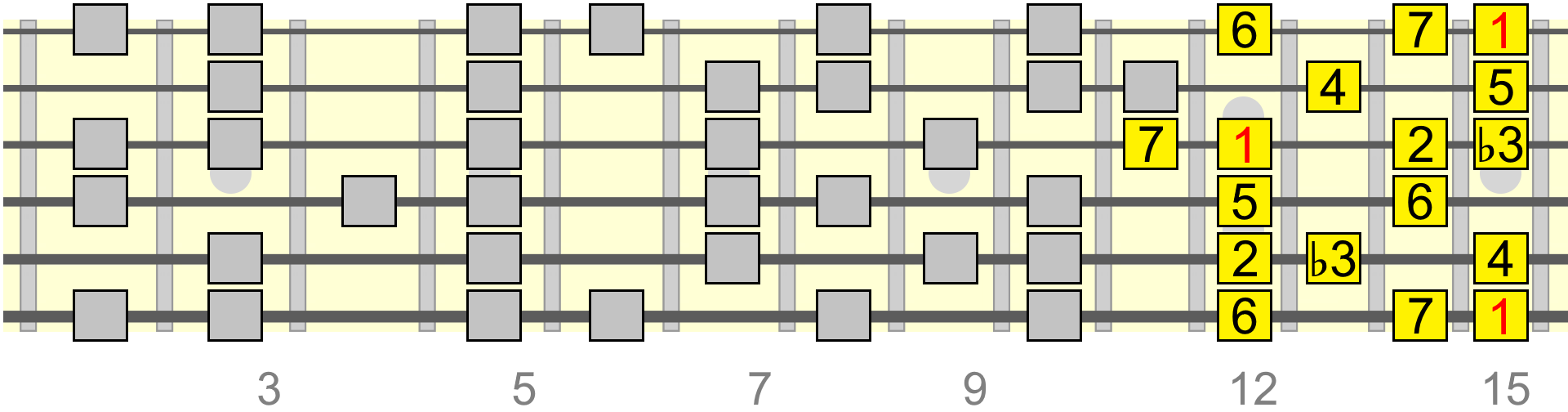
Tip: When memorising these patterns, it's useful to identify where the root positions fall within them, to help link them up and find your bearings.
3 Notes Per String Patterns
Some players prefer to divide up the neck into 3 notes per string patterns, which allow for wider sequential runs...
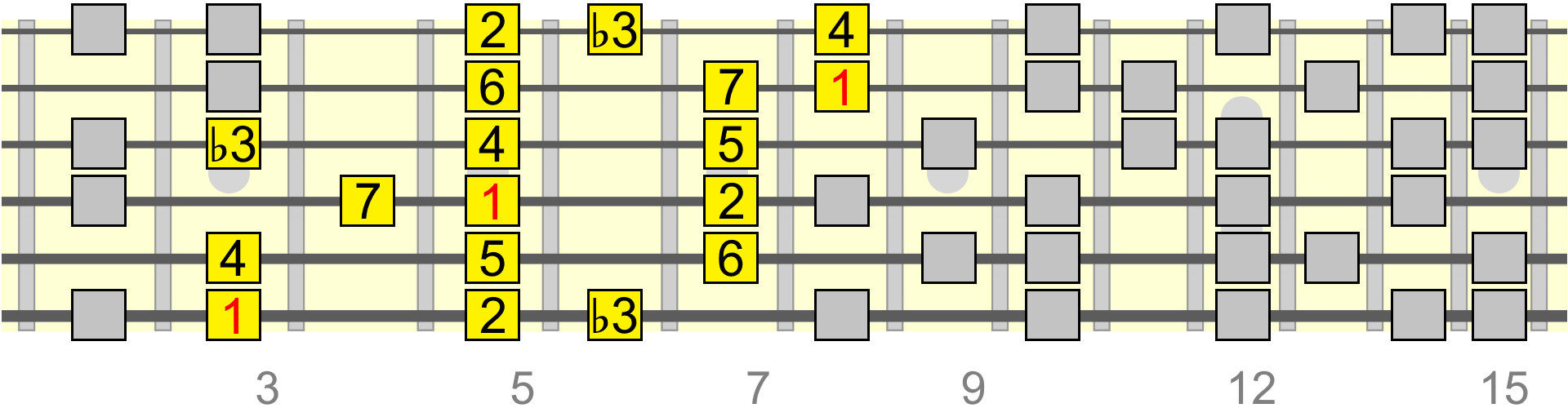
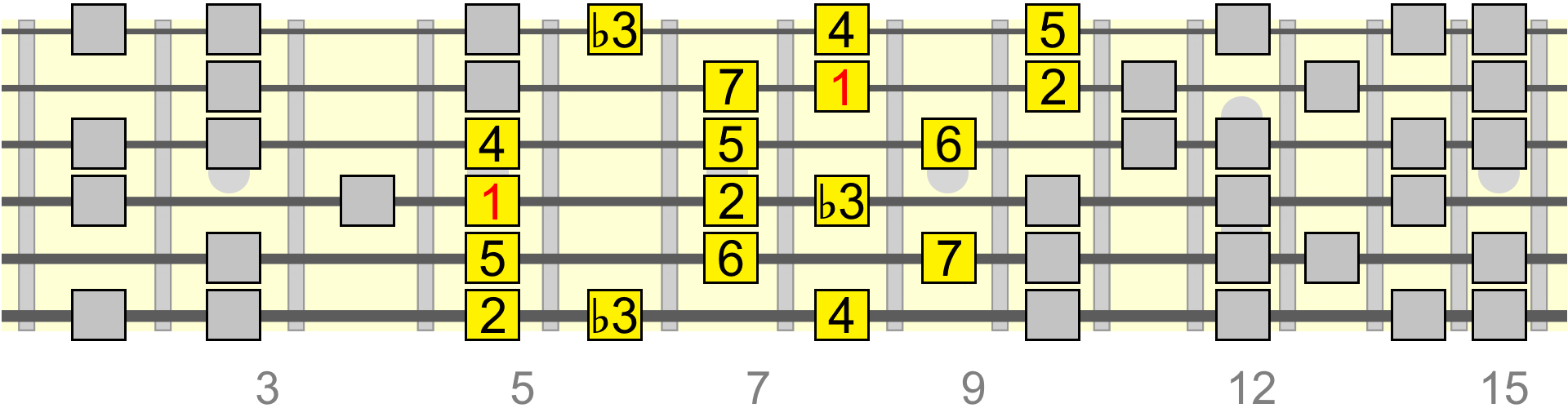
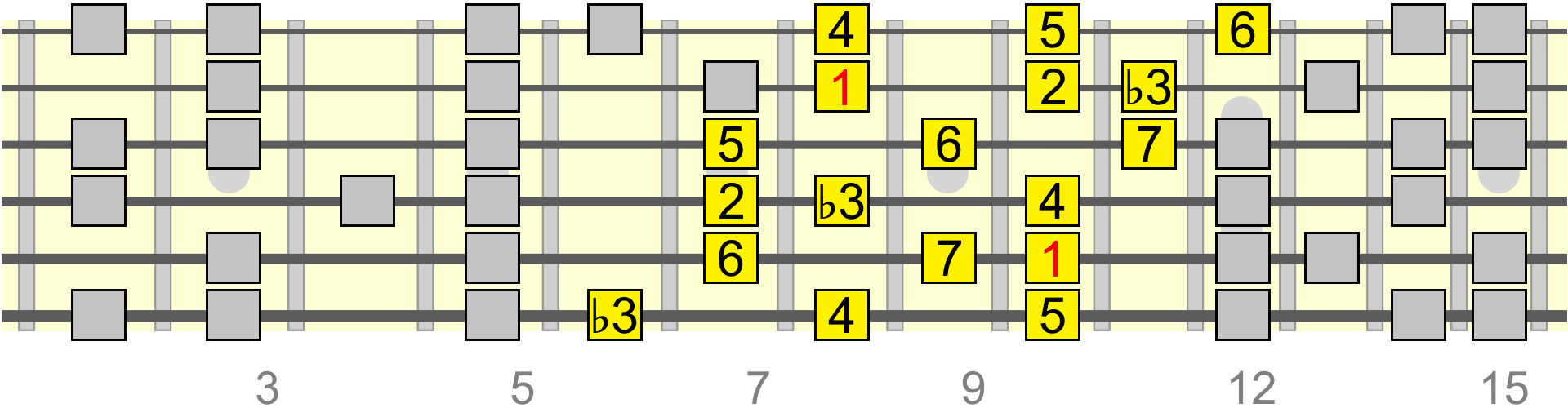
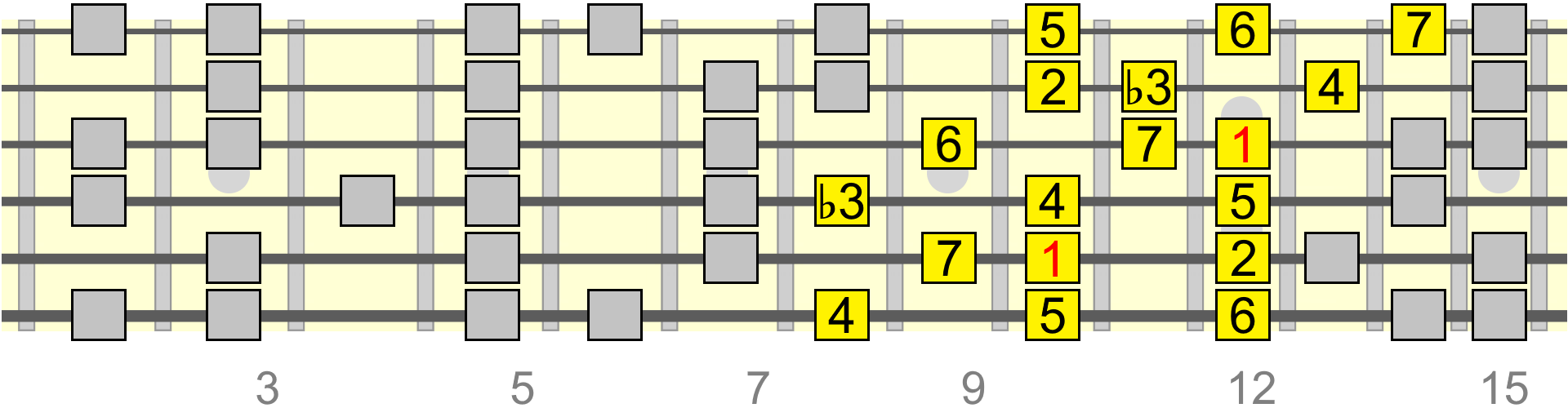
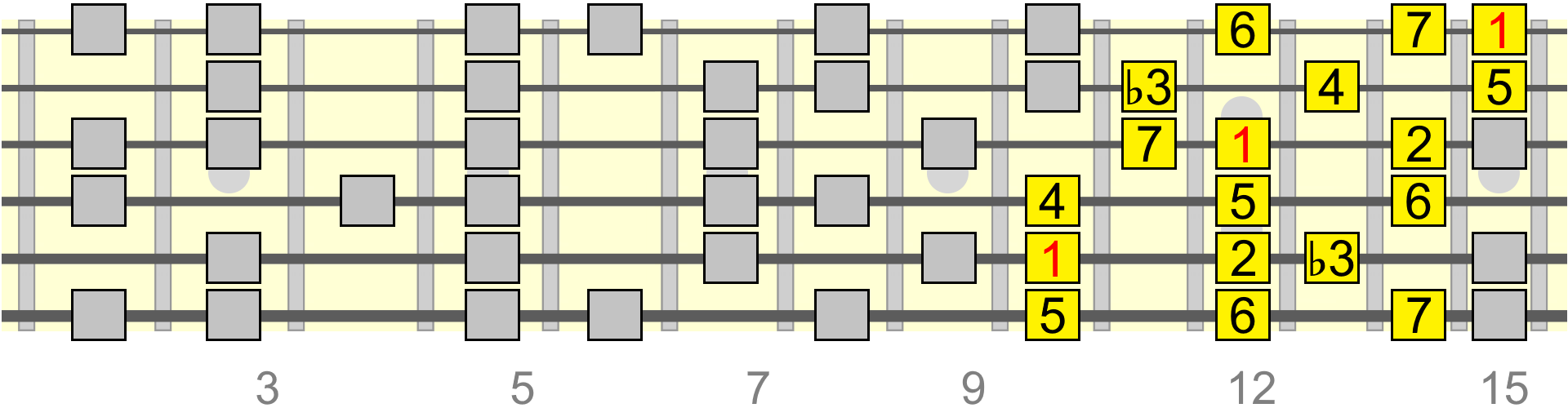
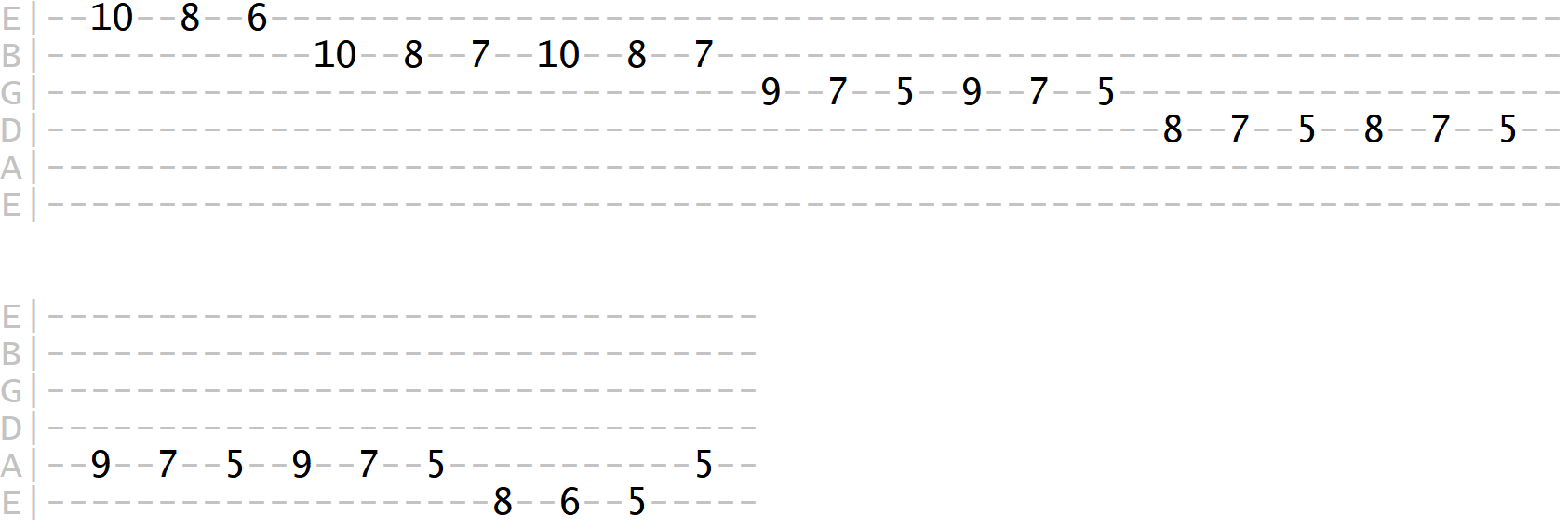
Start by taking them two strings at a time and come up with a sequence you like the sound of. For example (using the 2nd pattern from above)...
Hexatonic Patterns
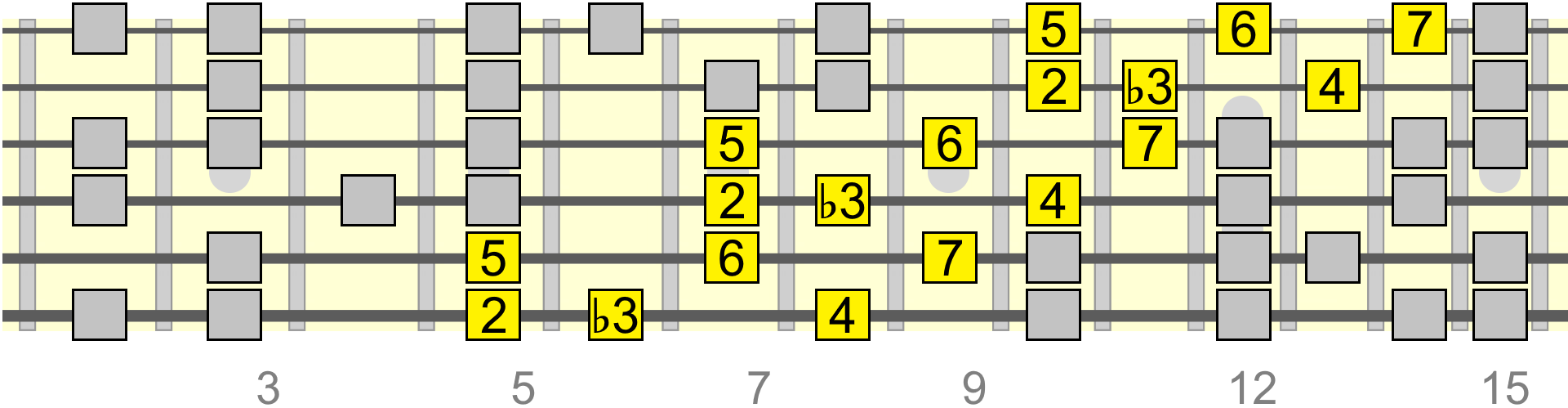
Within the roadmap we can also visualise hexatonic patterns - repeating six-tone sequences that omit a tone from the complete scale.
In this example the root is omitted, giving the scale a more outside sound. Again, think it terms of string pairings when navigating these...

Pentatonic Patterns
We can even form melodic minor flavoured pentatonic scales from the roadmap. Here I use the most important colour tones from the scale - 2, ♭3, 5, 6 and 7...
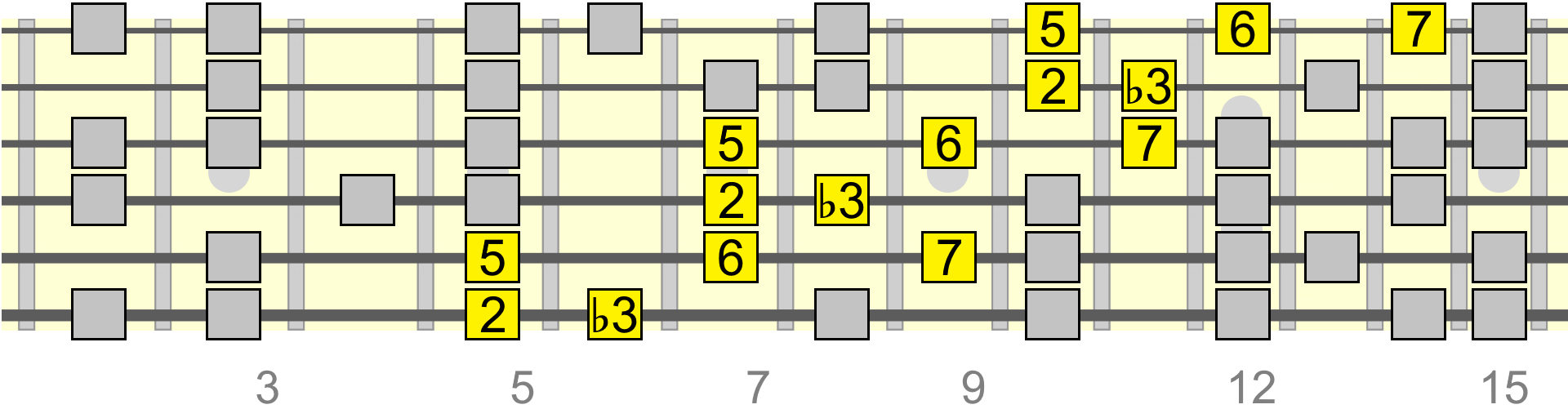

Each of these pattern forms offer us different options for phrasing and sequential runs.
However you choose to break up and navigate this roadmap, being aware of the defining tones of the scale, and how they interact with the backing chord, will help you to create the sound you want.
Melodic Minor Modes
Like the major scale and harmonic minor, melodic minor can be seen as the parent scale of six related modes, that can be used over a variety of chord types...
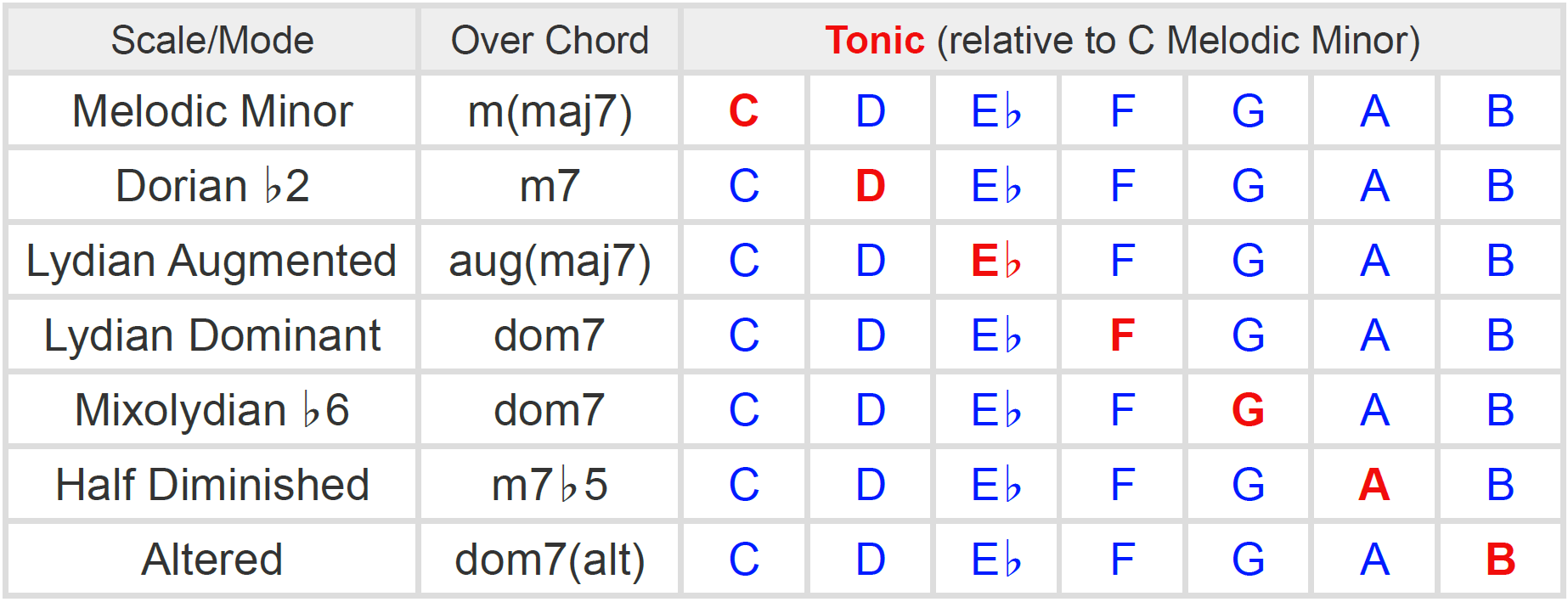
Each of these modes can be thought of as starting on a related degree of melodic minor. So they all use the same melodic minor roadmap, and therefore any of our melodic minor patterns and licks can be used to play these modes.
For example, F Lydian Dominant uses the same seven notes, and therefore the same roadmap, as C Melodic minor. As does B Altered. All we need to do is position our relative melodic minor patterns appropriately to cover these modes. Some examples...
Lydian Dominant
Lydian Dominant is the 4th mode of melodic minor, used over dominant 7th chords and distinguished by its raised 4th (♯4) degree.
As it's the 4th mode, it starts on the 4th degree of its parent melodic minor scale. The intervals of melodic minor get transposed/adjusted based on this new tonic (1)...

Therefore to play C Lydian dominant for example, we'd use a G melodic minor pattern, as C lies on G melodic minor's 4th degree...
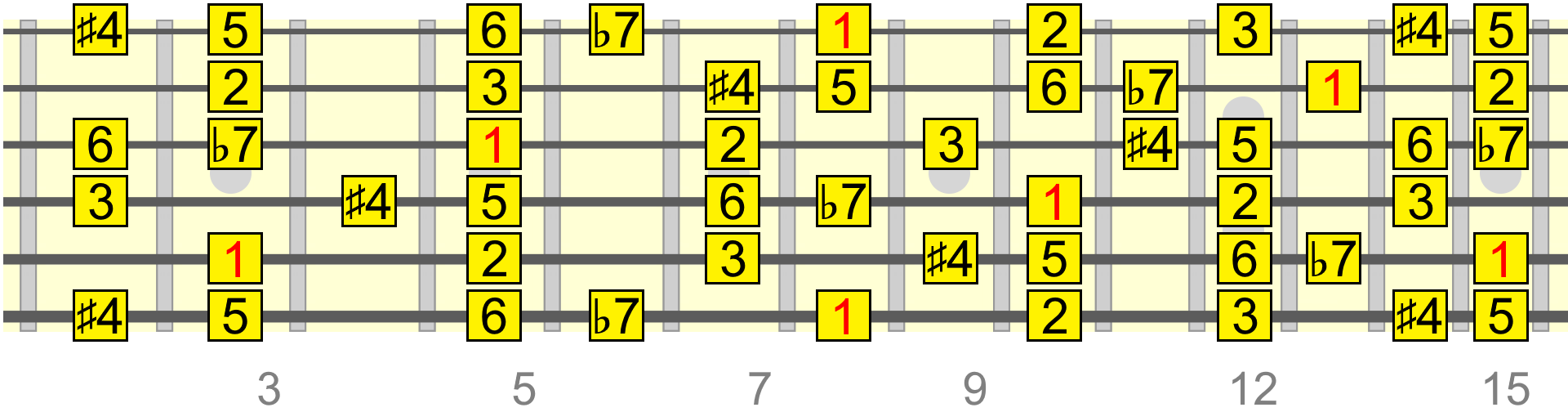
Here I'm playing over the mode's tonic chord - C7...
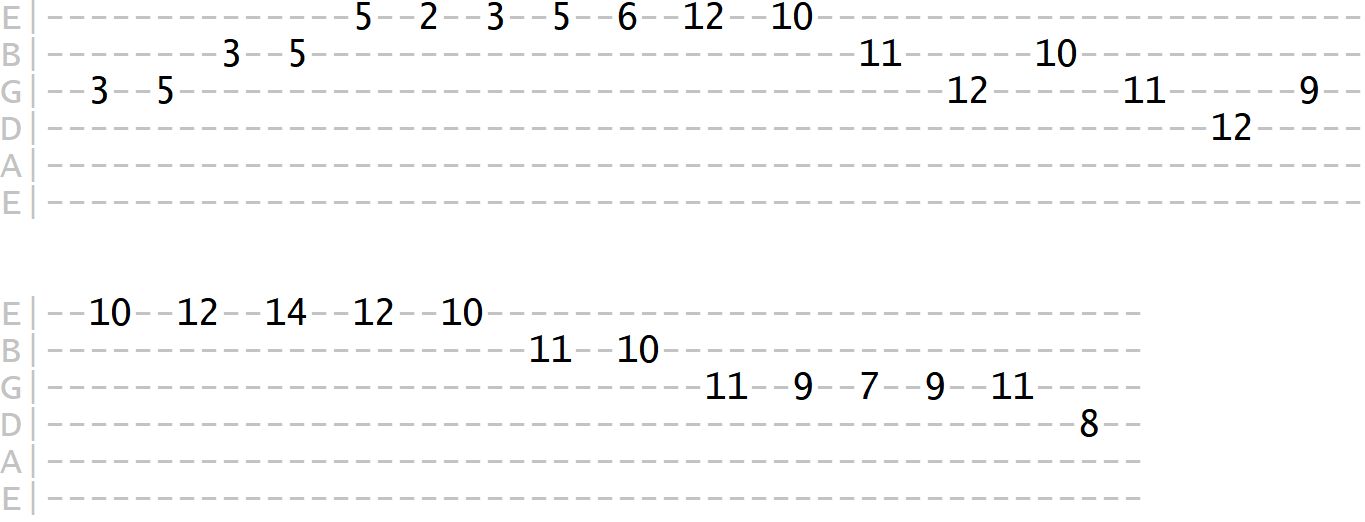
Example
C7 Track
Inversely, you could also see the melodic minor scale as starting on the 5th of Lydian Dominant. Either way, once you know melodic minor's roadmap and patterns, you'll automatically have Lydian Dominant covered!
Mixolydian ♭6
Similarly, we could use a melodic minor pattern to play its 5th mode, Mixolydian ♭6, a more tense alternative to regular Mixolydian over dominant chords.
As its the 5th mode, it starts on the 5th degree of its parent melodic minor...

Therefore to play D Mixolydian ♭6, we'd use a G melodic minor pattern...
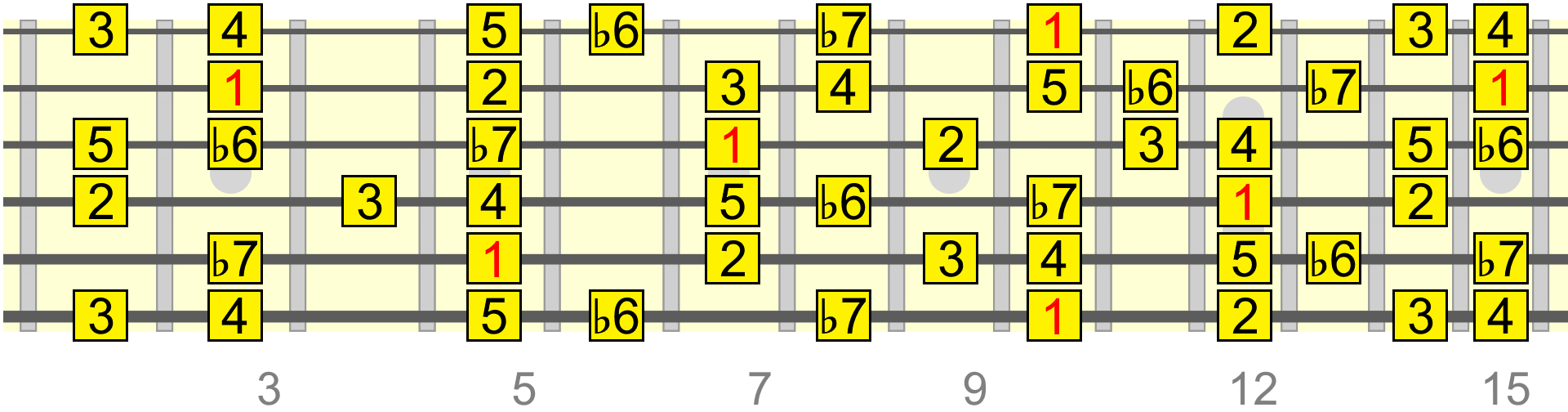
Here I'm playing it over D7...
Example
D7 Track
Tip: The run above was almost the same as earlier (over Gm). The only difference is I landed on D, reaffirming the D7 root. Same melodic minor pattern, different context!
Altered Scale
The 7th mode, commonly known as the Altered Scale, which is especially important in jazz music because of how it colours altered dominant chords (these are tense sounding dominant 7th based chords that typically include a flat 5th, flat or sharp 9th and/or flat 13th).
An easy way to remember where to position melodic minor for the altered scale is one half step or fret up from the chord root you're playing over...

Therefore to play F♯ Altered, we'd use a G Melodic Minor pattern...
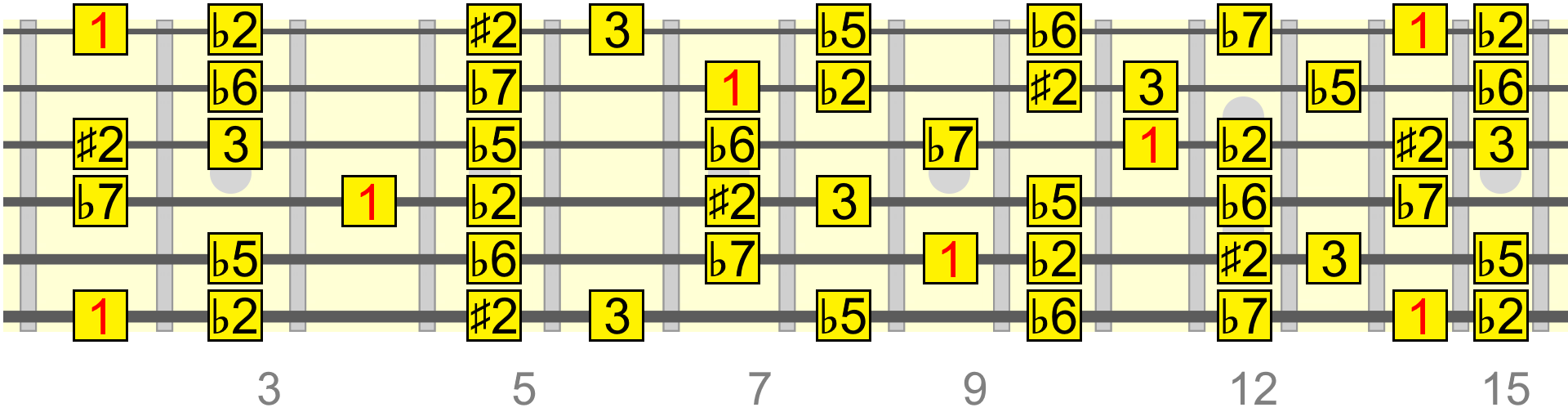
Here I'm playing over F♯7♭13...
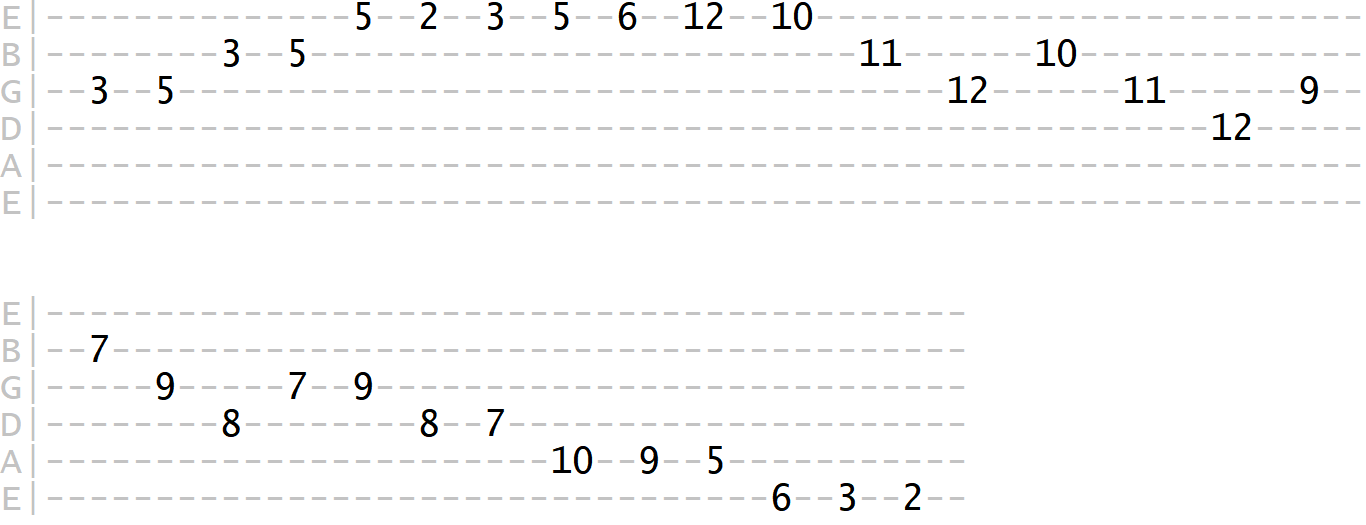
Example
F♯♭13 Track
Side note: The Altered scale is a strange one! It functions over augmented and altered dominant chords, typically in the 5 (V) position of a key, before resolving to the tonic. In order for it to work, it has to be compatible with the backing chord. We'll look more at this scale in more detail in its own lesson.
Melodic Minor Harmony
Finally, let's look at how harmony is formed from melodic minor, also known as scale harmonisation, starting with chords.
Like the major scale and harmonic minor, melodic minor forms seven triads, each rooted on a degree of the scale. These can also be made into 7th chords...

Tonic (I)
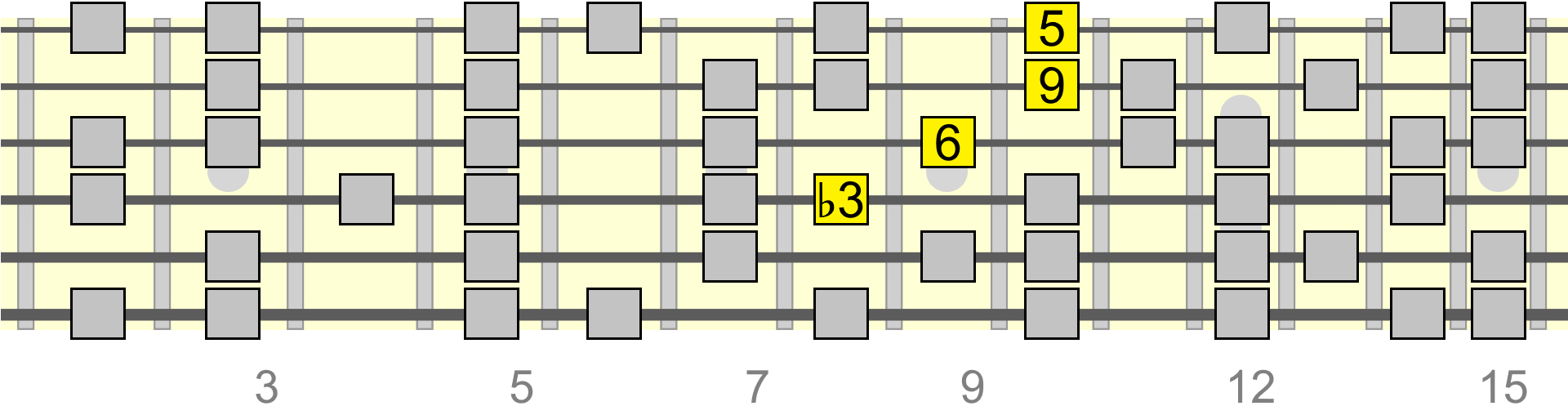
We established earlier that the tonic triad of the scale, that is the chord built on its first degree, is minor. Therefore G minor would be the tonic or 1 chord of G melodic minor, for example...
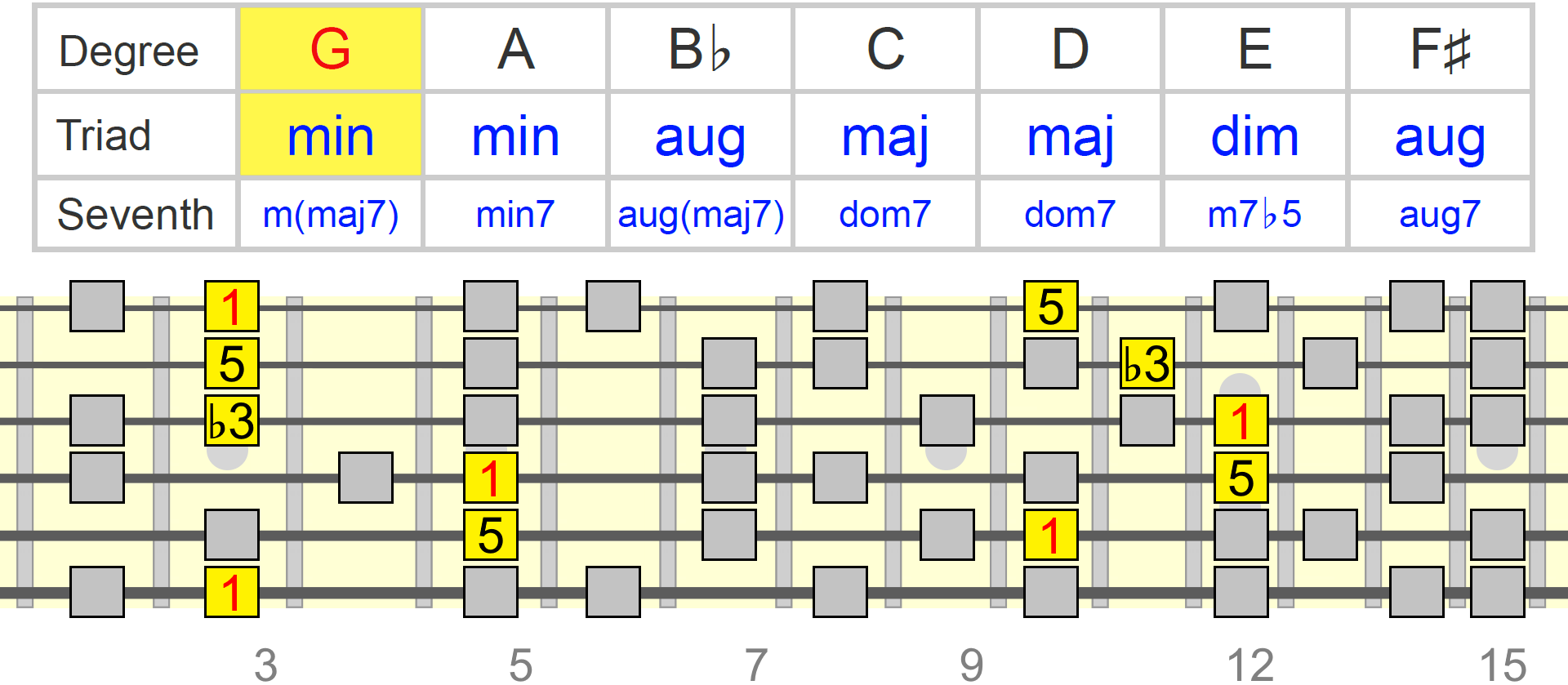
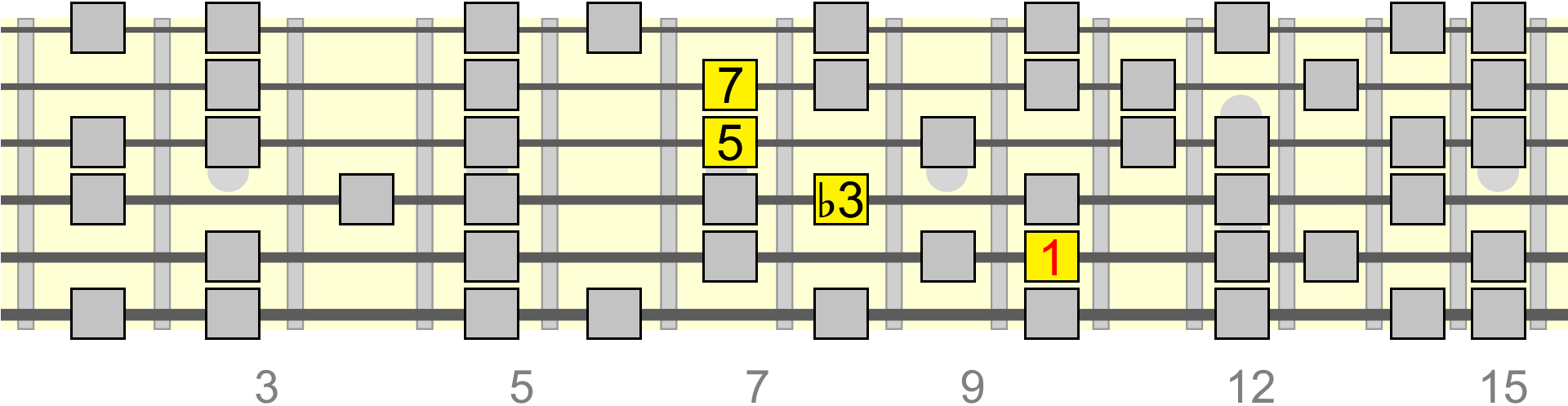
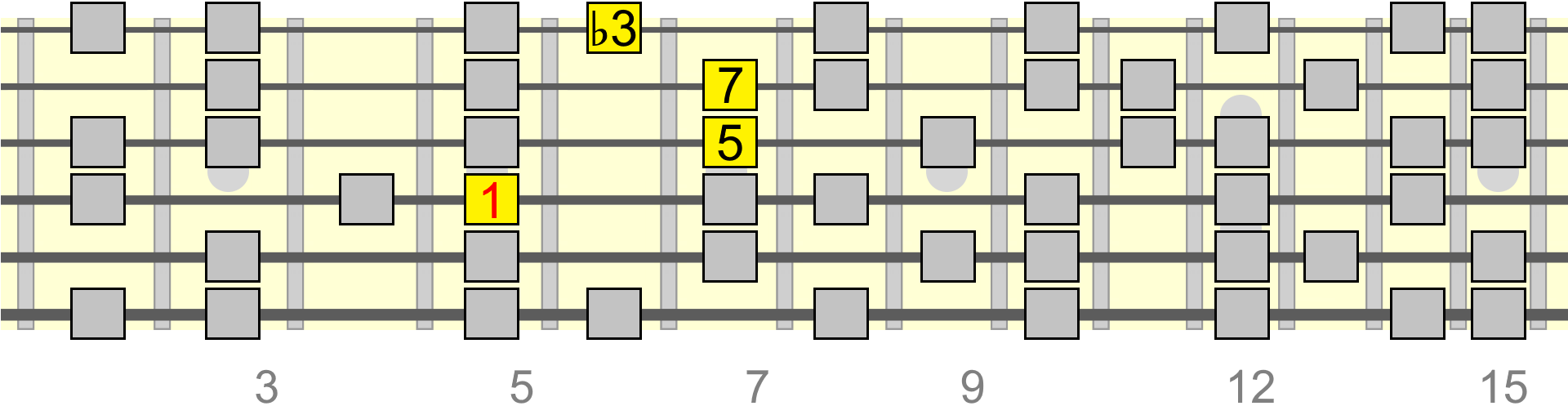
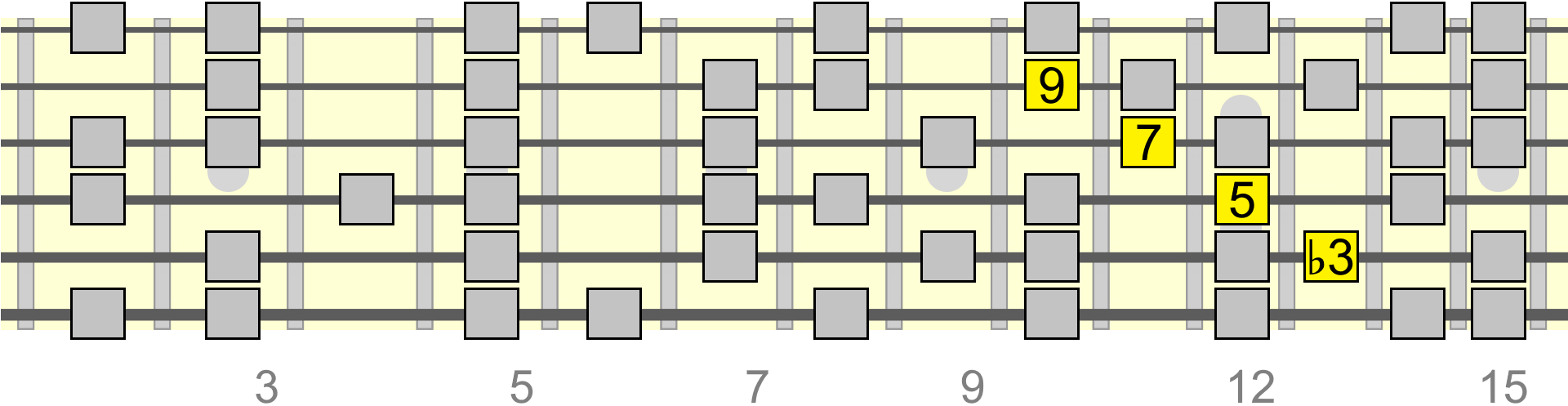
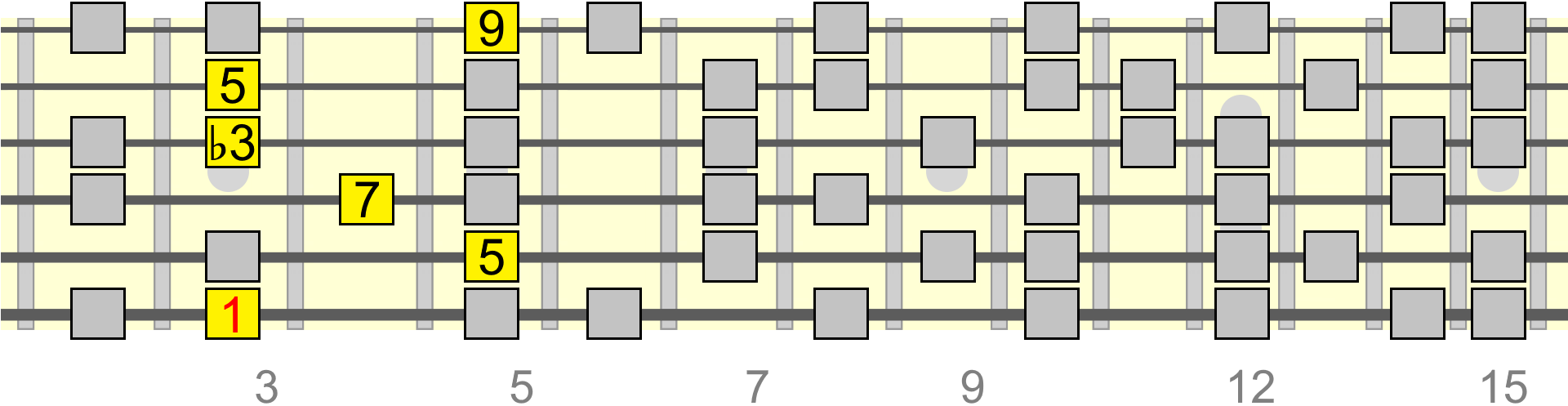
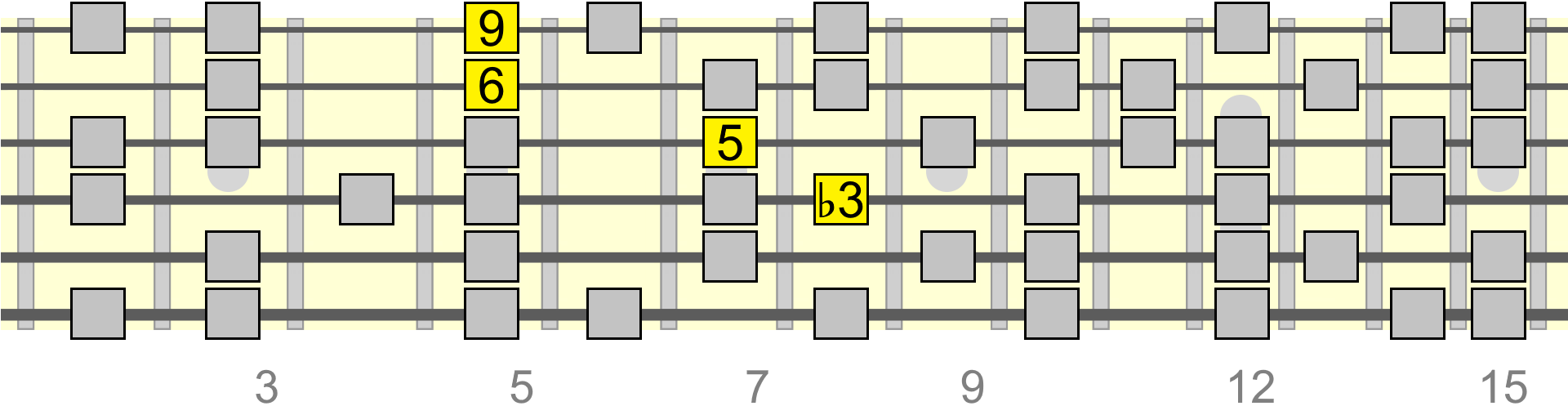
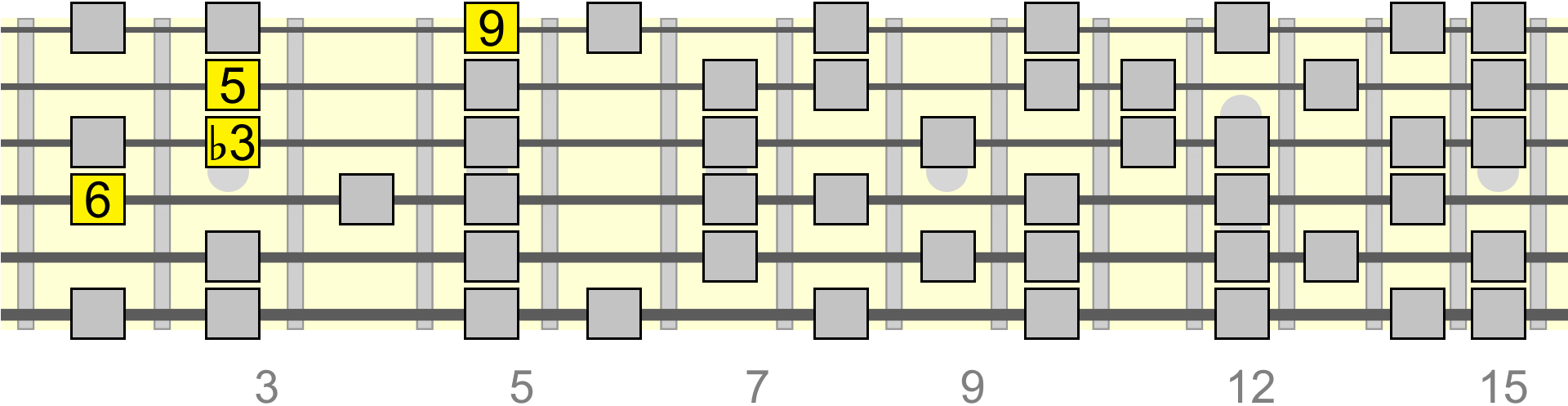
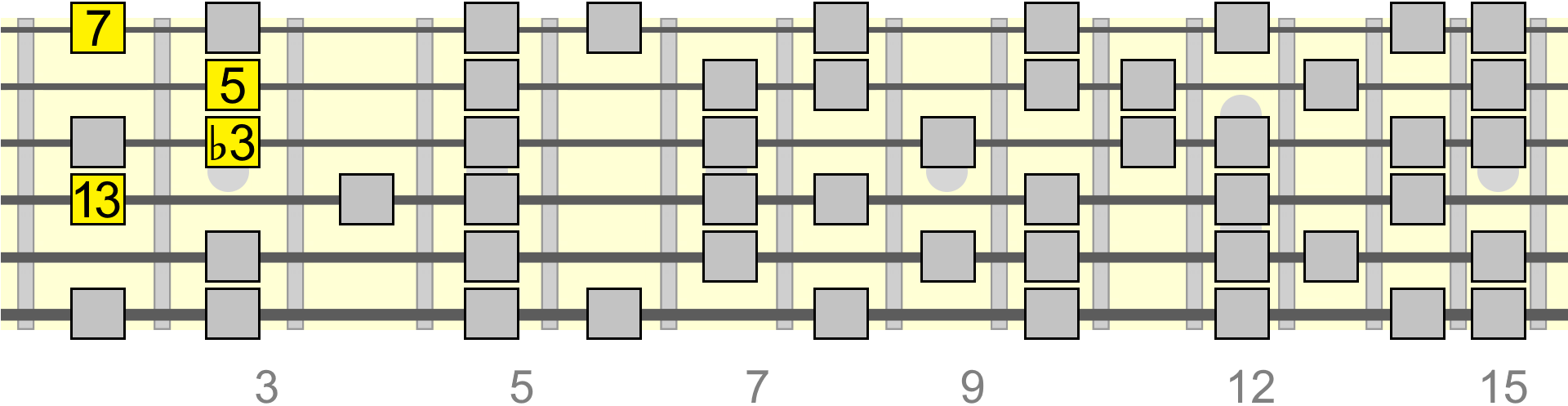
But we can also form more complex minor chords from melodic minor's tones.
Here I'm playing some different minor based forms from the scale on the tonic position...

Subdominant (IV)
A common movement is to the 4 chord. In G melodic minor, that would be C major in its triad form, and C dominant 7 (C7) in its seventh form.

But again, let's explore some additional colours on this 4 position using the scale's tones...
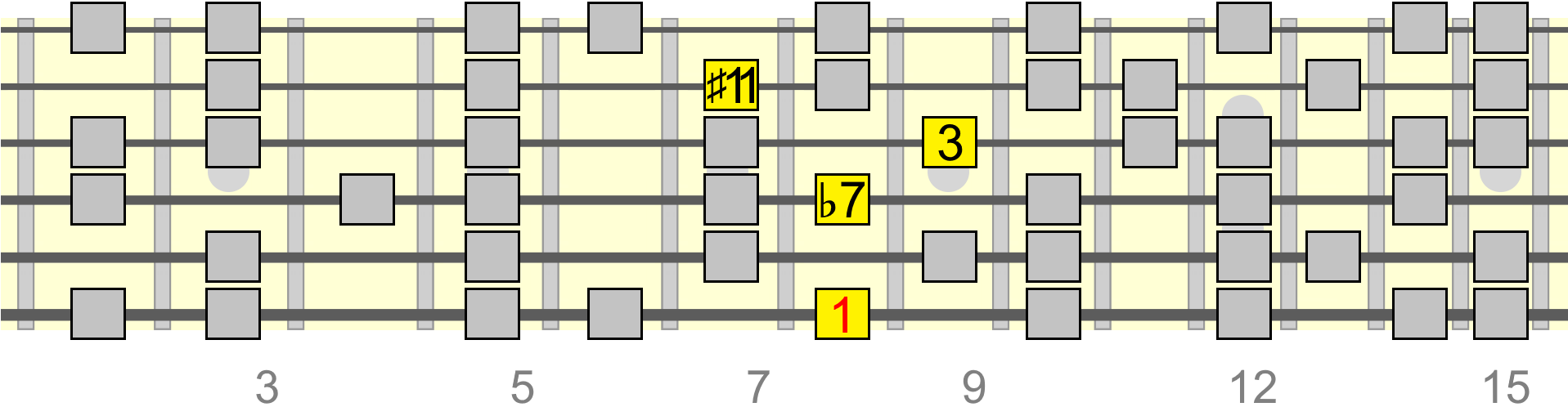
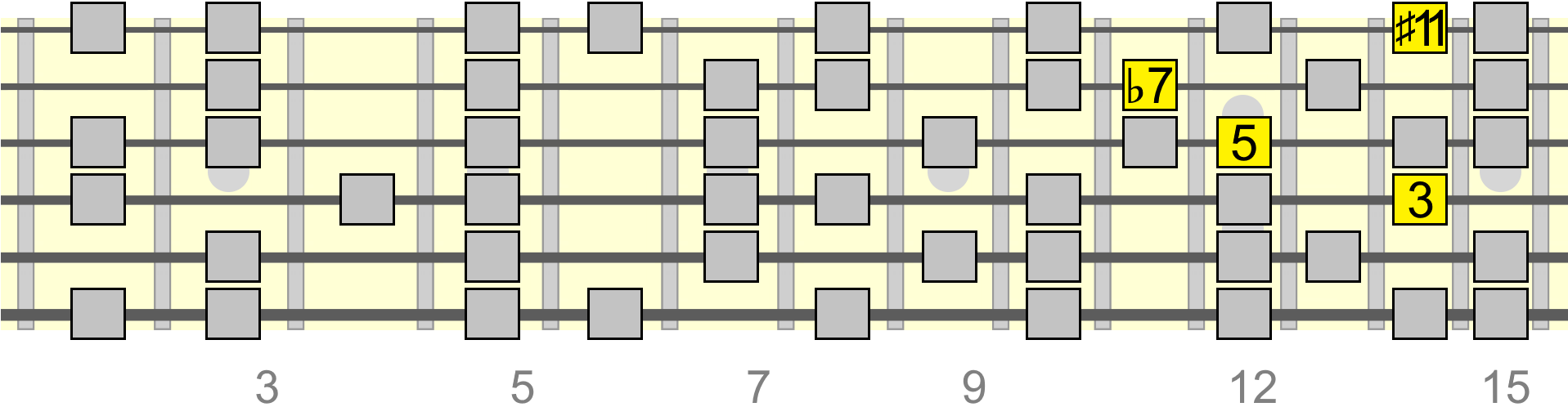
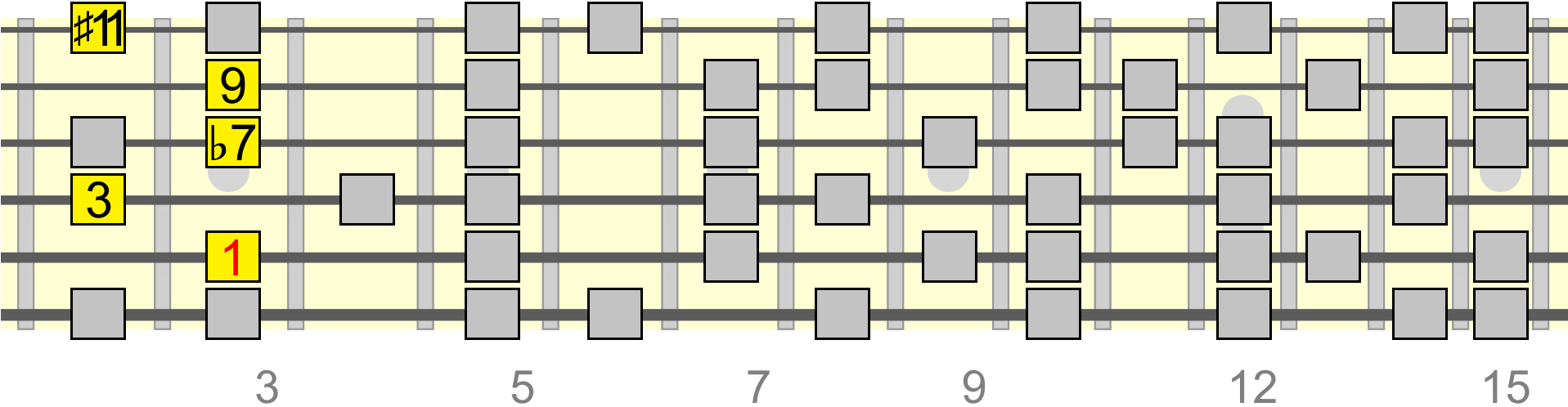
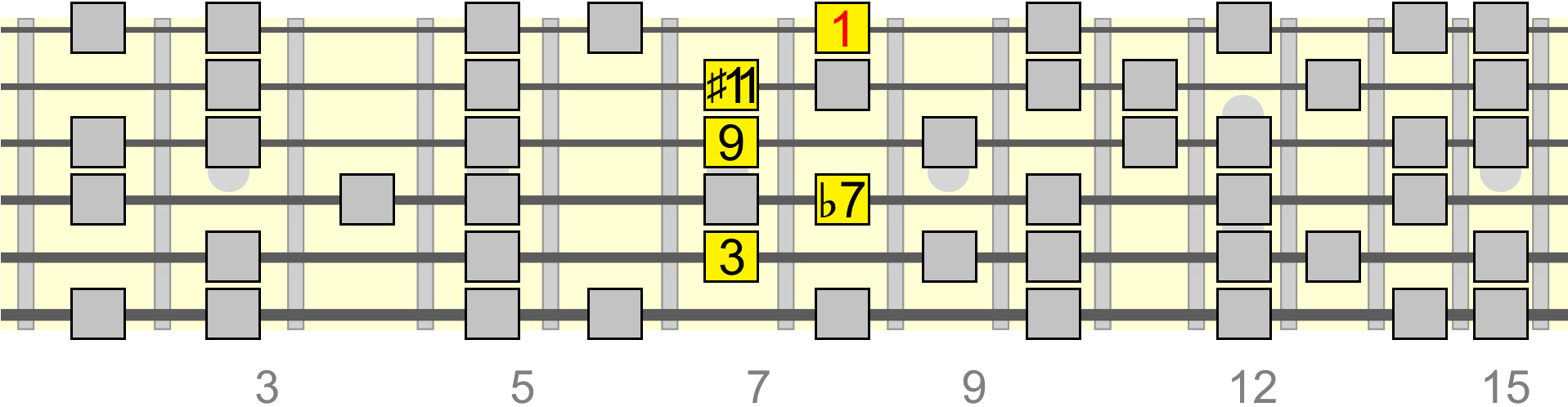
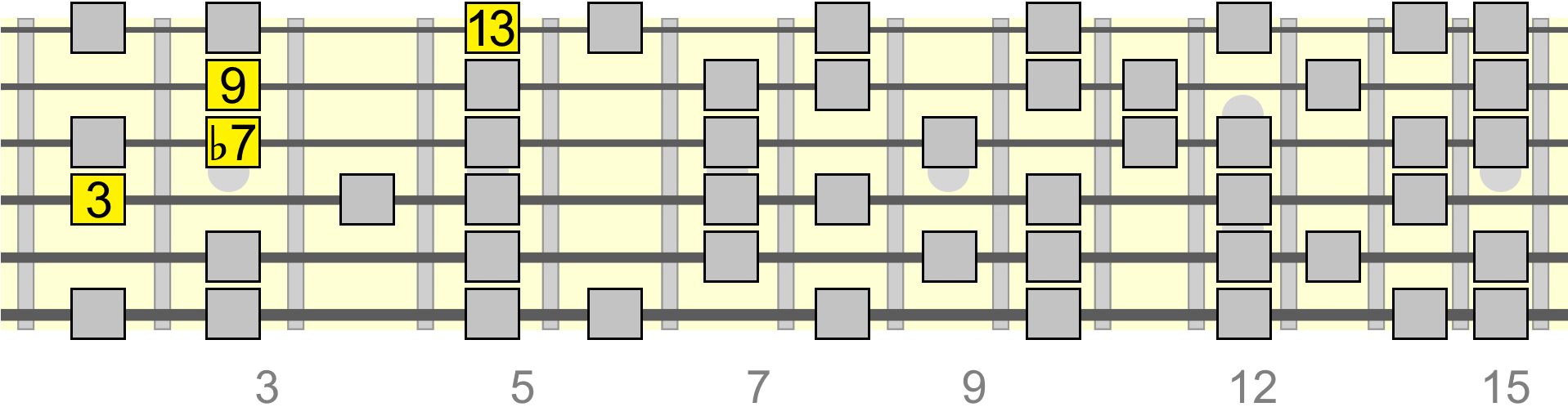
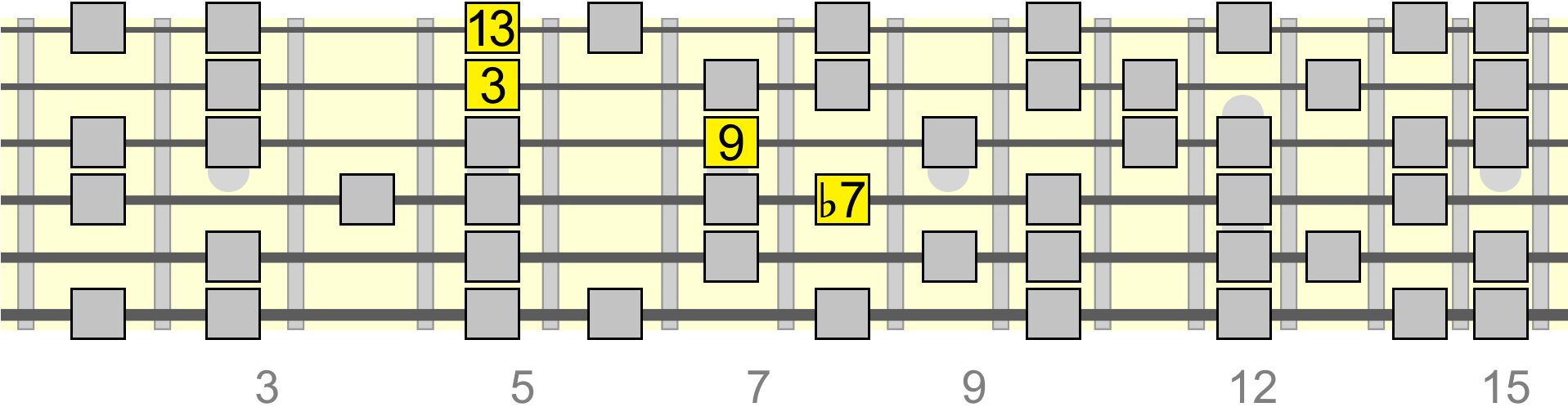
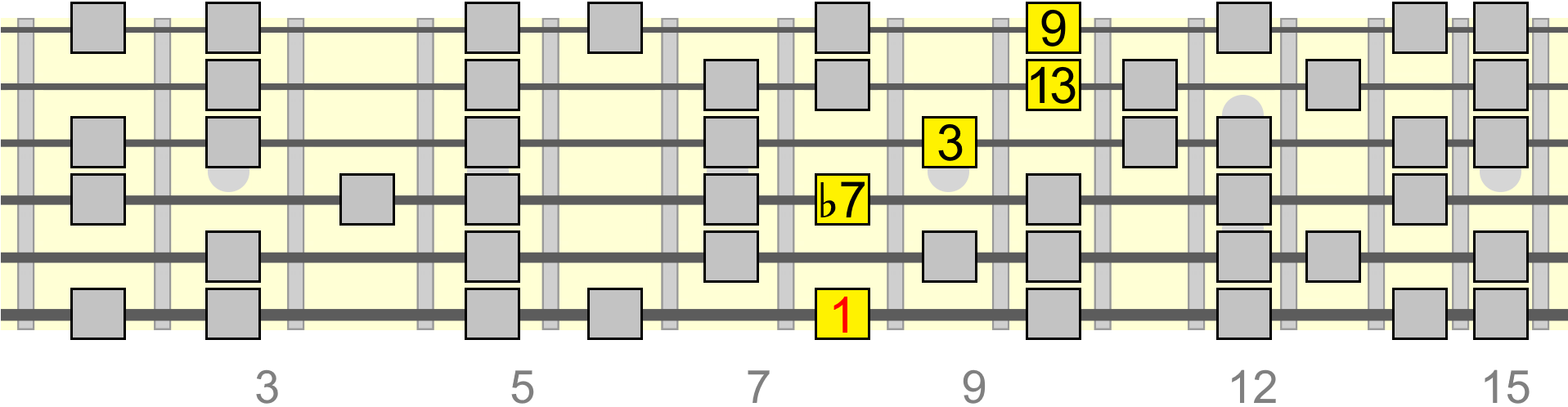
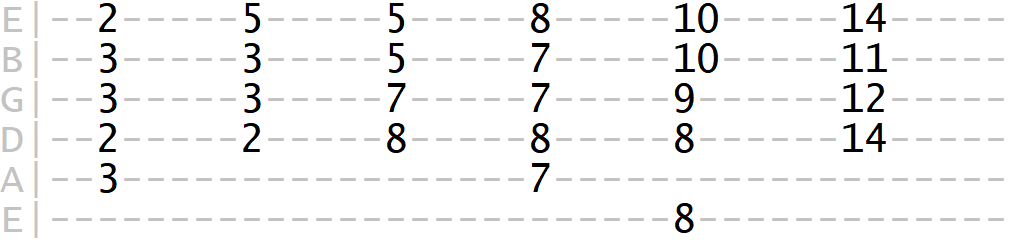
Let's try a simple movement between the 1 and 4 chords using G melodic minor. This is a good initial movement to train your ears to, especially for those interested in jazz harmony...
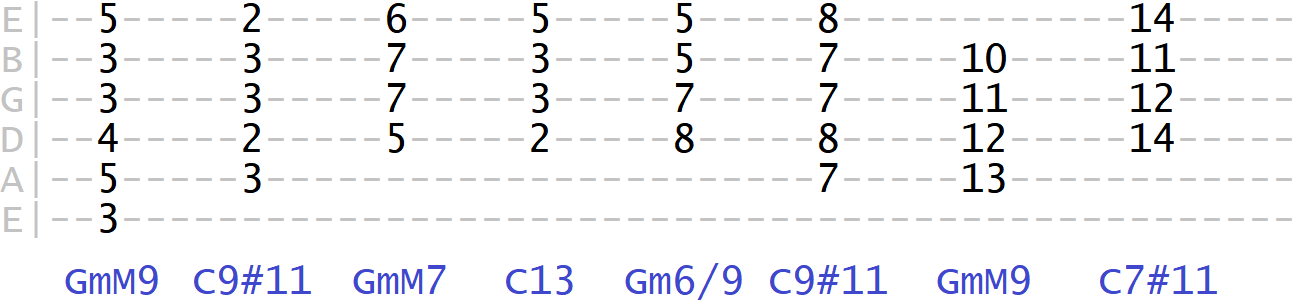
Example (with lead)
Gm / C7 Track
IV and V In Blues
Now, focusing on the seventh chords from the scale, you'll notice we get a dominant 7th chord on both the 4 and 5 positions...

And we can extend these to dominant 9th chords as demonstrated here, again in the key of G (taken from G melodic minor)...
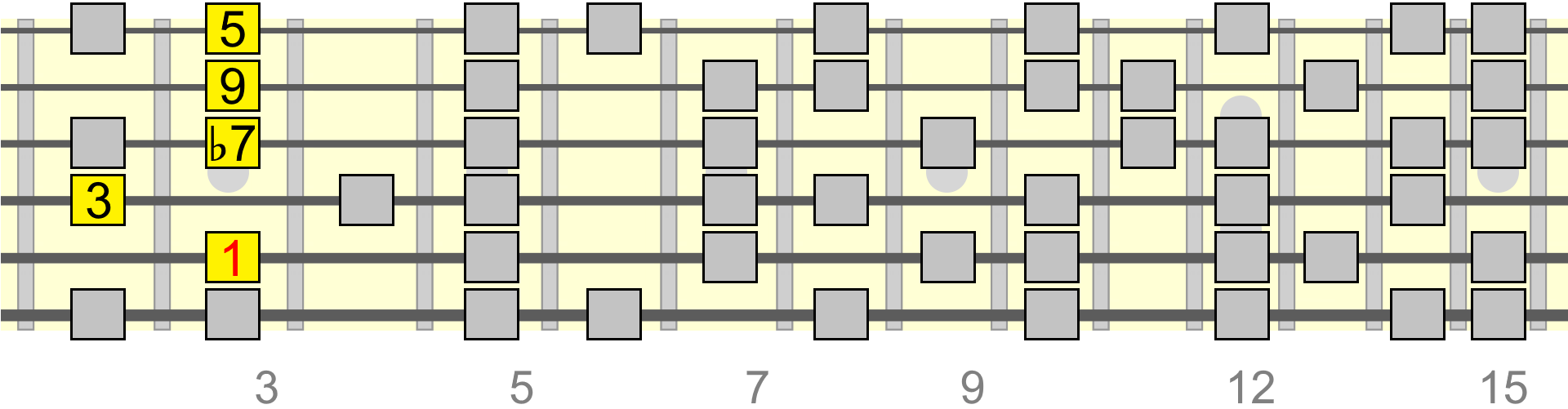
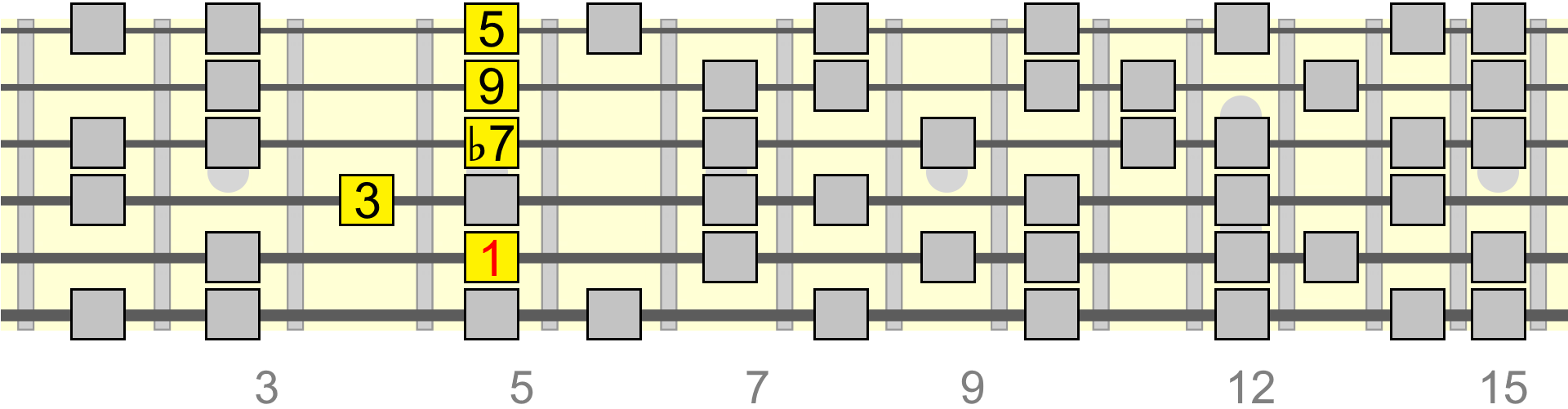
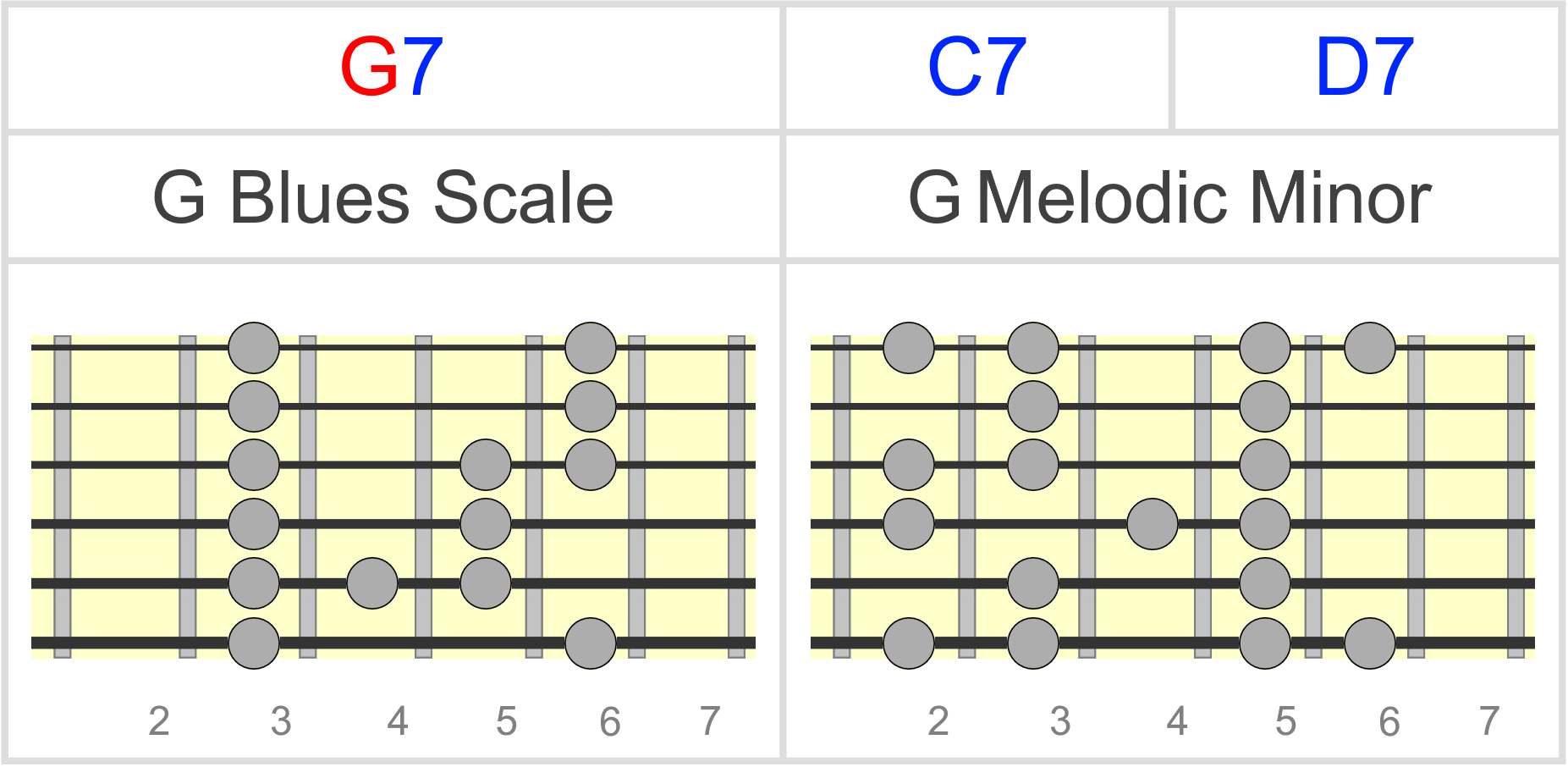
You're probably familiar with this IV / V, dominant 7th/9th relationship in a blues context. Therefore melodic minor offers us a nice alternative to the standard minor pentatonic and blues scale over the 4 and 5 chords. In this example we'd switch to G melodic minor over C7 and D7...
Three-Part Harmony
As well as block chords, we can use our melodic minor roadmap to create flows of harmony that highlight the scale's unique colour. All I'm doing in this example is using the top three strings of our roadmap for a three-part harmony over G minor (along with its 4 and 5 chords, C7 and D7)...
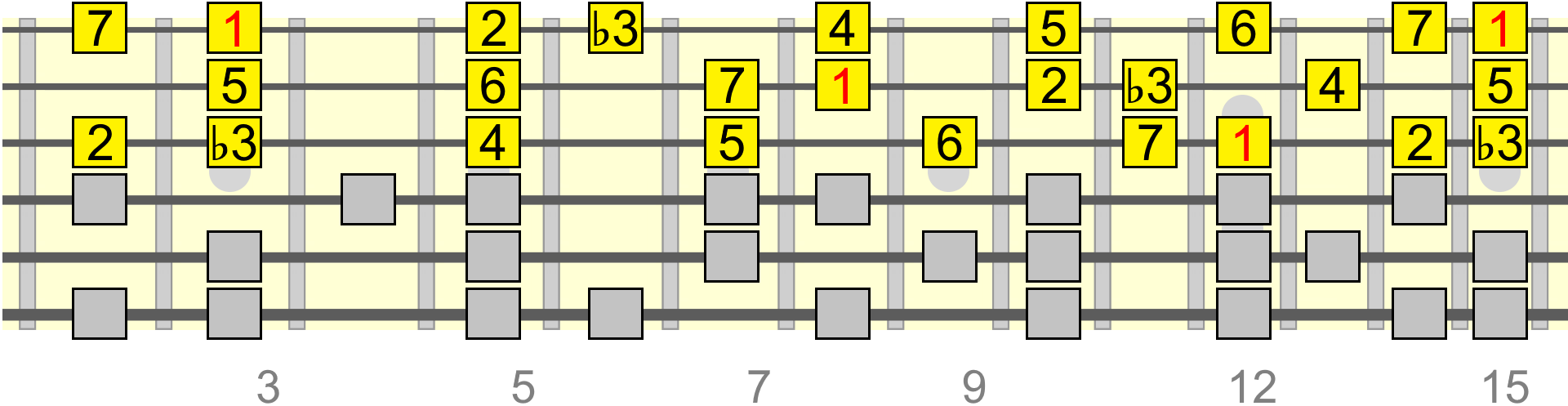
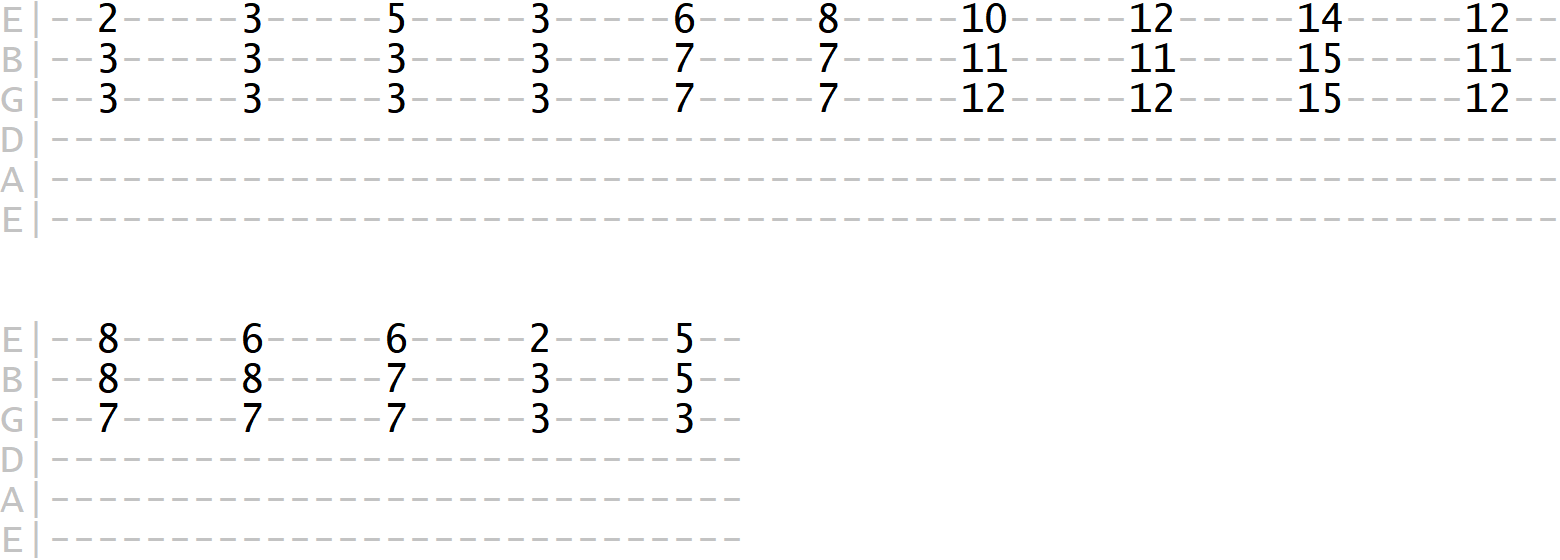
So when exploring scales, think about using the roadmap to create two-part (dyads) and three-part harmonies, as well as single-part melodies.
In Summary...
Melodic minor gives us both a melodic and harmonic system for accompanying minor chords and keys, plus three related modes (built on melodic minor's 4th, 5th and 7th degrees) for use over dominant 7th chords.
Start by getting familiar with melodic minor's sound and patterns over single chord tracks (which I provided earlier on this page). You can then start to explore it through compatible chord changes.
Enjoy your exploration of this wonderful scale and thank you for your time!