Arpeggios in Scales
Every scale you'll learn contains a related chord type, and therefore a related arpeggio, because...
Where there's a chord, there's an arpeggio (and vice versa)!
For example, the major scale (and major pentatonic) contains the tones 1 3 5 - a major triad. This can function as a major arpeggio.
The natural minor scale (and minor pentatonic) contains the tones 1 ♭3 5 - a minor triad. This can function as a minor arpeggio.
The general concept is to combine regular scale movements (horizontal
melody) with arpeggios (vertical melody). Moving around the scale like
this will keep it connected to the backing chords. It's an easy way of
keeping your solos sounding natural and melodic.
Major Scale Arpeggios
Most popular major key songs use chords that can be pulled from the major scale.
When we harmonise the major scale on each of its degrees (1 - 7), we get seven chords. This means we can pull seven related arpeggios from a given major scale pattern.
When the chord changes, we change which arpeggio we use from the scale. We just have to learn to correspond the chord changes with the correct arpeggios. This is a great way of connecting your solo to the chord changes.
Starting with the I or tonic chord, we have a major arpeggio (1 3 5) that we can visualise within a major scale pattern.
Below, I'm using a
two-position pattern that will allow us to span a good neck range.
Start by positioning the root (1)
on A
(so, A major - the key of the backing tracks below) and later you can
test your knowledge in other keys/positions.
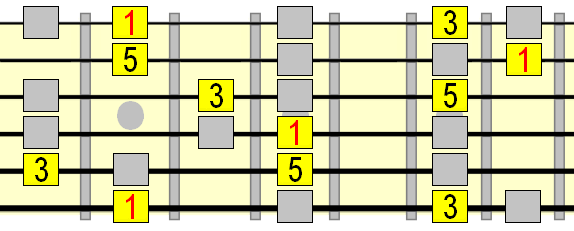
So this is our I
chord. Use the A
major track below to practice moving between arpeggio and scale
phrases...
On to the ii chord, to which we can relate a minor arpeggio (1 ♭3 5)...
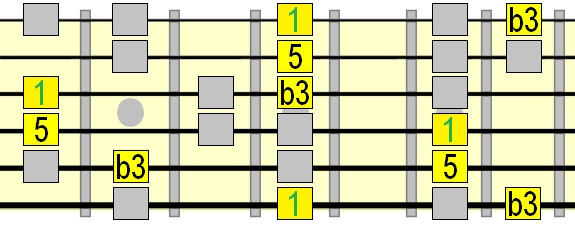
Now try changing from B
minor (ii)
to A
major (I)
using the track below. Start with some basic arpeggios for each chord
and then gradually build on the changes, linking the arpeggios with
scale movements...
iii
chord (minor)...
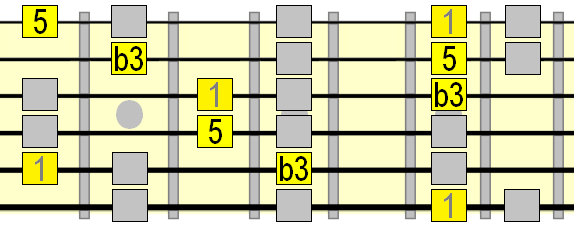
Try changing from A major to C♯ minor (iii) using the track below...
IV
chord (major)
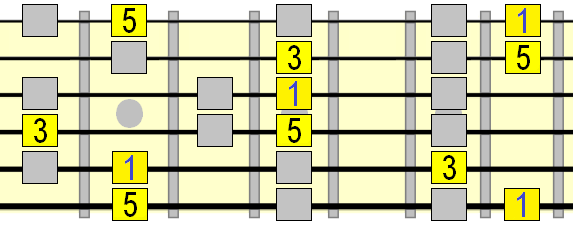
Try changing from D
major (IV)
to A major using the track below...
V
chord (major)
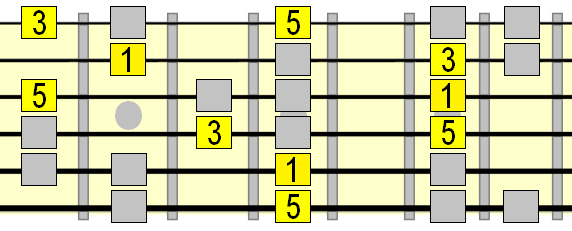
Try changing from E
major (V)
to A major using the track below...
vi
chord (minor)
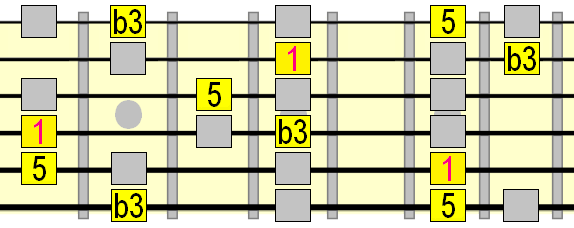
Try changing from A major to F♯ minor (vi) using the track below...
We'll leave out the 7th chord for now (diminished), because it's rarely used.
Natural Minor Scale Arpeggios
On to our most common minor key scale, containing seven common minor key chords. We'll stick with our A root and let's see how the arpeggios form around its seven chords...
Tonic (minor - 1 ♭3 5)
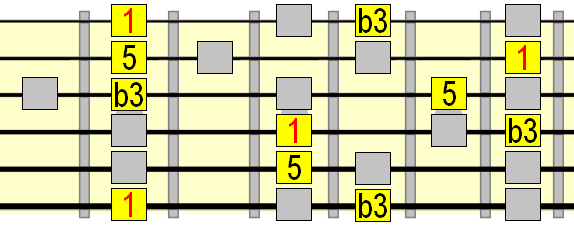
Just like with the major scale exercises, memorise this tonic pattern
so you can change between it and the other chords in the scale...
ii chord (diminished - 1 ♭3 ♭5)
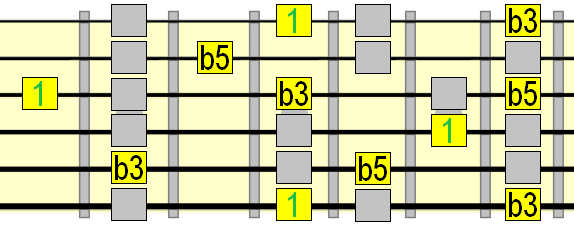
Try changing between A minor (i) and B diminished (ii°)...
III
chord (major)
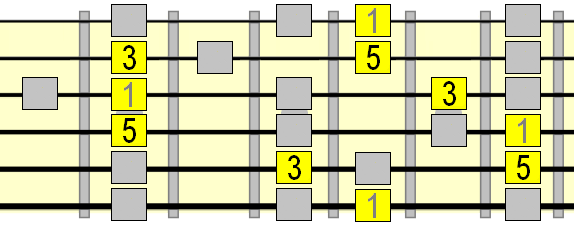
Try changing between A
minor (i)
and C
major (III)...
iv
chord (minor)
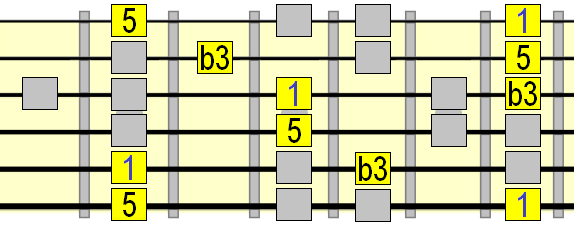
Try changing between A
minor (i)
and D
minor (iv)...
v chord
(minor)
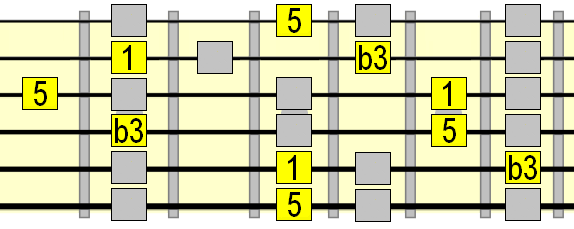
Try changing between A
minor (i)
and E
minor (v)...
VI
chord (major)
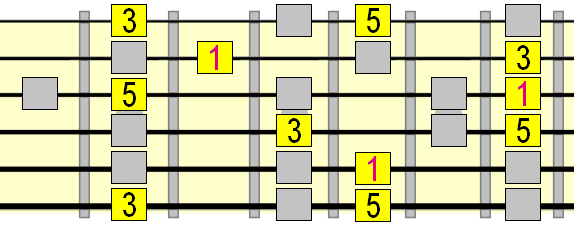
Try changing between F
major (VI)
and A
minor (i). So we're starting away from the tonic on this one...
VII
chord (major)
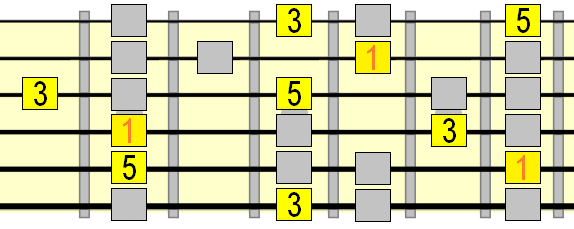
Try changing between A
minor (i)
and G
major (VII)...
Once
you're comfortable with playing through two-chord changes
like in
the above tracks, test your skills using faster, more complex tracks,
such as this rock backing
tracks compilation.
Look for Arpeggios in Other Scales You Learn...
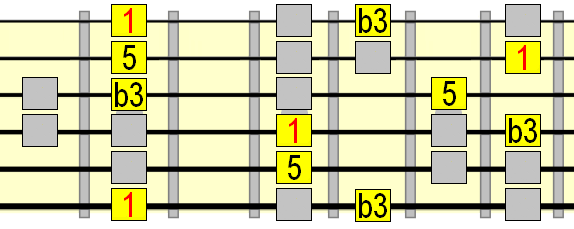
Sometimes we might use a single scale over a single chord. The same concept applies to visualising the related arpeggio within that scale and using it as the "skeleton" structure of your melody.
Minor pentatonic with the ♭5 "blue note" (minor arp)...
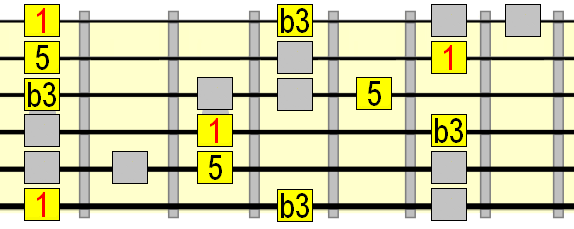
Dorian (minor arp)...
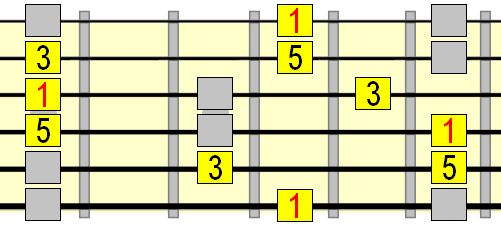
Major pentatonic (major arp)
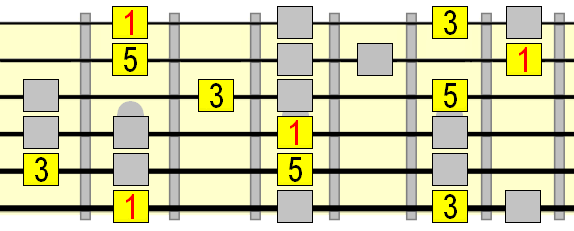
Mixolydian (major arp)...
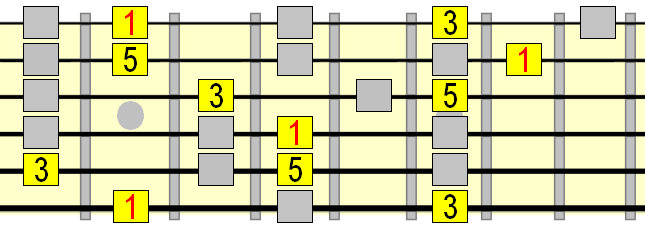
Lydian (major arp)...
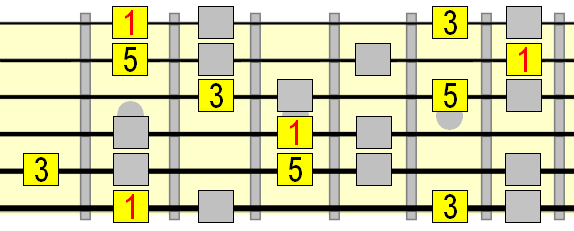
Phrygian dominant (major arp)...
Additional Tips for Using Arpeggios in Solos
So you can see how learning these arpeggio patterns in the context of the scales you play can help to structure the phrasing around that scale.
You can also embellish these arpeggios to include additional tones from the related scale, including 7th arpeggios.
When trying out different arpeggio movements, you can try different sequences, for example...
Try starting on different tones of the arpeggio - e.g. 1 3 5, 3 5 1, 5 1 3.
Instead of a straight 1 3 5 sequence, try a staggered 3 1 3 5 3 5... and then move into your scale phrase.
Place the arpeggio at the start, end and/or in the middle of your scale phrases.
Learn about the different techniques you can use to play arpeggios, from legato to sweep picking.
The general idea is to inject these vertical melodic passages into your scale phrases, whether as lead-ins, lead-outs or as bridges between phrases and licks (these three methods were covered in the video).
Keep experimenting with adding arpeggios to your lead lines and
wrapping scale phrases around arpeggios in different ways. Once you can
play through the chord tracks from this lesson, try testing your
knowledge over some simple three and four
chord backing tracks.