The 4th Over Major - A Functional Dissonance
The 4th (full name "perfect fourth") is an interval that can be heard in many scales and chords.
But when connected specifically to major chords, a lot of people hear dissonance, or that something isn't quite resolved. This is because the 4th exists a half step/semitone up from a crucial chord tone in our major triad - the major 3rd (3).
This creates a discordant or clashing sound that, in most situations, isn't very pleasing to the ears!
Hear the 4th being held over a major chord...
End a phrase on the 4th over a major chord, i.e. use the 4th as a target tone, and you can hear this dissonance more prominently...
Yet its role in music is as functional as any other interval and, when used in certain ways, it can introduce a unique colour and feel to our melodies and harmonies.
So how do we deal with it musically?
The 4th In Relation To The Major Triad
First, let's familiarise ourselves with where this 4th interval appears in relation to the major triad, here shown in C...
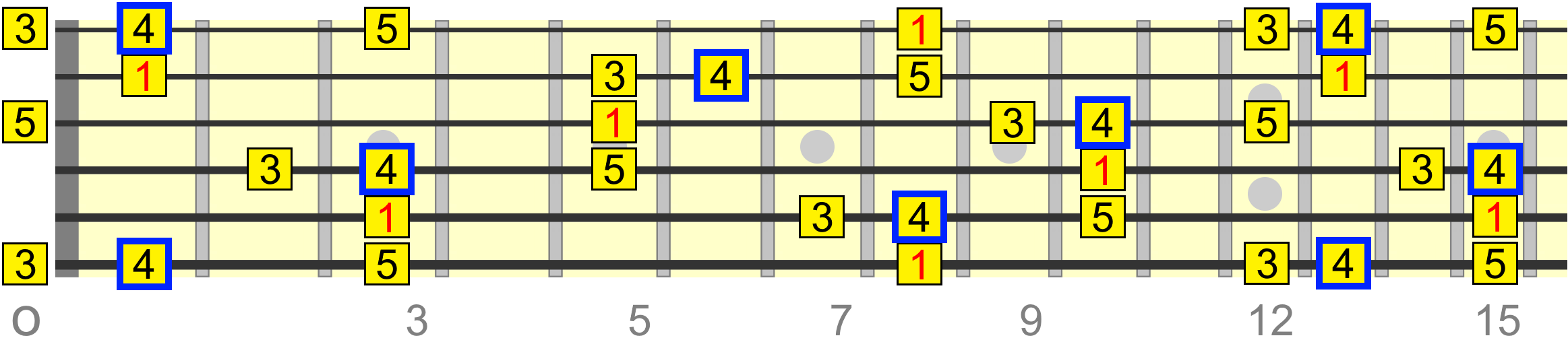
So as you can see, the 4th always exists just above the major 3rd - one fret up.
As we'll discover later, any major triad we might play over/with in a progression can involve the 4th. But knowing it's always right there, just above the 3 of the chord, will prove helpful.
The Function Of The 4th
The 4th naturally wants to go somewhere. In other words, its dissonance seeks consonance. Depending on the direction in which your melody is flowing, its two closest neighbours, the major 3rd and 5th, are where it will most often end up moving.
This makes the 4th primarily what is known as a passing tone. In other words, a tone we pass through in a phrase or sequence, rather than emphasise or hold on to it as a target for our phrases (such as with the more stable root, 3rd or 5th).
A good place to begin training your ears to the 4th's function, is to resolve it down to the 3, as follows...
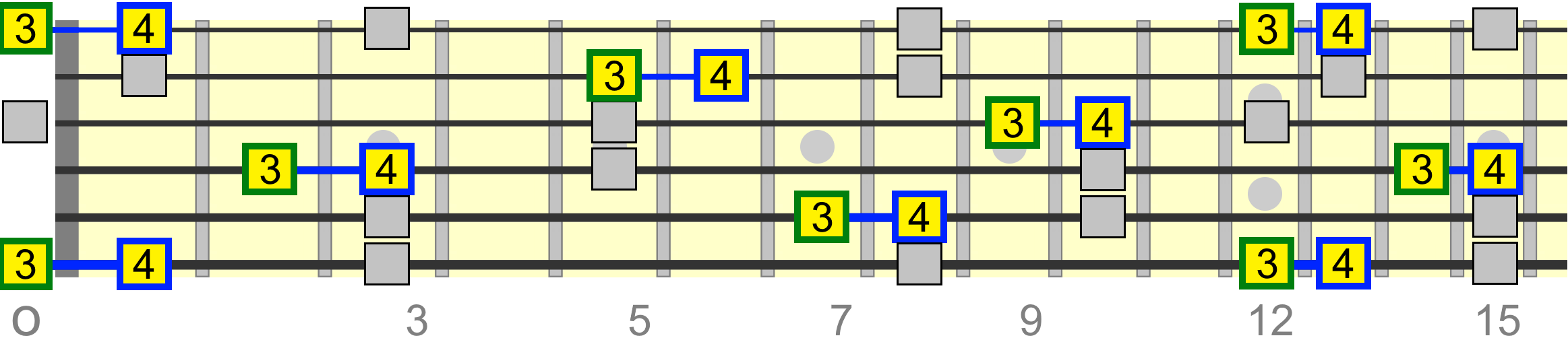
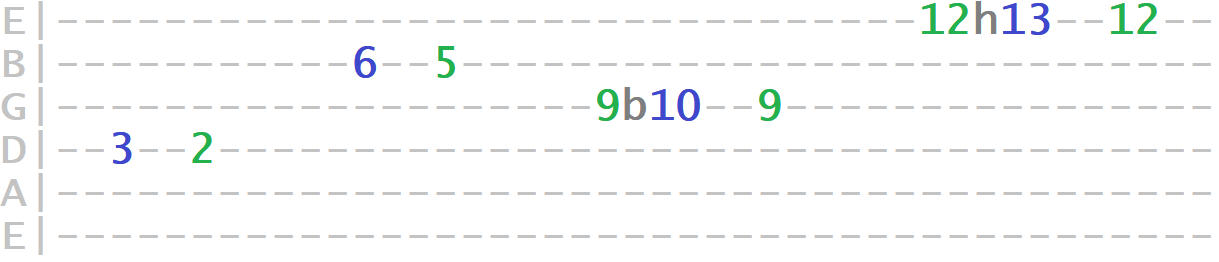
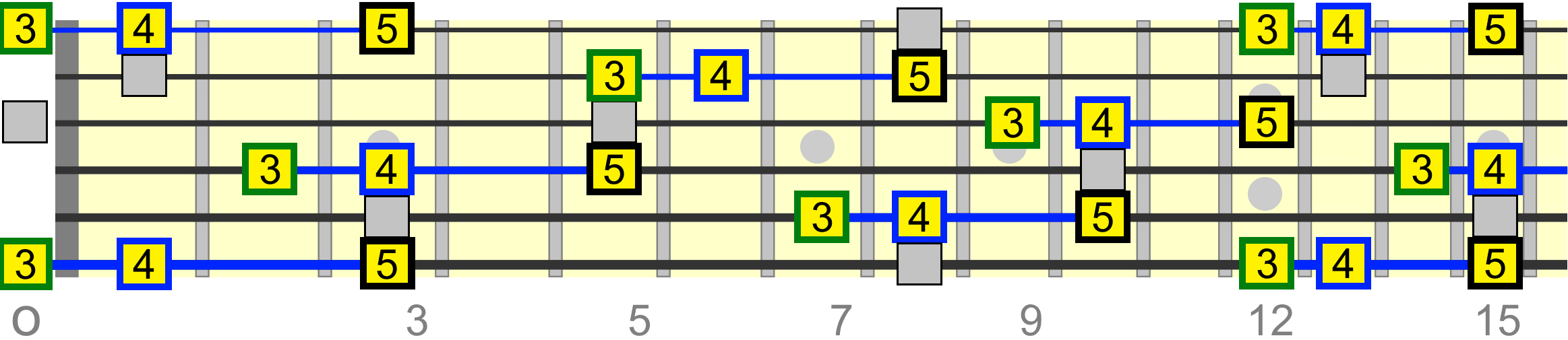
We could also resolve the 4 up to the 5. Typically, we'd precede the 4 with the 3 when we do this, creating a 4th bridge...

Now let's try resolving to the 3, again via the 4, from other tones that are found in various scales, building on our phrases...

Tip: These simpler phrases are a good opportunity to work on techniques such as vibrato, bending, legato (hammer-ons/pull-offs) and slides. See how much expression and feeling you can squeeze out of simple, three/four note phrases. We'll specifically look more at string bending shortly.
Arpeggio Embellishment Using The 4th
We can add the 4 to any of our major-based arpeggios, ascending or descending. Starting with our basic major arpeggio (1, 3, 4, 5)...
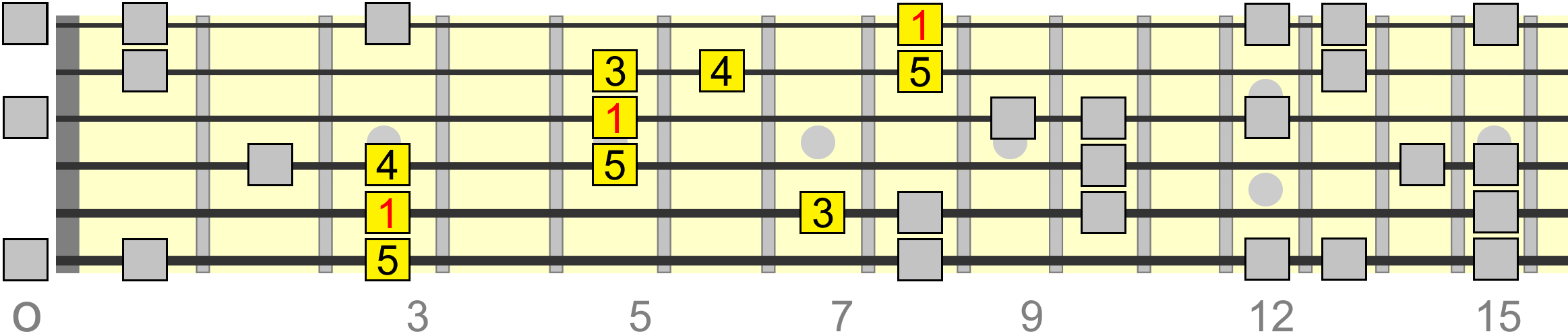
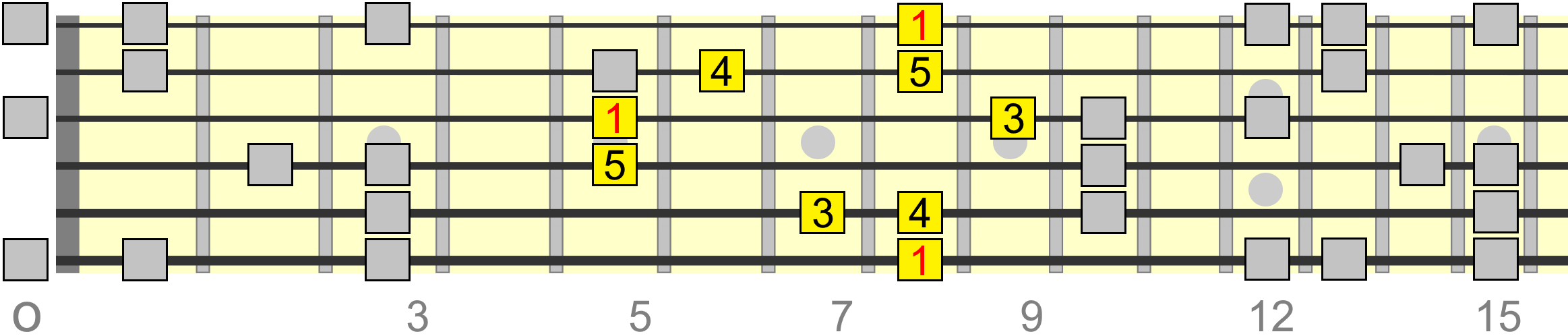
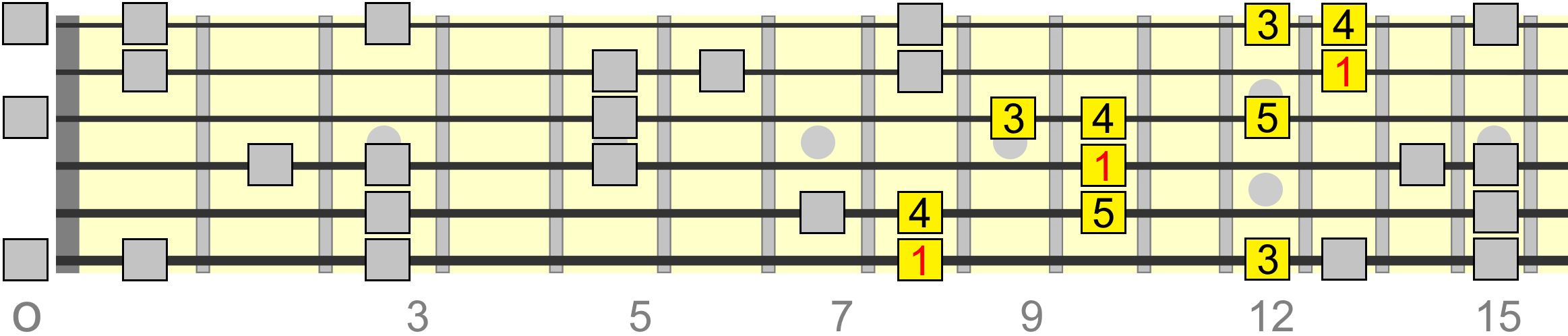
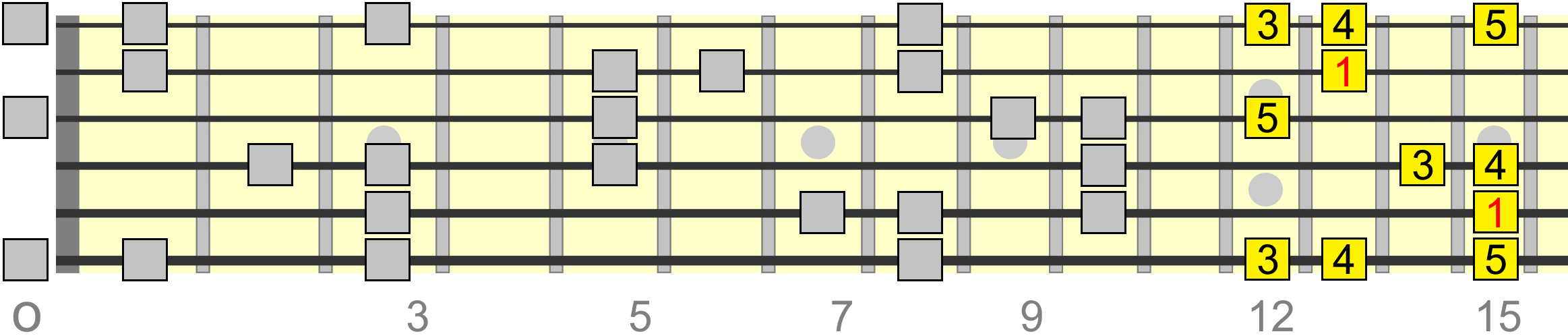
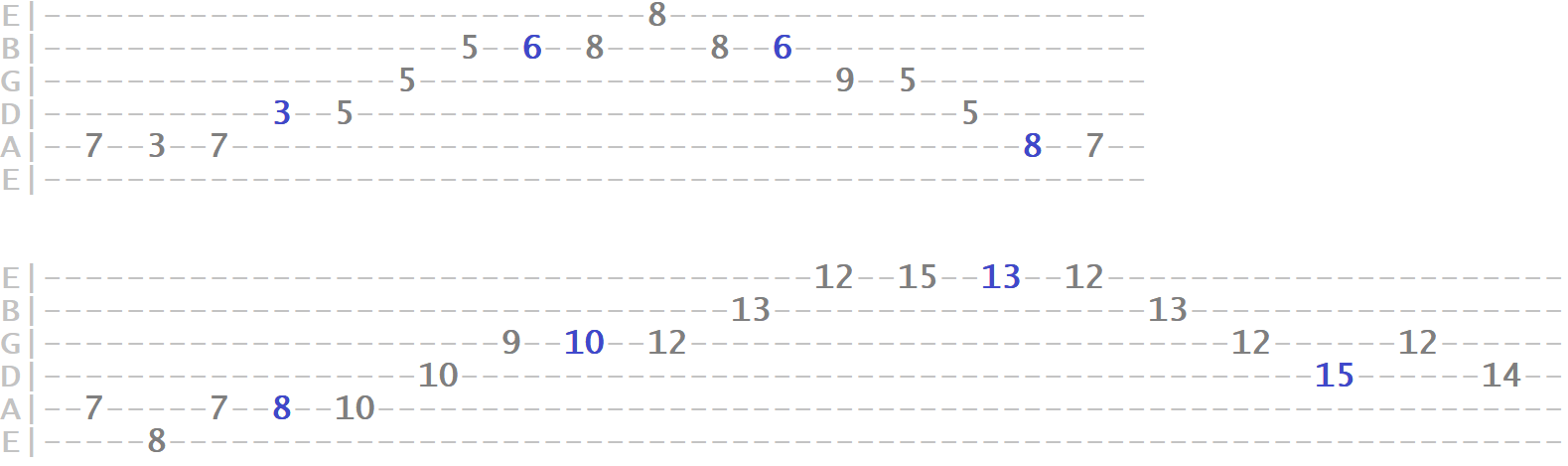
Tip: You don't have to play the entire pattern, from the lowest to highest string (or vice versa). You can break them up into smaller, two or three string segments. For example, just playing the top three strings from each pattern.
Adding the 4 to a major 7th arpeggio (e.g. Cmaj7 - 1, 3, 4, 5, 7)...
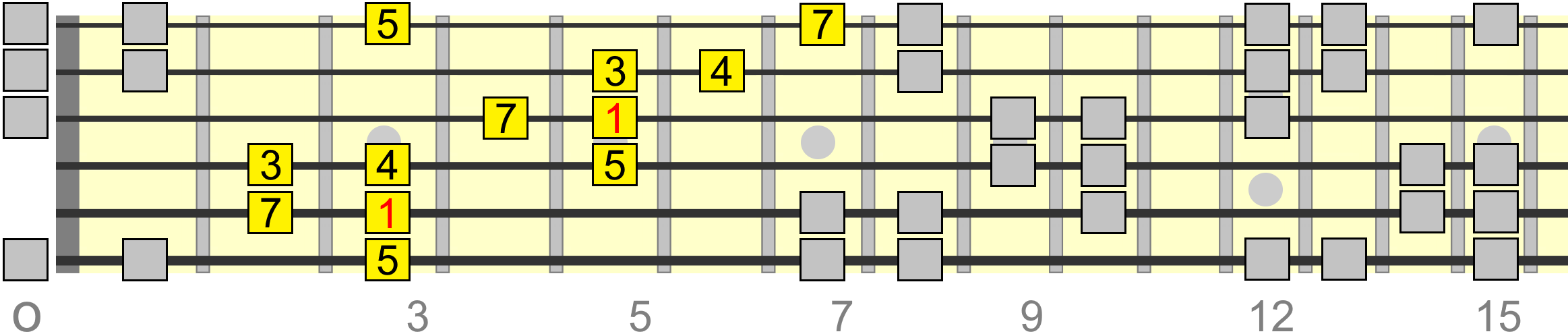
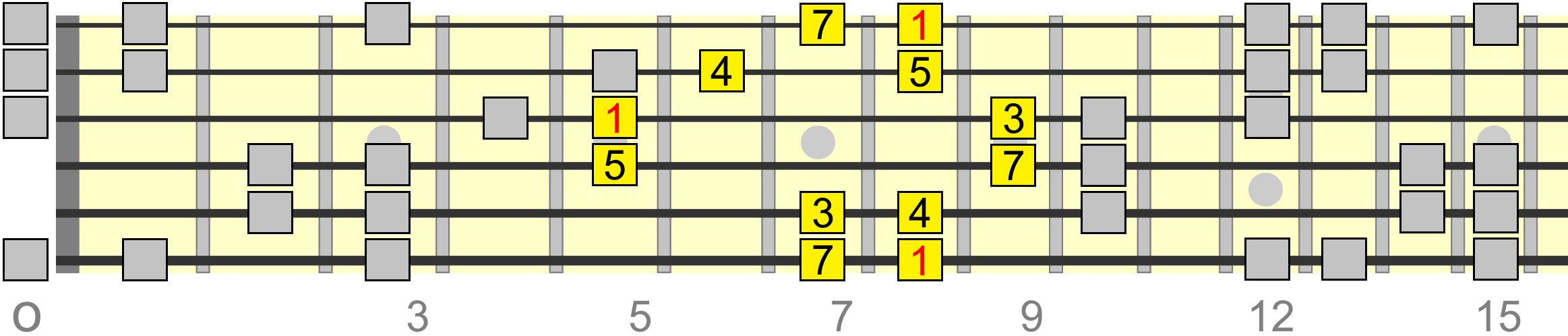
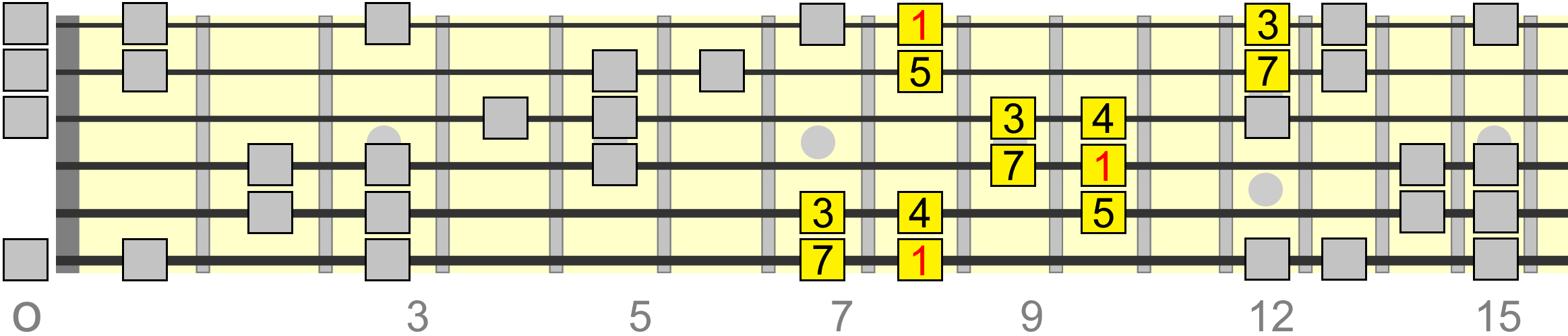
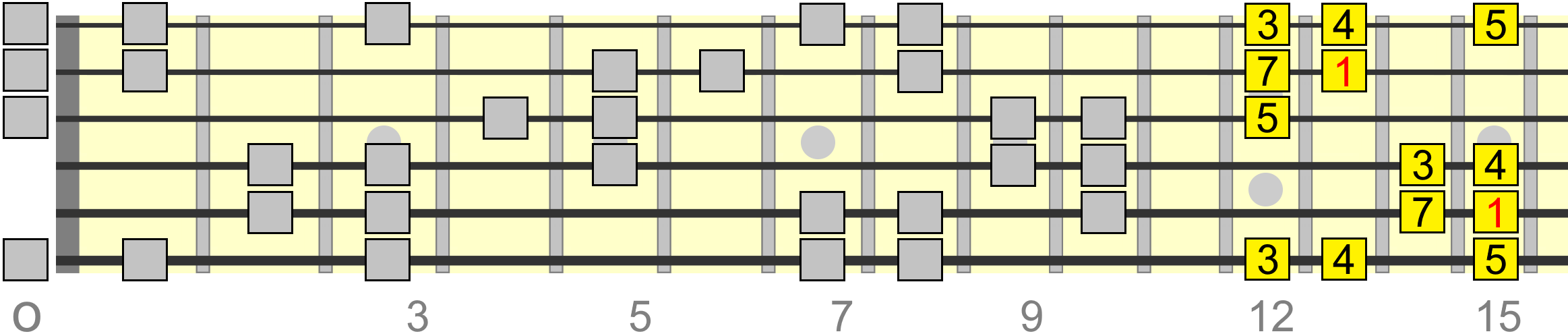
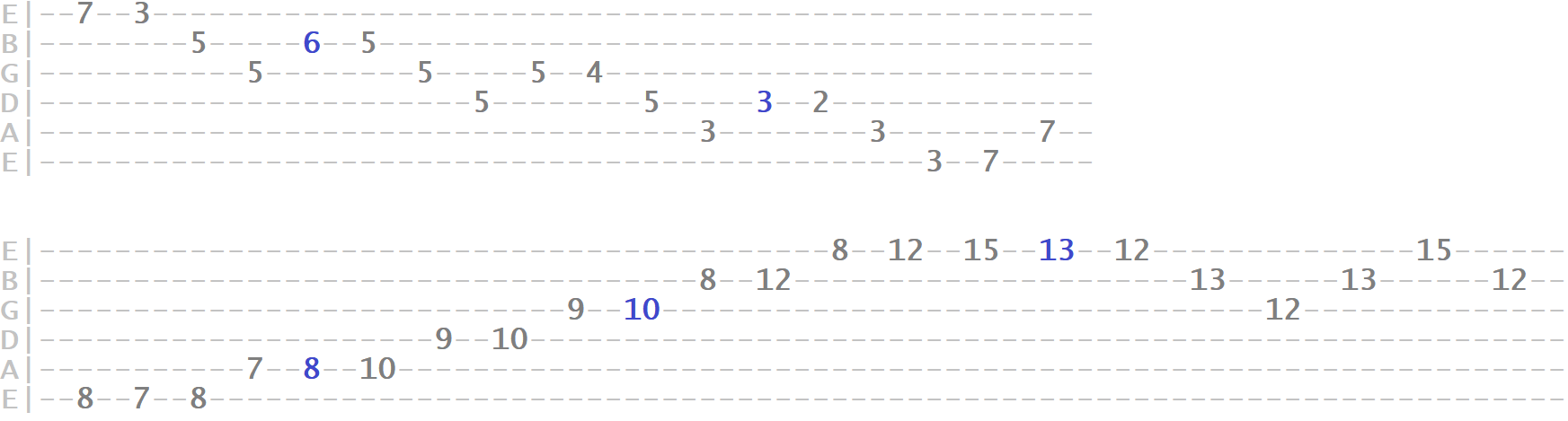
And to a dominant 7th arpeggio (e.g. C7 - 1, 3, 4, 5, ♭7)...
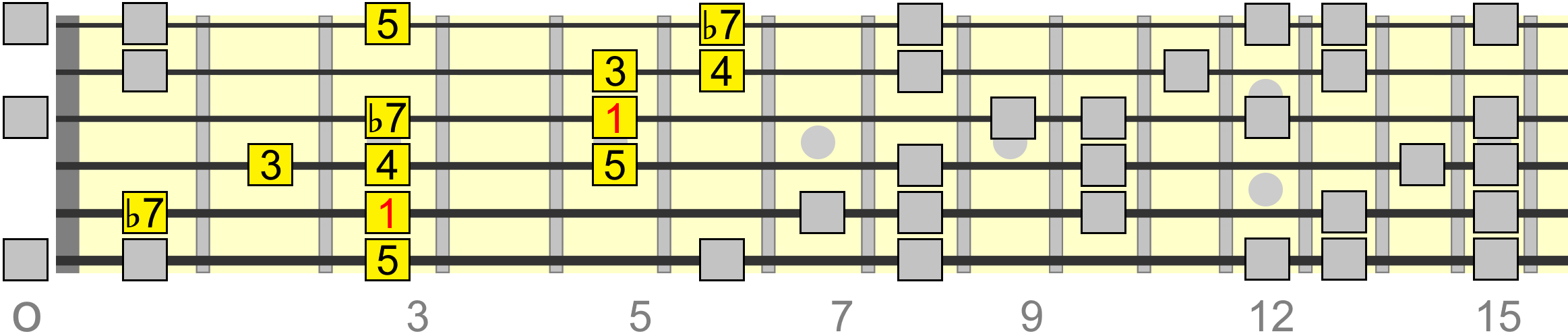
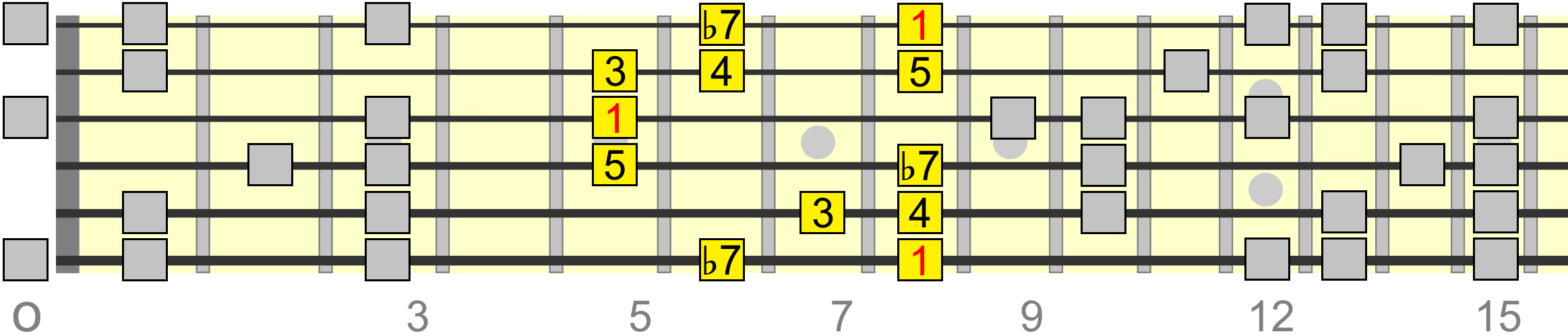
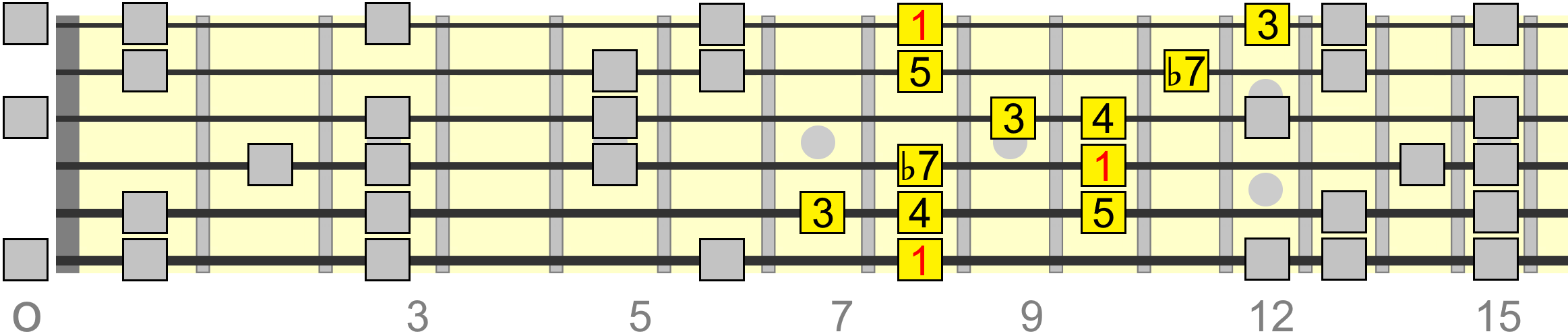
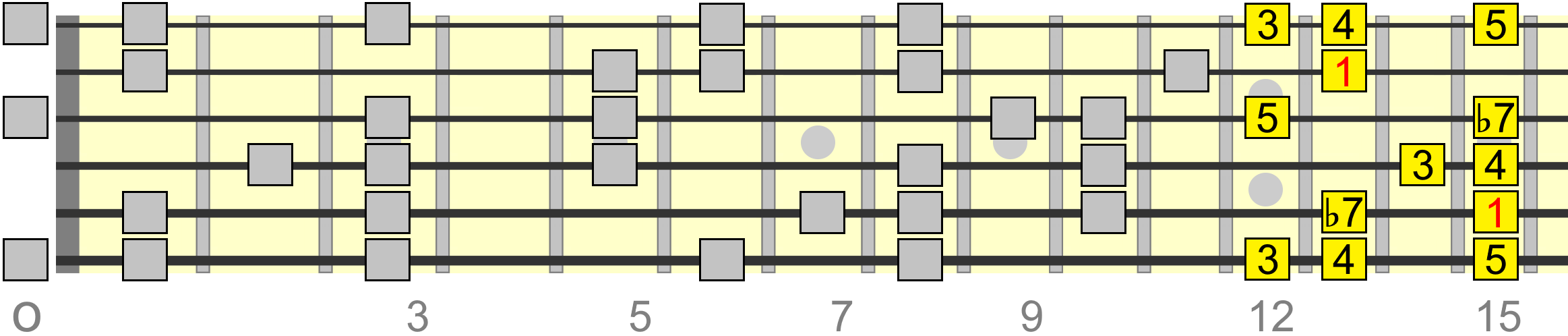
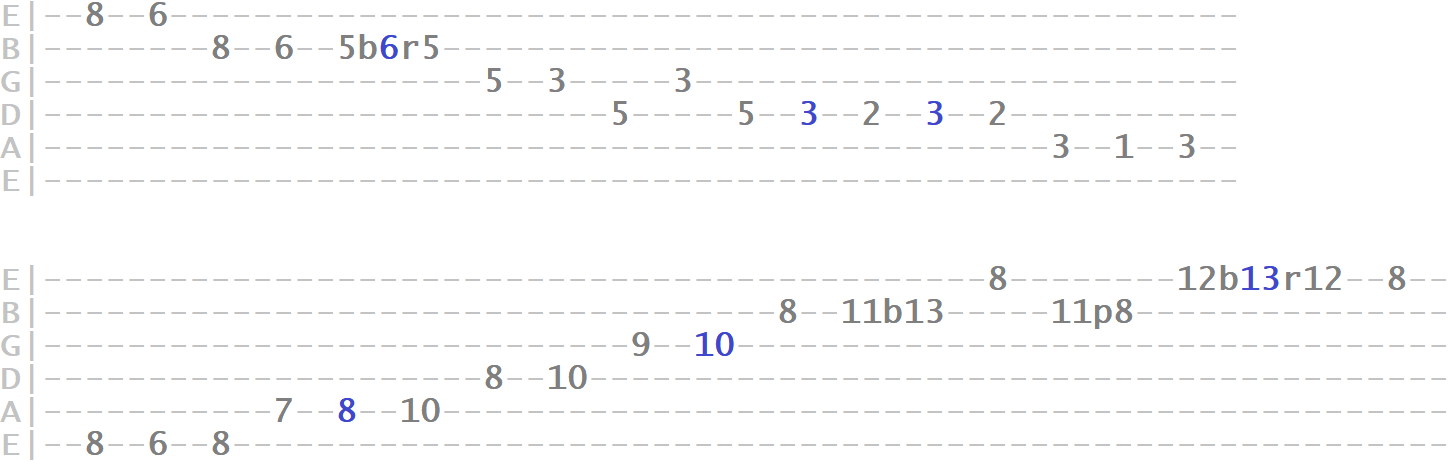
Hopefully you can already hear how the 4th naturally functions as a passing tone, giving us a certain leading momentum and melodic flow to our major based phrases.
Delaying The Resolution
We don't always have to move to the 3 or 5 directly from the 4. For example we could interrupt the 3-4-5 (or 5-4-3) sequence with other tones and slightly delay the resolution. Some examples...

So we still get the same passing/resolving effect by using the 4th, but it's more drawn out.
Adding The 4th To Major Pentatonic/Blues
Referencing the major pentatonic pattern, with the standard added "blue note" of a ♭3, it's useful to know where the 4 exists (again, just up from the 3!) so we can add it freely to our pentatonic phrases...
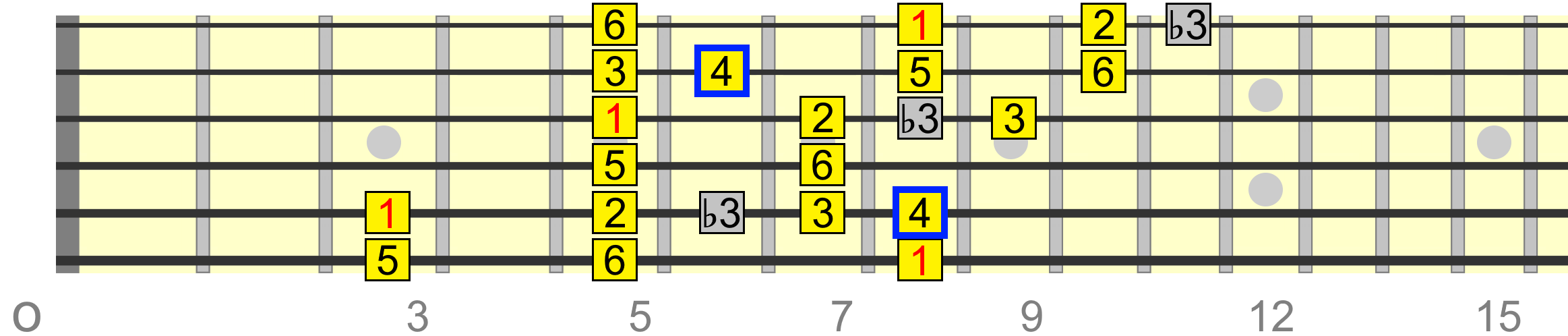
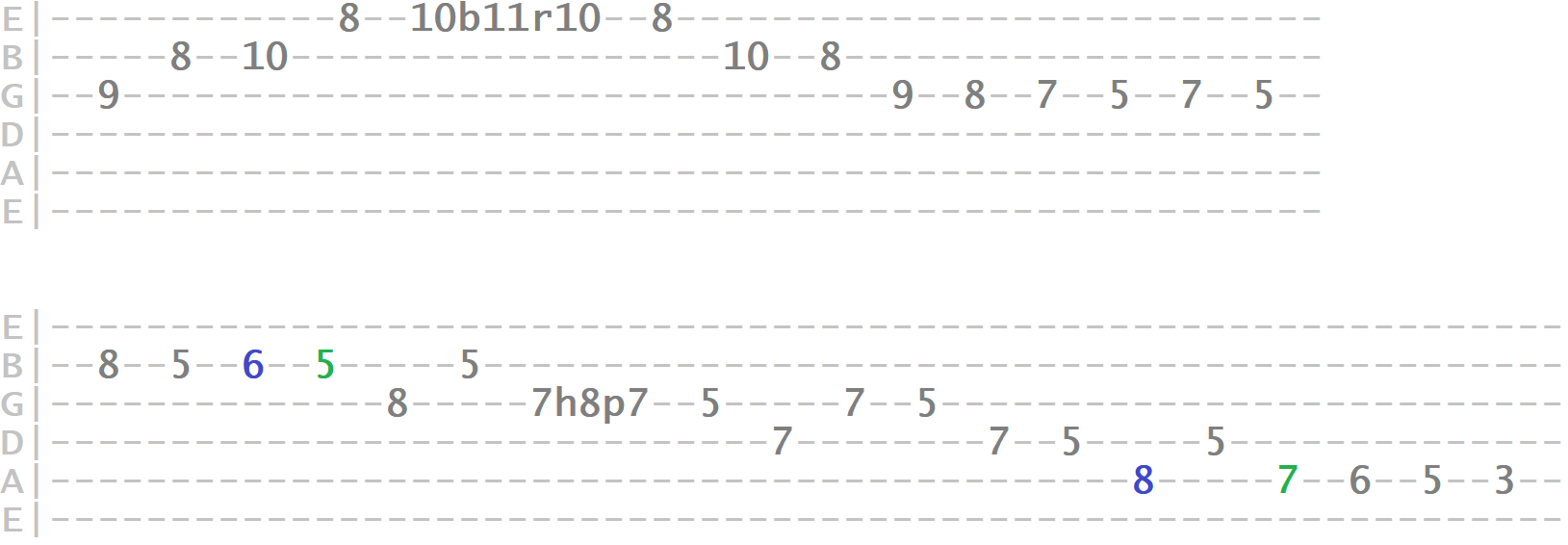
Minor Bluesy 3rd / 4th Interplay
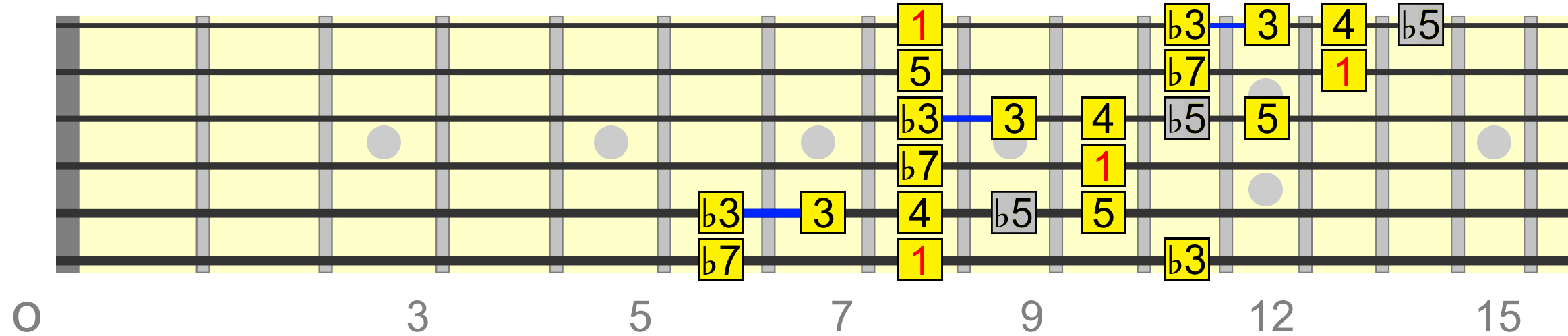
The minor 3rd (♭3) is often used in a major context, as counter-intuitive as that may sound. By resolving the ♭3 up to the 3, we get a distinctively bluesy sound that you'll likely recognise.
By preceding our ♭3-3 resolution with the 4, we can enhance its effect. Typically this resolving sequence, 4-♭3-3, will be used within a minor pentatonic or blues minor scale (adding the ♭5 to minor pentatonic) lick. Some examples...
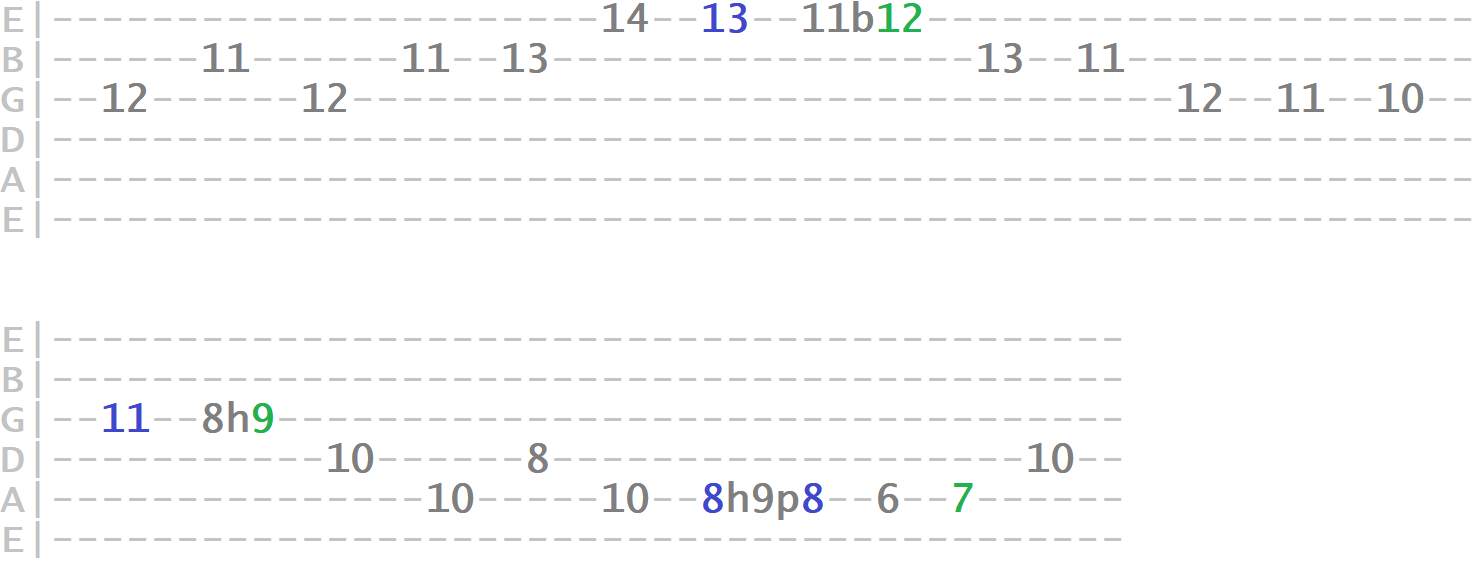
We can also use string bending to enhance the relationship between the ♭3, 3, 4 and 5. Take a look at the below examples which make use of string bending between these tones...
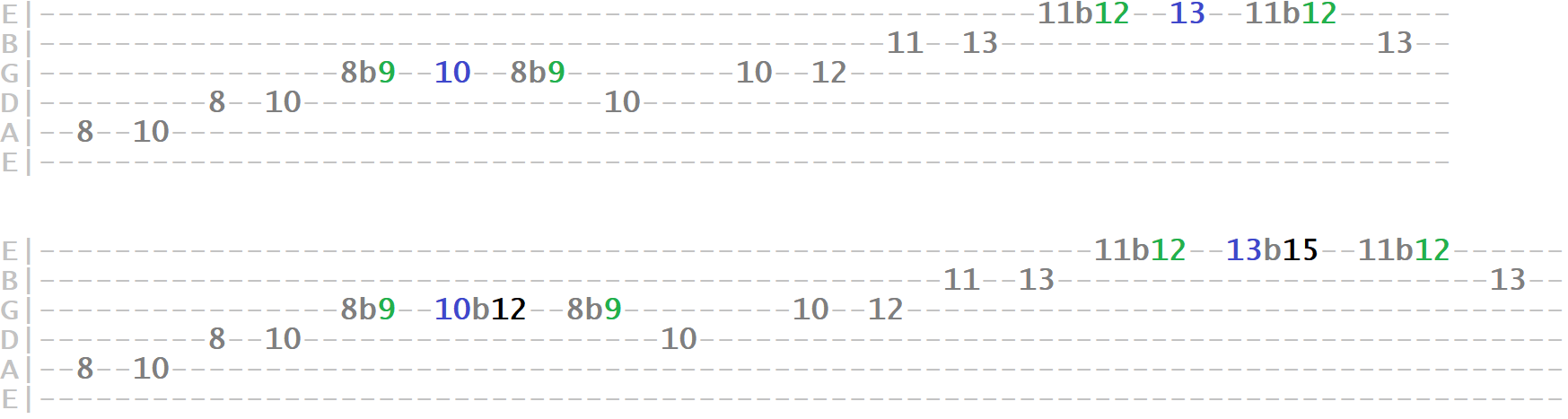
Tip: For an extra bluesy feel, try only bending up part way to the 3 from the ♭3. In other words, you can bend slightly flat of the 3 to get an additional blue note in your licks.
Two-Part Harmony (Dyads)
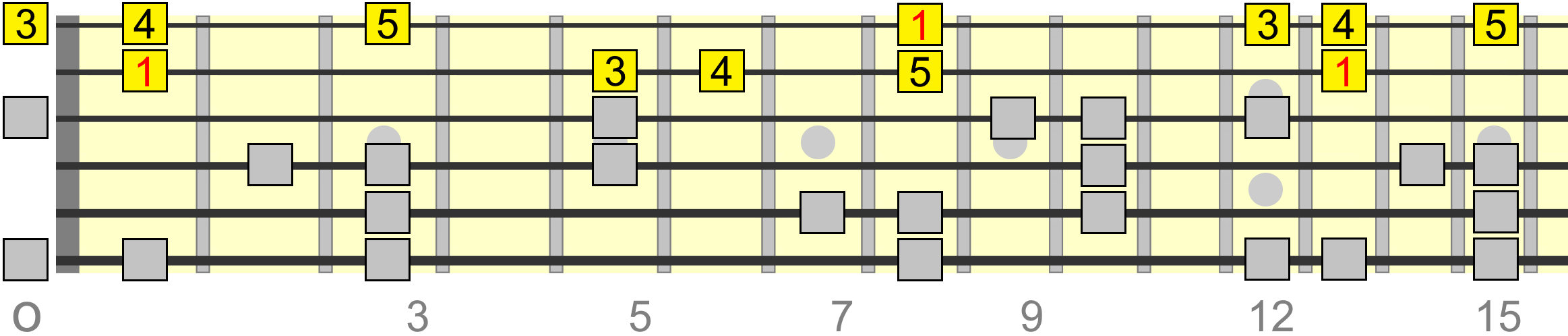
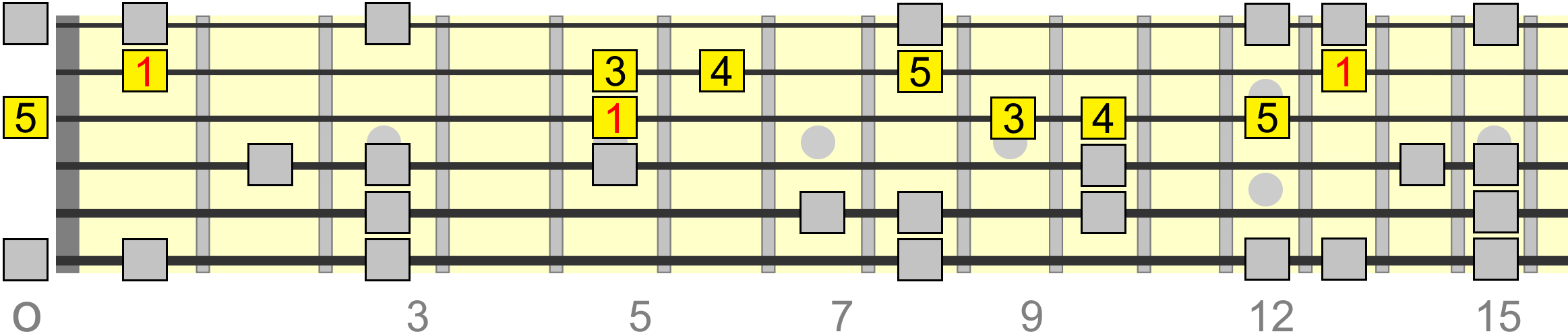
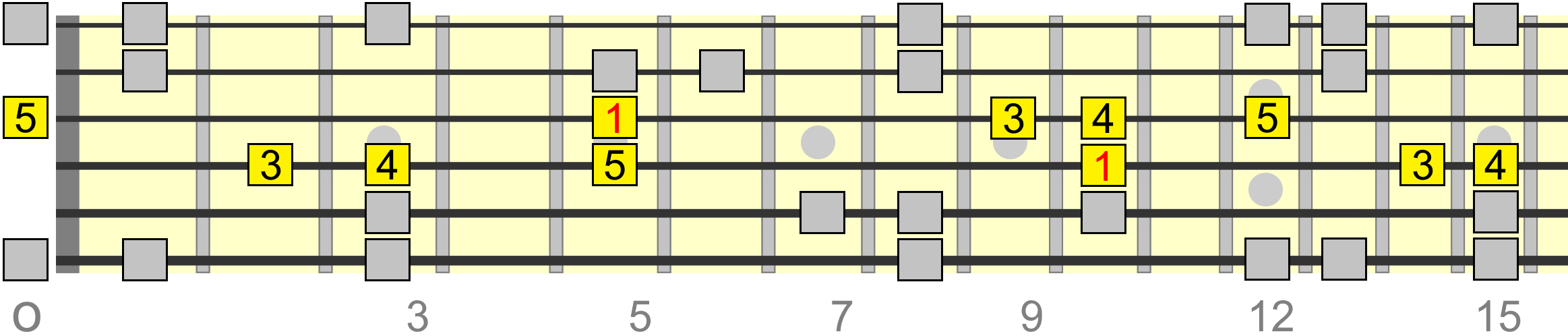
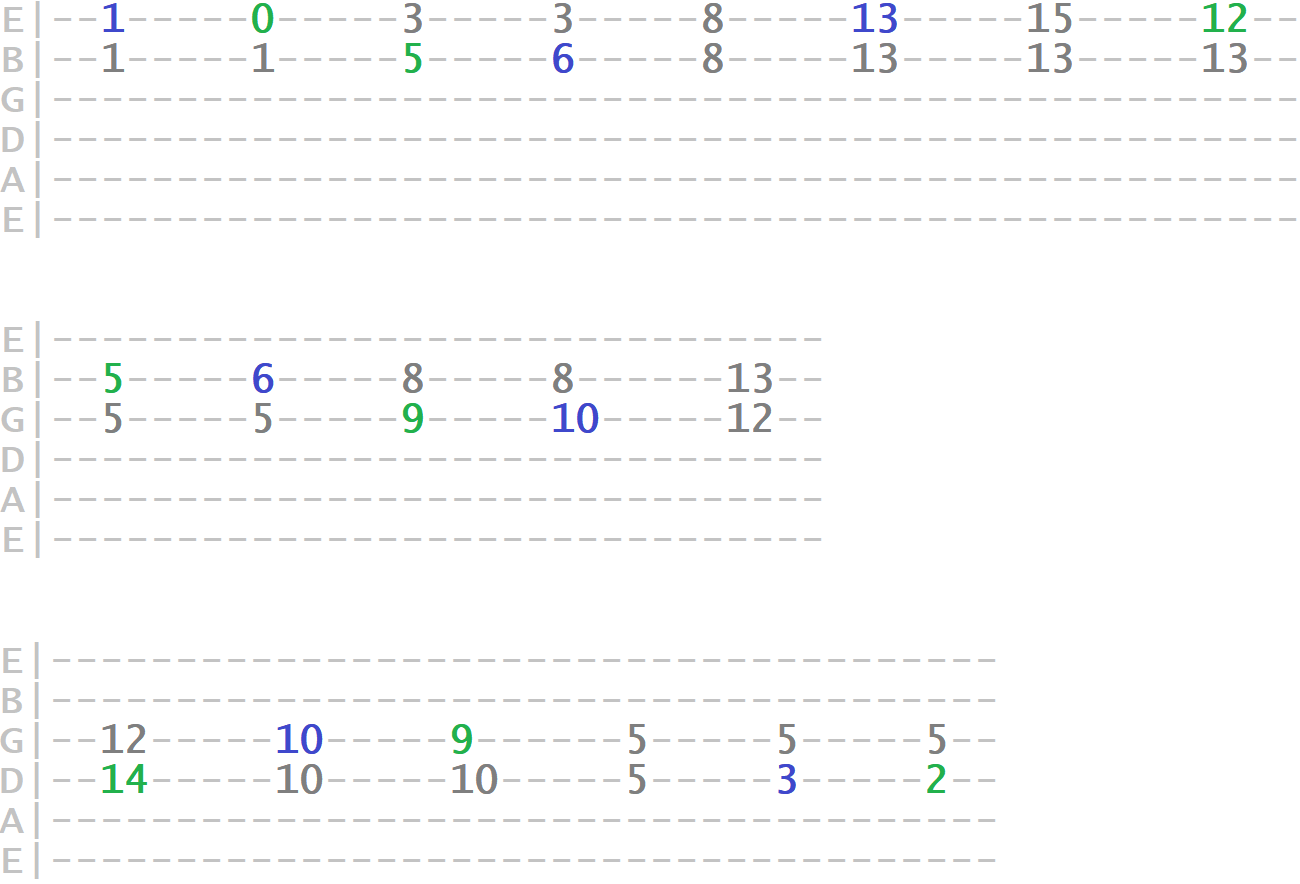
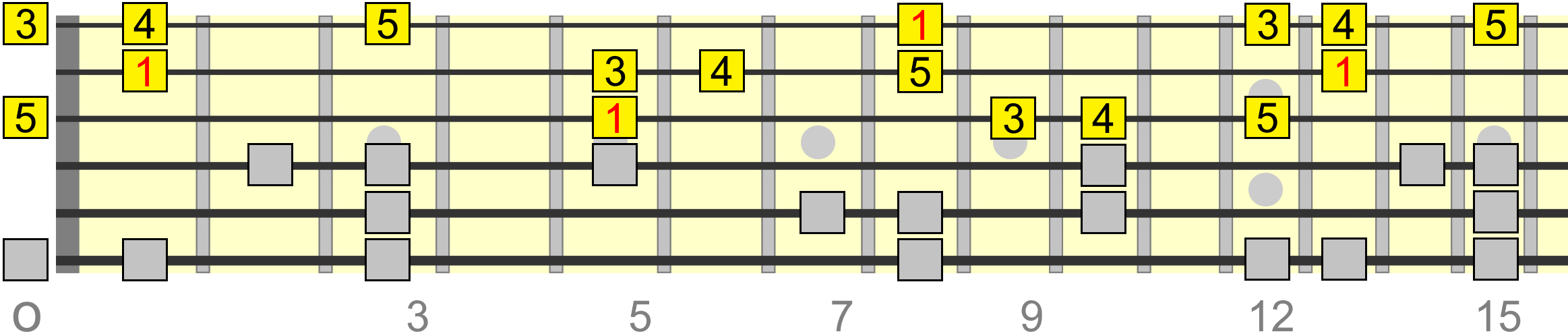
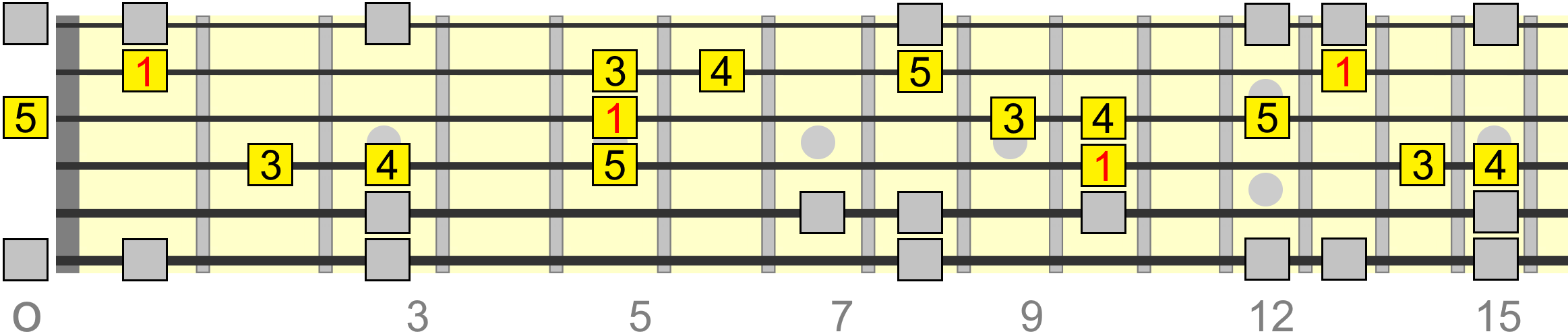
By pairing up strings/tones and forming dyads (playing two notes simultaneously), we can use the 4th in a similar way as earlier to embellish our two-part lead harmonies over major chords.
Using the same 1 3 4 5 roadmap as earlier, we can use two strings at a time to create flows of harmony across the neck...
Three-Part Harmony
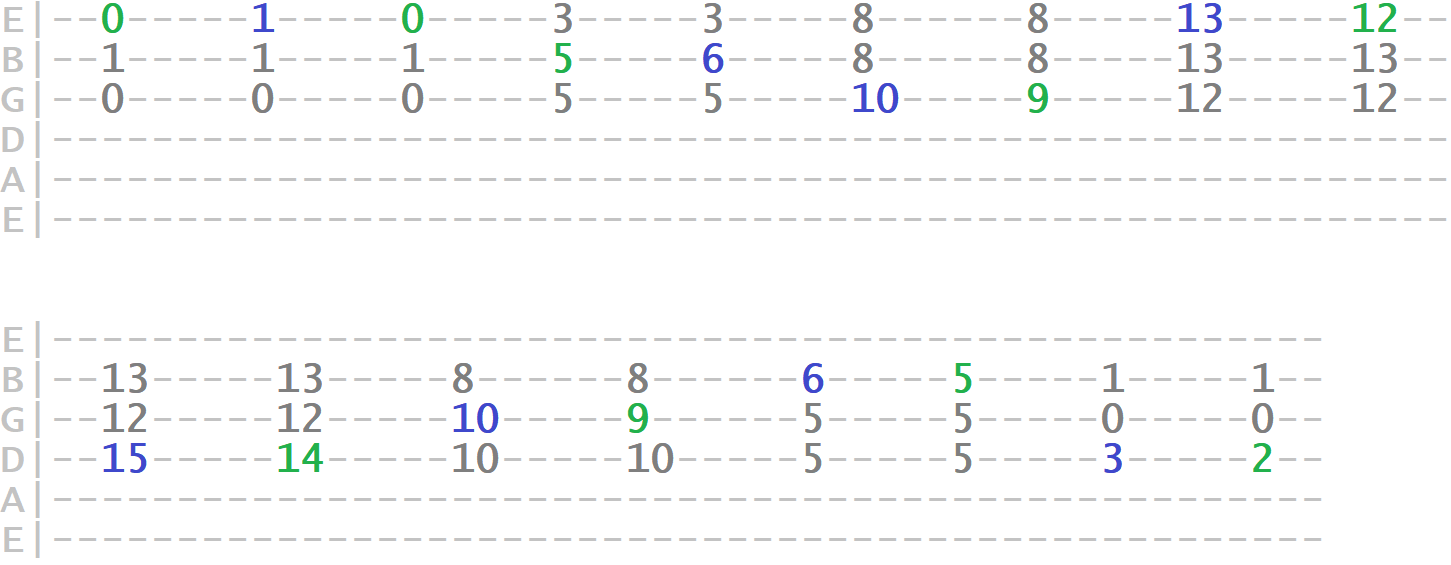
Taking our knowledge of major triads from the very first lesson in this course, we can add in the 4th, similar to the two-part example above, to colour our three-part, triad harmony...
Side note: When the 4th is played over the 1 and 5 instead of the 3rd (e.g. 1 4 5), it's referred to as a suspended 4th chord (e.g. Csus4). Typically the 4th will be held for a short time before moving back to the 3rd. You'll hear this movement in countless songs.
The 4th Through Chord Changes
Despite its dissonant quality, and having to use it in a certain way, the 4th is actually a pretty versatile interval. It can be used (in the way we've learned) over any instance of a major chord in a progression.
I / IV (in C major)
For example, take a I / IV progression in C major. That would be C / F. We could use the 4th respective to both these chords comfortably...
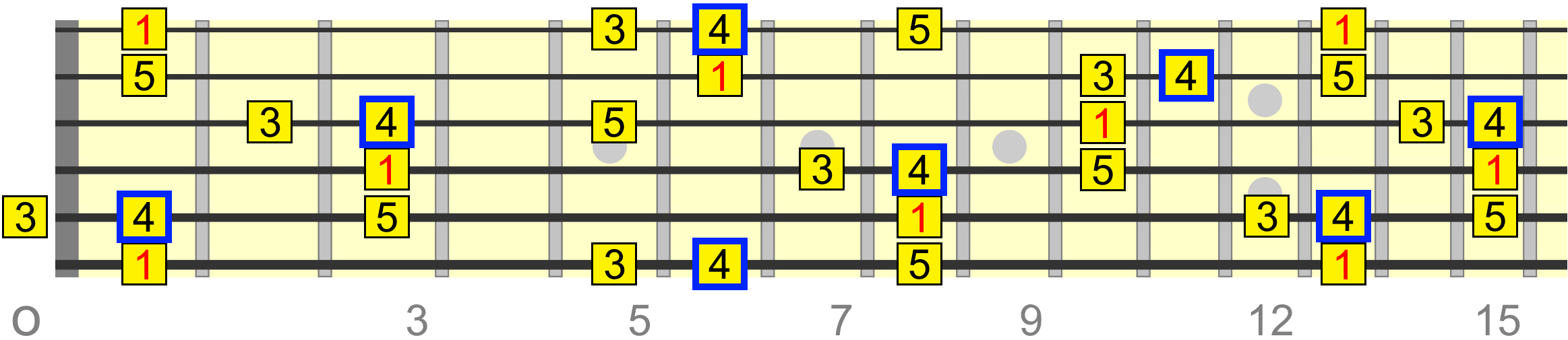
Tip: Think about shared tones between the chords you're playing over. For example, the 1 of I becomes the 5 of IV. The 4 of I becomes the 1 of IV. Seeing these shared tones can help you connect the changes more efficiently. Of course, there are other references you can use, such as the chord shape positions (e.g. how you might strum the chord changes), and build your phrases from there.
We'll look more specifically at connecting chord changes in later parts.
Use the backing tracks below, first practicing the 4th ideas over the individual chords and then the changes.
In scale terms, the C major scale and C major pentatonic will have you covered for both chords, but try incorporating the 4th for each chord (along with the chord's arpeggio and two/three-part harmonies) to get a feel for it...
C major track
F major track
C / F track
But there's more! Because of the relationship between these chords, as part of the same key and scale, we could also play C major + 4 ideas over F, which would give us an Fmaj9 colour.
So by simply changing the root on which we play the major + 4 ideas from earlier, they can interact colourfully with related chords in the same key. We can essentially "re-use" the tonic pattern over the IV (and other chords in the key).
I / V (in C major)
This time moving between C and G7, or I / V. The 4th works especially nicely over the V...
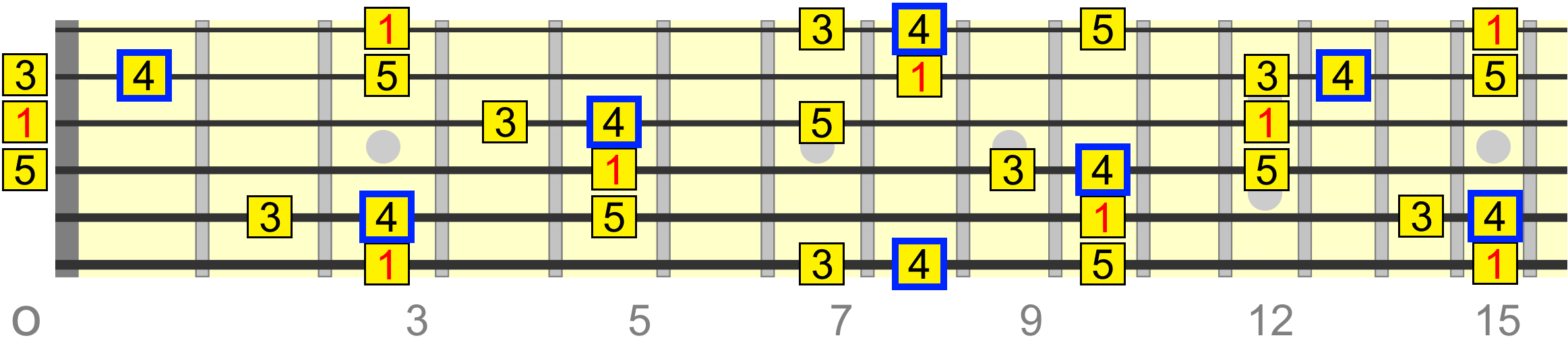
Again, we have options! We can either...
- Switch between C and G, including their respective 4ths, along with the changes.
- Use G+4 over both chords. This works because playing the G triad and its 4th over C gives us a Cmaj9 colour.
- Play a combination of the two.
Try these ideas over the individual chord tracks first and then the full chord change track...
C major track
G7 track
C / G track
I / ♭III (in A major)
Another track, this time moving from A major to C major (or I / ♭III). Again, the 4th used on each of these chords will add a distinctive colour. This time it's a straight change from A to C with our 4th-based patterns...
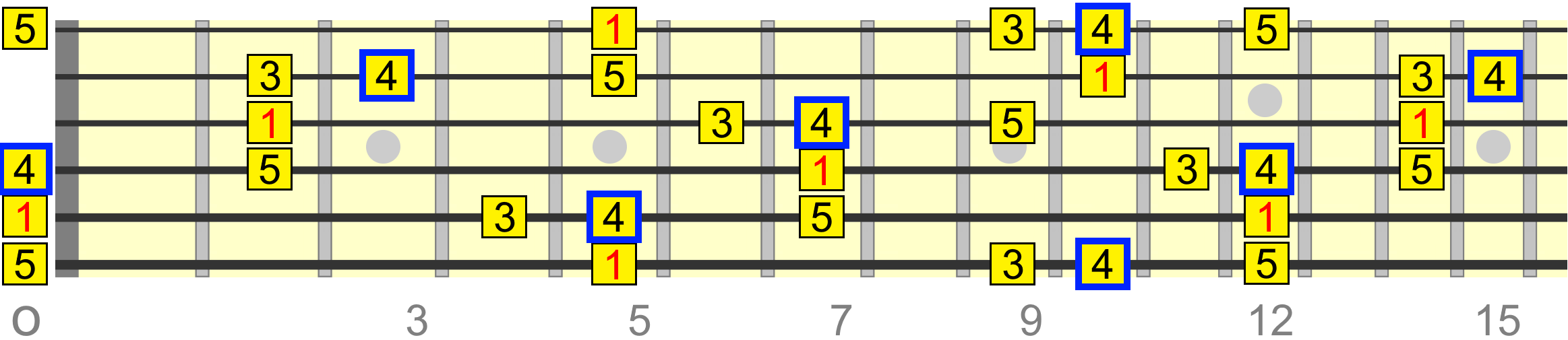
A major track
C major track
A / C track
An additional option if you're up for a challenge...
Try playing some G major + 4th phrases over the C major chord. This'll give you a Cmaj9 colour. Try moving seamlessly between a C+4 and G+4 over that C major chord, merging the two patterns into a single sequence. Lots to experiment with here!
Again, by changing the root on which we build our 4th based patterns and phrases, we can add new colours to the chord.
Tip: If you're playing scales, simply change from A major to A minor (either pentatonic or the seven-tone natural minor) over the C chord. This works because the ♭III can be seen as a "borrowed" chord from the parallel minor key (A minor in this case). Confused? Don't worry, you can learn more about borrowed chords in my lesson here.
Final Words...
While the 4th in isolation over major chords can sound a little... awkward, its true colour shines when used in its functional context. Some tones are destinations. Others, passages or bridges. Together they create a meaningful musical journey.
Remember the 4th's place in relation to the major triad, their arpeggios, and within related scales, and you'll find it a very useful melodic and harmonic tool for your music. Its presence may be fleeting, but it does its job in its own unique way and serves to flow towards and reinforce the strength of its closest neighbours - the major 3rd and 5th.