


Home
> Progressions
>
ii Chord

Of course, songwriting shouldn't be a rule-bound process, but the steps I'm taking you through here can be seen as the building blocks, to which you will naturally add your own embellishments as you become more confident.
Remember: it's important you have a basic understanding of chords on guitar. The chords section on the site has everything you need to learn chords!
So, time to add a new chord to our foundation scale, known as the supertonic or ii chord.
So far, then, we have: I (tonic), ii (supertonic), IV (sub-dominant) and V (dominant).
You'll notice that the supertonic is represented by a lower case numeral. This is because lower case numerals indicate the chord is a minor chord. The supertonic's natural chord type, therefore, is minor.
Following a similar format to the previous lessons, we first need to understand the supertonic's position on the fretboard, in relation to the other chords we know. For this, we need to refer back to the major scale - the foundation of the chord scale we're building.
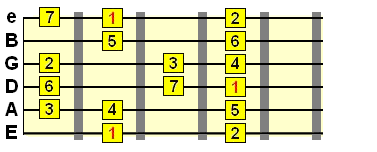
The above diagram shows the major scale in its 1st position box pattern. We can see that the 2nd degree (ii) lies one whole step from the root note (1 - the root note of the tonic I chord).
Therefore, we can use this 2nd note position as the root/bass note of our ii chord/supertonic chord!
We already know that 1 = tonic root, 5 = dominant root and 4 = subdominant root. It's just a case of building a chord on each of the major scale's degrees, onto those bottom 3 bass strings. This gives us a visual relationship for building our chord scale in our chosen key.
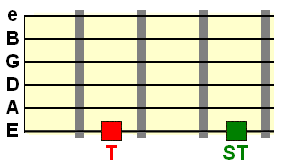
This relationship is the same no matter where you are on the fretboard. For example, if the tonic/I chord's root note was positioned on the note G, you'd know the supertonic/ii chord would be a whole step higher, on the note A.
If you've been through the chord section on the main site, you'll know we can build chords onto A and D string root/bass notes as well...
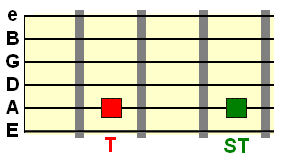
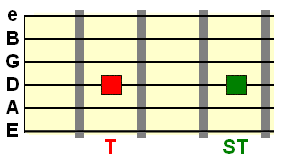
This is a good starting point for knowing where to build chords - identify the root/bass note on the E, A or D (usually E or A) strings and build the chord (e.g. a barre chord form) from that position. Or, you might know how to play that same chord in a different position - all the better!
I mentioned earlier that the ii chord in its basic form is a minor chord. So, with this knowledge, we could create a very simple two-chord progression changing between the major tonic and minor supertonic. Take a look below at an example using one of the string relationships from above...
I - G major
ii - A minor
In this example, the root notes are G (I) and A (ii), so I could play the open chords G (I) and Am (ii) if I wanted...
Click to hear
And remember, you don't have to start on the tonic chord. The natural harmony integral to the I/ii relationship can also be heard in a ii - I sequence...
Click to hear
So, whatever key it's played in, you should train your ear to that relationship. The ii chord is part of that "journey away from home" that either resolves to the tonic, or provides a gateway to another chord in the progression and a continuation of that journey. Let's look at involving the IV and V chords from previous lessons to see how they can interact with the ii chord.
I V ii IV
V ii I
ii IV I
ii V I - a staple part of jazz harmony, often referred to as a "2 5 1 cadence".
And of course, we can extend those progressions to include more than one combo, either separated by a verse/chorus or simply as one longer, more progressive sequence (e.g. I - V - ii - IV - V - I - IV - ii - repeat).
Let's look more indepth at these common examples, based on our knowledge of the root note positions of the 4 chords we've learned so far.
I V ii IV (...simply repeat)
Remember, some of these positions will allow you to play open chords, such as the first chord example below - we know that G, D, Am and C can be played open from the open chord series. Otherwise, I'm playing the basic barre chord shapes (E and A) around those root note positions.
V ii I IV
ii IV I
As you continue through the chord progressions section (and I hope you will!), you'll see your songwriting options open up more and more. Plus, you won't just be limited to the chord scale we're building here, because you'll discover how you can add in chords around the scale and essentially link up these chords in interesting ways.
The "in-scale" chords will keep things from wandering aimlessly off-track, whereas the "outside" chords will inject some spice and unpredictability to your songs. They both complement each other.
Supertonic Chord Variation
Main Guitar Chord Progressions Section
Supertonic ii Chord in Chord Progressions
Over the course of this series, we've been building the foundations we need to create naturally flowing chord progressions on guitar.Of course, songwriting shouldn't be a rule-bound process, but the steps I'm taking you through here can be seen as the building blocks, to which you will naturally add your own embellishments as you become more confident.
Remember: it's important you have a basic understanding of chords on guitar. The chords section on the site has everything you need to learn chords!
So, time to add a new chord to our foundation scale, known as the supertonic or ii chord.
The supertonic ii chord
In music theory, the chord we're about to add to the scale is called the supertonic, represented by the roman numeral ii (2). This is because it's the 2nd chord in the scale following the tonic 1 chord (which we looked at in an earlier part).So far, then, we have: I (tonic), ii (supertonic), IV (sub-dominant) and V (dominant).
You'll notice that the supertonic is represented by a lower case numeral. This is because lower case numerals indicate the chord is a minor chord. The supertonic's natural chord type, therefore, is minor.
Following a similar format to the previous lessons, we first need to understand the supertonic's position on the fretboard, in relation to the other chords we know. For this, we need to refer back to the major scale - the foundation of the chord scale we're building.
1
W
2
W 3
H
4
W
5
W
6
W 7
H
1
The above diagram shows the major scale in its 1st position box pattern. We can see that the 2nd degree (ii) lies one whole step from the root note (1 - the root note of the tonic I chord).
Therefore, we can use this 2nd note position as the root/bass note of our ii chord/supertonic chord!
We already know that 1 = tonic root, 5 = dominant root and 4 = subdominant root. It's just a case of building a chord on each of the major scale's degrees, onto those bottom 3 bass strings. This gives us a visual relationship for building our chord scale in our chosen key.
The supertonic in relation to the tonic
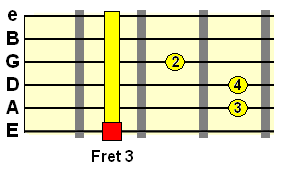
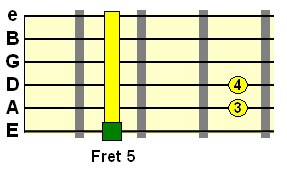
So from above, we can single out the root note relationship between the I and ii chord in the scale, first on the low E string...This relationship is the same no matter where you are on the fretboard. For example, if the tonic/I chord's root note was positioned on the note G, you'd know the supertonic/ii chord would be a whole step higher, on the note A.
| How do I know the notes of each fret position? Know the fretboard! |
If you've been through the chord section on the main site, you'll know we can build chords onto A and D string root/bass notes as well...
This is a good starting point for knowing where to build chords - identify the root/bass note on the E, A or D (usually E or A) strings and build the chord (e.g. a barre chord form) from that position. Or, you might know how to play that same chord in a different position - all the better!
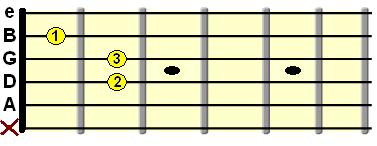
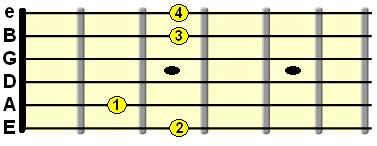
I mentioned earlier that the ii chord in its basic form is a minor chord. So, with this knowledge, we could create a very simple two-chord progression changing between the major tonic and minor supertonic. Take a look below at an example using one of the string relationships from above...
I - G major
ii - A minor
In this example, the root notes are G (I) and A (ii), so I could play the open chords G (I) and Am (ii) if I wanted...
|
|
 |
Click to hear
And remember, you don't have to start on the tonic chord. The natural harmony integral to the I/ii relationship can also be heard in a ii - I sequence...
Click to hear
So, whatever key it's played in, you should train your ear to that relationship. The ii chord is part of that "journey away from home" that either resolves to the tonic, or provides a gateway to another chord in the progression and a continuation of that journey. Let's look at involving the IV and V chords from previous lessons to see how they can interact with the ii chord.
I ii IV V progressions
...and not necessarily in that order! See, as the chord scale grows, we have more and more combinations to pick out. Some popular ones...I V ii IV
V ii I
ii IV I
ii V I - a staple part of jazz harmony, often referred to as a "2 5 1 cadence".
And of course, we can extend those progressions to include more than one combo, either separated by a verse/chorus or simply as one longer, more progressive sequence (e.g. I - V - ii - IV - V - I - IV - ii - repeat).
Let's look more indepth at these common examples, based on our knowledge of the root note positions of the 4 chords we've learned so far.
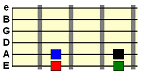
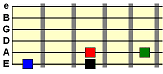
I V ii IV (...simply repeat)
Remember, some of these positions will allow you to play open chords, such as the first chord example below - we know that G, D, Am and C can be played open from the open chord series. Otherwise, I'm playing the basic barre chord shapes (E and A) around those root note positions.
| Position | Example Key |
|
G
D Am
C Click to hear |
|
C#
G# D#m
F# Click to hear |
V ii I IV
| Position | Example Key |
|
|
D
Am
G
C Click to hear |
|
|
F#
C#m
B
E Click to hear |
ii IV I
| Position | Example Key |
|
|
Am
C
G Click to hear |
|
|
Dm
F
C Click to hear |
Keep experimenting with these chord relationships
So we can see that, as we build our foundation chord scale, we can literally pull out chords in different combinations and create very natural sounding progressions.As you continue through the chord progressions section (and I hope you will!), you'll see your songwriting options open up more and more. Plus, you won't just be limited to the chord scale we're building here, because you'll discover how you can add in chords around the scale and essentially link up these chords in interesting ways.
The "in-scale" chords will keep things from wandering aimlessly off-track, whereas the "outside" chords will inject some spice and unpredictability to your songs. They both complement each other.
| |
Tweet |
Stay updated and learn more
Sign up to the newsletter for updates and grab your free Uncommon Chords book
Sign up to the newsletter for updates and grab your free Uncommon Chords book
Related
Supertonic Chord Variation
Main Guitar Chord Progressions Section



