


Home
> Metal
> Metal
Strumming 2

As with the first part, there'll be drum tracks to jam along to and help nail your timing. Make sure you download them so you can use them as and when you need.
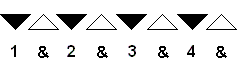
In the following exercise, with our down strokes timed as "1 2 3 4", then we can effectively double our timing by adding in an up stroke between each count - "1 and 2 and 3 and 4 and..."
Take a look at the video below for an example of this. I'm simply strumming a power chord using that constant down-up-down-up alternate strumming...
Observe the pick hand action. Most of the movement is in the wrist. Try and keep it relaxed so you can brush over the strings without unnecessary obstruction. Quick, sharp strokes.
Start slow and gradually build up your speed using a metronome.
This basic 4/4 rhythm is our foundation. Once you're confident with maintaining this strumming pattern, it's time to move on to more complex variations...
Take a look at the pattern below. All we've done is skip a few strokes (marked in red). On these skipped strokes, the strings are not being strummed, but the constant up/down action remains in place...
So I'll repeat - keep your down and up strokes in the same constant 4/4 timing we used before, but by skipping some strokes we can create a more interesting movement.
Try out your own riff using the above pattern over the drum track below. Hear how the percussion complements this type of strumming pattern.
My example only stays around one power chord, so I'm sure you can move around a bit and come up with something more interesting!
Download the drum track
(right click and "save as")
Example
Here's a similar example, but this time we're missing some up strokes as well...
So again, same constant down-up momentum, but it's the strokes where you actually hit/don't hit the strings that form the pattern.
Download the drum track
Example

So instead of a consistant gap between the up and down strums, we have a "jump" on two strokes. This gives it a galloping effect. Listen to the example over the drum track below for a typical use of this pattern.
Download the drum track
Example
Below is an exercise in what many guitarists refer to as "power strumming". We're using exactly the same down-up alternate strokes as before, but in quicker, staccato bursts. When played at high speed, under high gain/distortion, this creates a "wall of sound". Great over blast beats...

This pattern was popularised by hardcore punk, but became a staple part of speed and thrash based metal. Take a listen below for a typical example of how this pattern is used over blast beats...
Download the drum track
Example
Obviously I can't show you every possible strumming pattern, but please do experiment with the ideas we've looked at over the course of this series, using both down and alternate strumming. You now have a good library of drum tracks to practise over. I hope you've found these lessons helpful and inspiring!
Guitar Strumming in Heavy Metal - Part 2
In the first metal strumming lesson, we learned the essential down strumming rhythms used in many of the heavy metal subgenres. Now it's time to build on that foundation, adding in upstrokes and building up our speed.As with the first part, there'll be drum tracks to jam along to and help nail your timing. Make sure you download them so you can use them as and when you need.
Building up your metal strumming speed
Obviously if you only rely on down strumming you'll struggle at higher speeds, so it makes sense to add in an upstroke and make more efficient use of your pick hand.In the following exercise, with our down strokes timed as "1 2 3 4", then we can effectively double our timing by adding in an up stroke between each count - "1 and 2 and 3 and 4 and..."
Take a look at the video below for an example of this. I'm simply strumming a power chord using that constant down-up-down-up alternate strumming...
Observe the pick hand action. Most of the movement is in the wrist. Try and keep it relaxed so you can brush over the strings without unnecessary obstruction. Quick, sharp strokes.
Start slow and gradually build up your speed using a metronome.
This basic 4/4 rhythm is our foundation. Once you're confident with maintaining this strumming pattern, it's time to move on to more complex variations...
More complex alternate metal strumming patterns
The first "rule" is to ensure you can keep a constant down-up motion with your strumming hand. As we'll see in a moment, it's important to keep this motion constant even if you're not hitting the strings. It's all about momentum.Take a look at the pattern below. All we've done is skip a few strokes (marked in red). On these skipped strokes, the strings are not being strummed, but the constant up/down action remains in place...
So I'll repeat - keep your down and up strokes in the same constant 4/4 timing we used before, but by skipping some strokes we can create a more interesting movement.

Try out your own riff using the above pattern over the drum track below. Hear how the percussion complements this type of strumming pattern.
My example only stays around one power chord, so I'm sure you can move around a bit and come up with something more interesting!
Download the drum track
(right click and "save as")
Example
Here's a similar example, but this time we're missing some up strokes as well...

So again, same constant down-up momentum, but it's the strokes where you actually hit/don't hit the strings that form the pattern.
Download the drum track
Example
Other metal strumming patterns
Let's try something a little less... conventional. The below pattern still uses a constant pattern of up and down strokes like before, but the timing is different. The gap between some of the strokes has changed. Take a look and listen...So instead of a consistant gap between the up and down strums, we have a "jump" on two strokes. This gives it a galloping effect. Listen to the example over the drum track below for a typical use of this pattern.
Download the drum track
Example
Below is an exercise in what many guitarists refer to as "power strumming". We're using exactly the same down-up alternate strokes as before, but in quicker, staccato bursts. When played at high speed, under high gain/distortion, this creates a "wall of sound". Great over blast beats...
This pattern was popularised by hardcore punk, but became a staple part of speed and thrash based metal. Take a listen below for a typical example of how this pattern is used over blast beats...
Download the drum track
Example
Obviously I can't show you every possible strumming pattern, but please do experiment with the ideas we've looked at over the course of this series, using both down and alternate strumming. You now have a good library of drum tracks to practise over. I hope you've found these lessons helpful and inspiring!
| |
Tweet |
Stay updated and learn more
Sign up to the newsletter for updates and grab your free Uncommon Chords book
Sign up to the newsletter for updates and grab your free Uncommon Chords book
More Metal Guitar Lessons



