


10 Heavy Metal Guitar Scales You Should Know
I've specifically named this lesson "metal guitar scales", but of course you can play any damn scale you want, whether it be pentatonic, major, minor, whatever! What I'll do is go through some of the more specialized scales used in heavy metal - scales that really complement the dark and aggressive power chord movements.The scales featured in this lesson are by no means the extent of your options - I'm not trying to pigeon hole, but it's true that harsh/dissonant scales tend to best fit the ominous and intense nature of this style of music.
Remember, you can (and should) combine several scales in your solo for variation.
Use this D5 power chord track to practice playing through these scales. There's no beat, so you can set your metronome to any tempo with which you feel comfortable. Using the scale diagrams on this page, simply position the 1 note on the E string at the 10th fret (in standard tuning)...
Most popular metal guitar scales
These are your "bread and butter" metal guitar scales, and can be used in most circumstances.
The scale patterns shown below are movable, meaning you can slide the patterns up and down the fretboard to change the key you're playing in (you can learn to expand out of these boxes in the individual scale lessons).
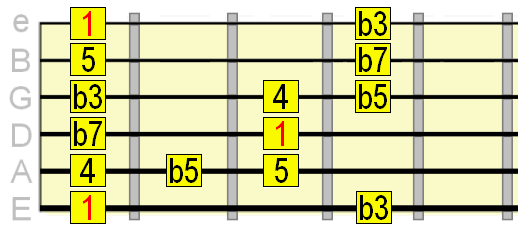
Position the root note (1) of these scales on the same root as the chord or key you're playing over. For example, if the riff was built around an A power chord (A5), you would position the root of these scales on... A.Minor Pentatonic with b5
Many metal guitarists have stuck almost exclusively with this staple combo for decades. Adding the flat 5th (b5) to minor pentatonic gives it that bluesy, slightly dissonant quality. Tony Iommi, Dimebag Darrell and Zakk Wylde are three notable metal guitarists who have made great use of this scale (although there are countless more)...
Natural Minor Scale / Aeolian
The natural minor scale also falls as the 6th mode of the major scale, Aeolian. You can see this scale as minor pentatonic with an added major 2nd (2) and minor 6th (b6).
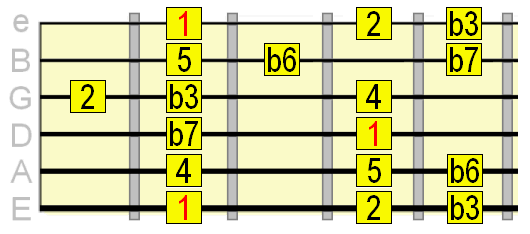
The natural minor scale works over many minor key progressions and is a loyal companion for the above minor pentatonic/blues scale.
Harmonic Minor Scale
The harmonic minor scale is almost the same as natural minor, but with a major 7th (7) instead of a minor 7th (b7). As metal commonly uses power chords which are neither major nor minor, using this scale will give it the flavour of a "minMaj7" chord (e.g. AmM7), which has a naturally tense, unsettling sound.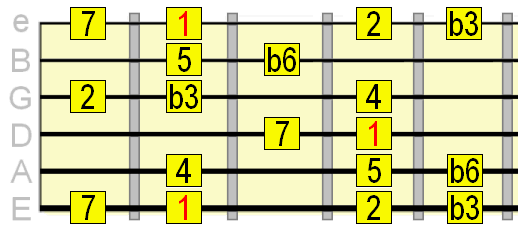
It's a nice alternative to natural minor as a metal guitar scale, when you want to spice things up a little. Again, use a metronome to build up speed and confidence with jumping around this scale.
Dorian
Another staple minor scale that uses a major 6th (6) instead of natural minor's minor 6th (b6) which changes its mood. Less harsh, more airy and "mysterious" making its place more in progressive, melodic metal. Again, like the other minor scales, Dorian tends to be interchanged and merged with minor pentatonic/blues.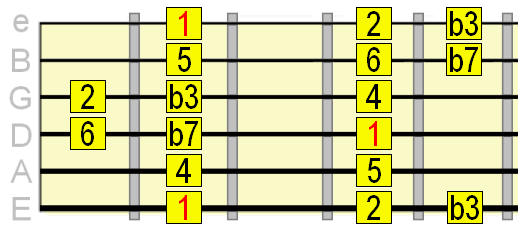
More "Experimental" Metal Scales
Bored of the pentatonic and minor scales? Try the below alternatives...Lydian
This one's a major scale (due to the major 3rd, or 3). Its sound is characterised by the augmented 4th (#4), also known as the tritone (an interval once aptly nicknamed "the devil in music"!), which gives it a dark, ethereal sort of quality. Lydian is definitely one of my favourites for slow paced and down tuned metal - try holding that #4 for a sweet dissonant sound.
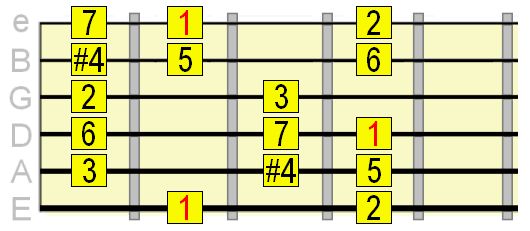
Tip: try also lowering the 7th (to a b7) for a slight variation knowing as Lydian dominant.
Phrygian Dominant
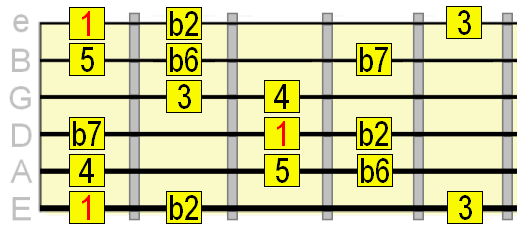
The Phrygian dominant scale (also the 5th mode of harmonic minor) is a staple scale of flamenco and other traditional styles, but metal has made effective use of it for its tense, aggressive sound.
Double Harmonic Scale
The double harmonic scale (sometimes called the Byzantine scale) is like phrygian dominant's evil twin brother. The only difference between the two is double harmonic uses a major 7th (7) instead of a minor 7th (b7). This creates an unusual chromatic interval sequence between the 7th, root and minor 2nd that gives it a very unique sound.
It takes a while to learn how to negotiate this one, but give it the time and attention it deserves and you'll be glad you added it to your repetoire. Tense, dark, and definitely fun to play.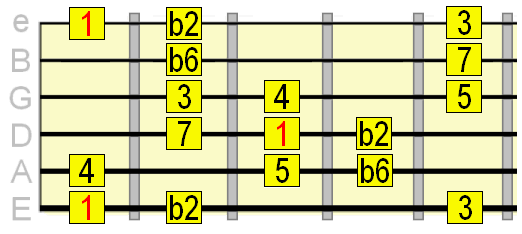
Hungarian Minor
Sometimes called the Hungarian Gypsy scale. Harmonic minor with a raised 4th (#4). Great for writing those crazy, chaotic riffs.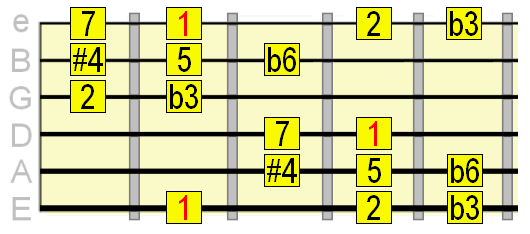
Dorian #4
Another minor scale that uses the augmented 4th tension to create an ominous atmosphere. Great for metal.
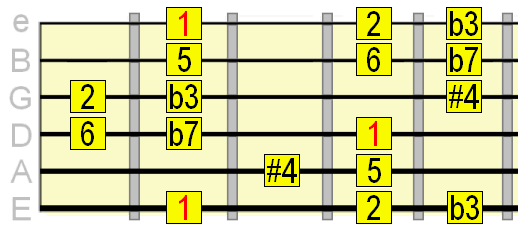
Tip: When playing scales over a riff you have to experiment and find which tones of the scale you're playing are best played at certain points of the riff. E.g. You may be able to hold one of the scale's notes over one chord, but when the chord changes, you might find it no longer "fits", so you need to change the note there and then.
These are often called target notes - the notes we use when a chord changes. This is covered in more depth in the scales and theory section.
Locrian
Traditionally used as a diminished scale, so it has all the tense, unresolved qualities we need for metal...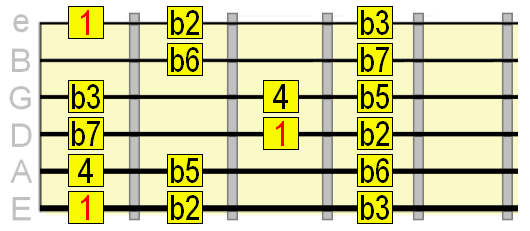
A note on combining scales
Guitarists soon forget that scales are merely a group of related intervals/notes. If you like the sound of a particular movement (e.g. 5 - b6 - 7 - 1) try mixing it with interval groups from other scales. This sounds quite complicated, but once you have a few scales under your fingers, it's just a case of playing between them, building phrases that overlap two or more scales.
When you do this, you'll start to think less in terms of individual scales, rather in terms of individual note selection. Metal is a unique genre in that it is flexible enough to use dissonant, jarring movements and mix major and minor tonality quite freely. In fact, dissonance and ambiguity can often be just the sound you need to create the fitting atmosphere of tension and chaos in your metal solos.
The main thing is that you spend time writing some of your own solos. Learn to respect chord changes and how they affect what notes you play.
Building small phrases within the scale is a good way to lead in to those more effective color tones (e.g. the #4).
And don't forget to mix these fuller scales with pentatonic licks on the same root.It all boils down to time, practice
and experimentation.
| Was this
helpful? Please support this site. I really appreciate it! |
Stay updated
and learn more Sign up to the newsletter for updates and grab your free Uncommon Chords book |
Share your thoughts...
Have any questions, thoughts or ideas about this lesson? Let us know using the comments form below.
Related





