


Home
>
Scales
> Jazz
Scales
Each scale below is shown in its first position box pattern, but you can learn how to "unbox" these scales in their individual lessons. I'll also note the associated chord type for each scale so you have some idea of when to use them.
Remember, learning scales is just one part of jazz guitar, but it is a crucial part, as a lot of your playing time will be spent on lead improvisation. For now, just get to know the basic interval structure and color of these scales. Each one offers its own unique sound...
 Download the free print sheets for
this lesson (PDF)
Download the free print sheets for
this lesson (PDF)
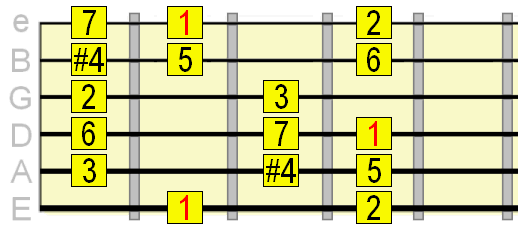
In the diagrams below, take a look at how the intervals correspond with those in the associated chord. For example, Lydian is suited to maj7#11 chords because of its #4 (augmented 4th) interval (4 is technically the same as 11 in music theory).
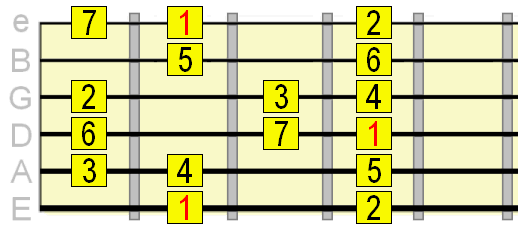
Characterised by the major 7th (7) added to the major triad (1, 3, 5).
The #4 (#11) gives Lydian its distinctive flavour over major 7th chords (1, 3, 5, 7).
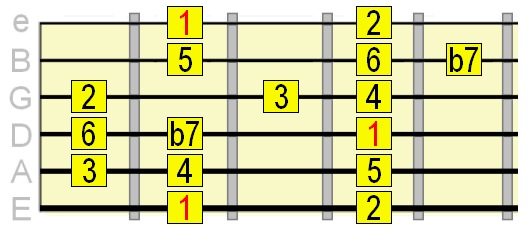
The basic dominant scale (1, 3, 5, b7).
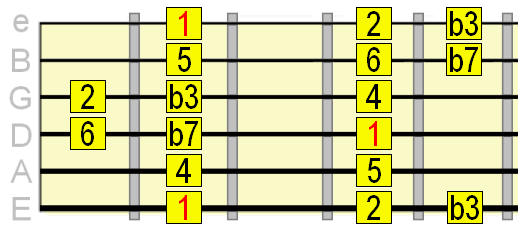
Characterised by its major 6th (6) over minor 7th chords (1, b3, 5, b7).
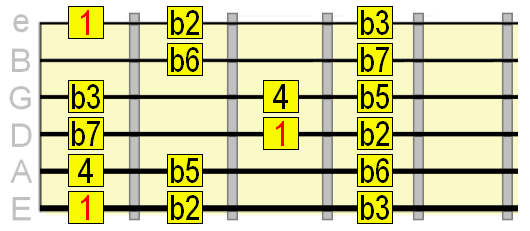
Notice how the names of some of these scales refer to modes of the major scale (e.g. Dorian, Mixolydian) but with slight alterations (e.g. Dorian b2) that make significant differences to the scale's overal sound...
Same as Dorian, but with a major 7th instead of a minor 7th. Often called the "jazz minor scale".
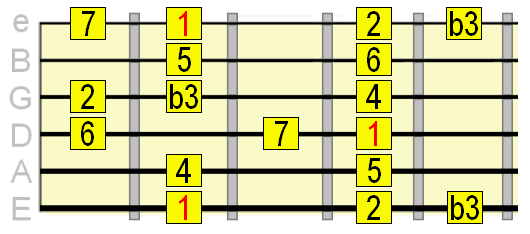
Dorian with a minor 2nd. Generally used as an alternative to Phrygian minor.
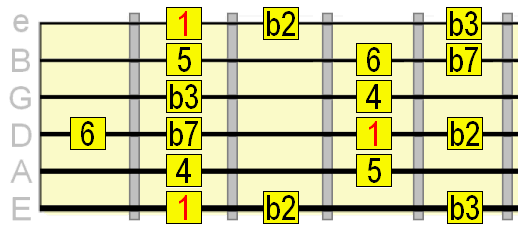
Lydian with an augmented 5th.
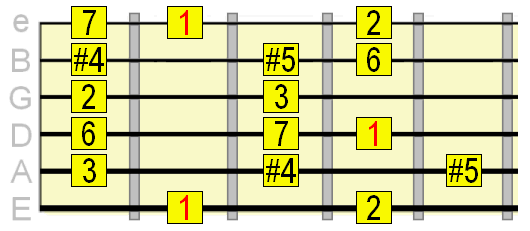
A nice (and often preferable) alternative to Mixolydian, the only difference between the two being the 4th.
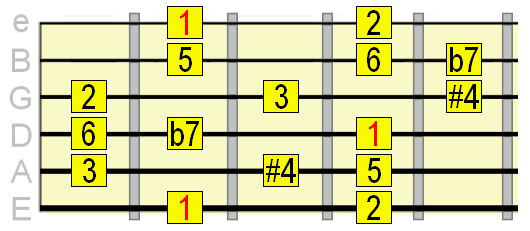
Remember the 13th is the same as the 6th, so we're looking for a flat 6th (b6) interval over flat 13th chords. But it's also just another option for coloring dominant 7th chords with no extensions.
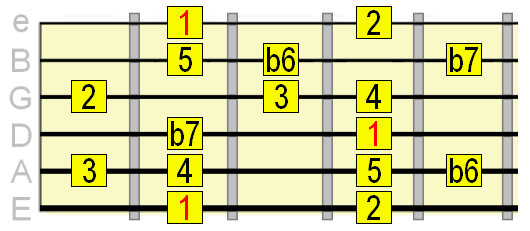
The only difference between this scale and the other natural half diminished scale, Locrian, is the major 2nd instead of the minor 2nd.
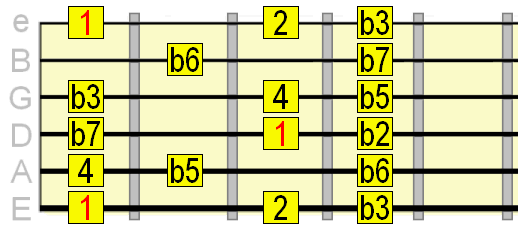
So-called because it colors the "altered" extensions of the #9 (#2) and b13 (b6) in dominant 7th chords.
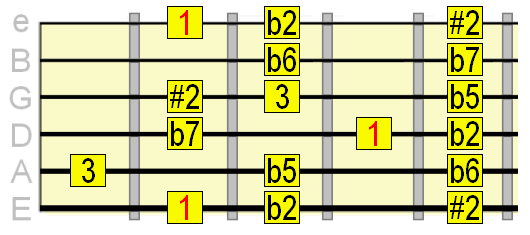
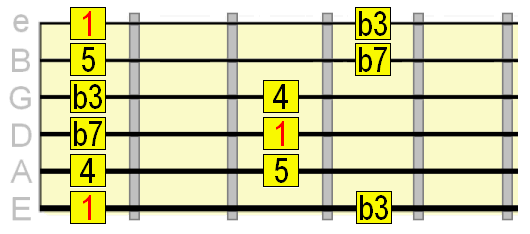
Minor pentatonic can be used over minor chords and certain minor key progressions. But it can also be positioned relative to major chords to outline specific chord tones. For example, you can start the following minor pentatonic pattern on the major 3rd of a major 7th chord to outline the maj7 chord tones (e.g. play E minor pentatonic over Cmaj7).
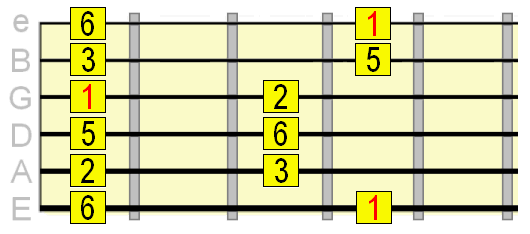
Major pentatonic can be used in a similar way. For example, as well as using it over maj7 and dom7 chords, you could also start it on the 2nd degree of a maj7 chord to highlight the 9, #11, 13 and 7 tones respectively (e.g. D major pentatonic over Cmaj7).
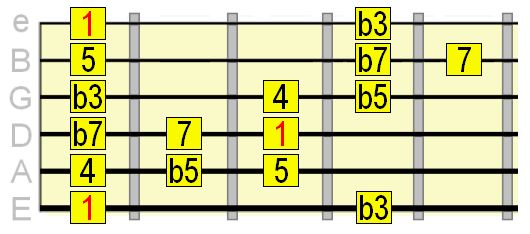
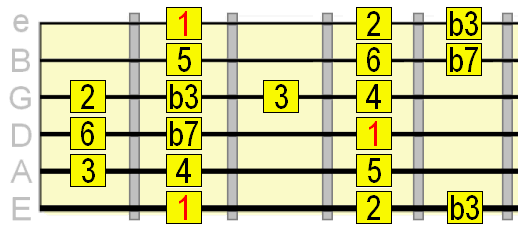
Adding a flat 5th (b5) and major 7th (7) to minor pentatonic gives us a jazzier variation on the standard blues scale...
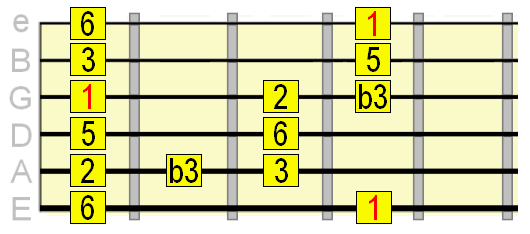
You can also add an extra tone to major pentatonic to give it more of a jazzy/bluesy flavour. Essentially, we're adding a chromatic minor 3rd to major pentatonic. In the context of a major key progression (e.g. I IV V), the minor 3rd will often resolve quickly down to the 2nd or up to the major 3rd...
In jazz, combinations of major and minor pentatonic blues scales will commonly be used in the same lead passages.
Holding the major 3rd over a minor chord, for example, will sound dissonant, but if you pass over it quickly, as part of a larger phrase, it'll fall into context. This chromatic phrasing is a large part of jazz's distinctive sound.
Ionian with a passing flat 5th.
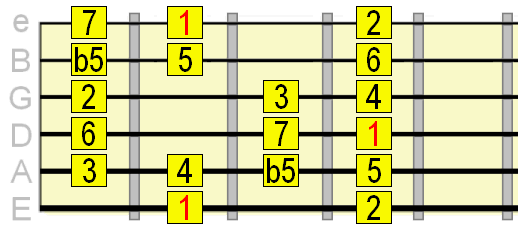
Mixolydian with a passing major 7th.
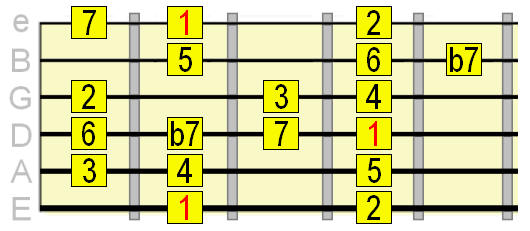
Dorian with a passing major 3rd.
Remember, this is a minor scale used in a minor context, so don't dwell on the major 3rd. Use it as a passing tone...
I hope you found this lesson useful!
Share your thoughts...
Have any questions, thoughts or ideas about this lesson? Let us know using the comments form below.
Learn More Guitar Scales
20 Jazz Guitar Scales & When to Use Them
This lesson will show you some of the most commonly used jazz guitar scales, although keep in mind you shouldn't necessarily be limited to using these scales. Jazz is an experimental genre and guitarists are constantly exploring new scales (and modifying old ones) in their improvisation.Each scale below is shown in its first position box pattern, but you can learn how to "unbox" these scales in their individual lessons. I'll also note the associated chord type for each scale so you have some idea of when to use them.
Remember, learning scales is just one part of jazz guitar, but it is a crucial part, as a lot of your playing time will be spent on lead improvisation. For now, just get to know the basic interval structure and color of these scales. Each one offers its own unique sound...
Download the free print sheets for
this lesson (PDF)Basic modal jazz guitar scales
These are your standard improvisation scales over major, minor and diminished chords.In the diagrams below, take a look at how the intervals correspond with those in the associated chord. For example, Lydian is suited to maj7#11 chords because of its #4 (augmented 4th) interval (4 is technically the same as 11 in music theory).
Ionian/Major Scale
Play over: Major 7th chords (e.g. C Major over Cmaj7)Characterised by the major 7th (7) added to the major triad (1, 3, 5).
Lydian
Play over: Major 7th (Sharp 11th) chords (e.g. C Lydian over Cmaj7 or Cmaj7#11)The #4 (#11) gives Lydian its distinctive flavour over major 7th chords (1, 3, 5, 7).
Mixolydian
Play over: Dominant 7th chords (e.g. C Mixolydian over C7)The basic dominant scale (1, 3, 5, b7).
Dorian
Play over: Minor 7th / Minor 6th chords (e.g. C Dorian over Cm7 / Cm6)Characterised by its major 6th (6) over minor 7th chords (1, b3, 5, b7).
Locrian
Play over: Half Diminished chords (e.g. C Locrian over Cm7b5)Melodic minor jazz guitar scales
The melodic minor scale also has its own modal system, producing 7 of its own modes/scales, each one rooted on a degree of the scale. These derived scales have qualities that are well suited to those tense, altered jazz chords.Notice how the names of some of these scales refer to modes of the major scale (e.g. Dorian, Mixolydian) but with slight alterations (e.g. Dorian b2) that make significant differences to the scale's overal sound...
Melodic Minor
Play over: Minor Major 7th / Minor 6th chords (e.g. C Melodic Minor over CmM7 / Cm6)Same as Dorian, but with a major 7th instead of a minor 7th. Often called the "jazz minor scale".
Dorian b2
Play over: Suspended 4th, Flat 9th chords (e.g. C Dorian b2 over C7sus4/b9)Dorian with a minor 2nd. Generally used as an alternative to Phrygian minor.
Lydian Augmented
Play over: Major 7th, Augmented 5th chords (e.g. C Lydian Augmented over Cmaj7#5)Lydian with an augmented 5th.
Lydian Dominant
Play over: Dominant 7th, Sharp 11th chords (e.g. C Lydian Dominant over C7 or C7#11)A nice (and often preferable) alternative to Mixolydian, the only difference between the two being the 4th.
Mixolydian b6
Play over: Dominant 7th, Flat 13th chords (e.g. C Mixolydian b6 over C7 or C7b13)Remember the 13th is the same as the 6th, so we're looking for a flat 6th (b6) interval over flat 13th chords. But it's also just another option for coloring dominant 7th chords with no extensions.
Half Diminished
Play over: Half Diminished chords (e.g. C Half Diminished over Cm7b5)The only difference between this scale and the other natural half diminished scale, Locrian, is the major 2nd instead of the minor 2nd.
Altered Scale
Play over: Augmented 7th or Dominant 7th, Sharp 9th, Flat 13th chords (e.g. C Altered over C7#9b13 or Caug7)So-called because it colors the "altered" extensions of the #9 (#2) and b13 (b6) in dominant 7th chords.
Pentatonic & blues jazz guitar scales
The minor and major pentatonic scales play a significant role in jazz.Minor pentatonic can be used over minor chords and certain minor key progressions. But it can also be positioned relative to major chords to outline specific chord tones. For example, you can start the following minor pentatonic pattern on the major 3rd of a major 7th chord to outline the maj7 chord tones (e.g. play E minor pentatonic over Cmaj7).
Major pentatonic can be used in a similar way. For example, as well as using it over maj7 and dom7 chords, you could also start it on the 2nd degree of a maj7 chord to highlight the 9, #11, 13 and 7 tones respectively (e.g. D major pentatonic over Cmaj7).
Adding a flat 5th (b5) and major 7th (7) to minor pentatonic gives us a jazzier variation on the standard blues scale...
You can also add an extra tone to major pentatonic to give it more of a jazzy/bluesy flavour. Essentially, we're adding a chromatic minor 3rd to major pentatonic. In the context of a major key progression (e.g. I IV V), the minor 3rd will often resolve quickly down to the 2nd or up to the major 3rd...
In jazz, combinations of major and minor pentatonic blues scales will commonly be used in the same lead passages.
Bebop jazz guitar scales
Bebop scales add chromatic "passing tones" to standard 7 note scales. You'll also often hear the bass following these chromatic passages. Passing tones should be glanced over rather than emphasised/held. See them as part of the path or bridge between the starting and destination notes of a phrase.Holding the major 3rd over a minor chord, for example, will sound dissonant, but if you pass over it quickly, as part of a larger phrase, it'll fall into context. This chromatic phrasing is a large part of jazz's distinctive sound.
Bebop Major scale
Play over: Major 7th chordsIonian with a passing flat 5th.
Bebop Dominant scale
Play over: Dominant 7th chordsMixolydian with a passing major 7th.
Bebop Dorian scale
Play over: Minor 7th and minor 6th chordsDorian with a passing major 3rd.
Remember, this is a minor scale used in a minor context, so don't dwell on the major 3rd. Use it as a passing tone...
Whole Tone scale
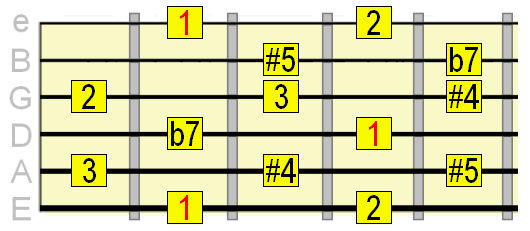
The whole tone scale is so-called because it consists entirely of whole step intervals. It's used to colour augmented 7th chords (e.g. Caug7 / C7#5)...Diminished scale
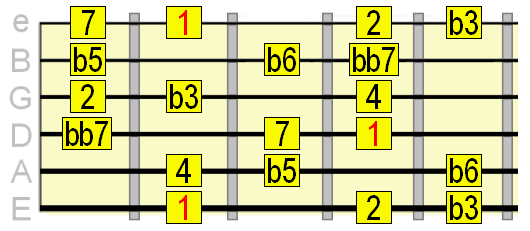
This is an eight note (octatonic) scale that works over diminished 7th (e.g. Cdim7) chords. It's characterised by its repetitive interval step pattern (W H W H W H W H)...I hope you found this lesson useful!
| Was this
helpful? Please support this site. I really appreciate it! |
Stay updated
and learn more Sign up to the newsletter for updates and grab your free Uncommon Chords book |
Share your thoughts...
Have any questions, thoughts or ideas about this lesson? Let us know using the comments form below.
Related
Learn More Guitar Scales


