


Home
> Chords
> Power
Chord Chart
As we learned in the introductory guitar power chords lesson, the typical power chord consists of the root (1) and 5th (5). There are several positions in which you can play this diad, some of which were shown in the above lesson and covered more comprehensively below.
The basic
power chord diad, consisting of the root and 5th can be
played in the following movable positions. Movable means the chords
maintain their form/fingering on the fretboard no matter which fret you
position them at.
More Guitar Chords

Guitar Power Chords Chart
Power chords appear in several different forms (or "shapes") on the fretboard. The guitar power chords chart in this lesson will provide you with many of these variations, but ultimately it's up to you to explore the fretboard in your own way (based on your knowledge of chords and scales). This is just for quick reference. Print this page out if you like.As we learned in the introductory guitar power chords lesson, the typical power chord consists of the root (1) and 5th (5). There are several positions in which you can play this diad, some of which were shown in the above lesson and covered more comprehensively below.
 Movable
guitar power chords chart
Movable
guitar power chords chart
The basic
power chord diad, consisting of the root and 5th can be
played in the following movable positions. Movable means the chords
maintain their form/fingering on the fretboard no matter which fret you
position them at.E string
root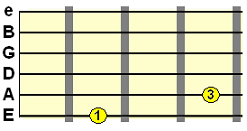 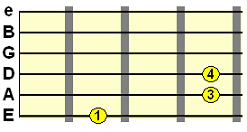 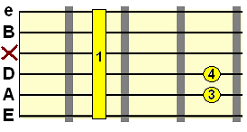 ^ This fuller power chord shape requires you to mute the G string. I use my 2nd finger as if I were playing a standard major barre chord, but instead of fretting the G string I just rest over it. This mutes the string. |
A string
root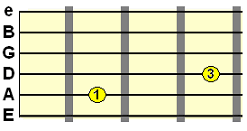 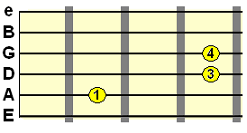 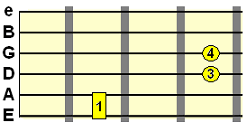 ^ Simply barre your index finger across the low E and A strings. The low E provides a lower 5th in the power chords shape. Adds a bit of depth to A string root power chords. TIP You can also just use the 2 string barre and leave out the D and G strings for more of a "lead" fingering. |
D
string root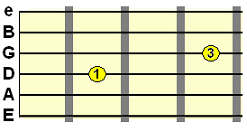 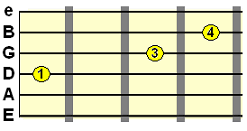 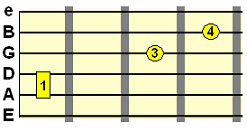 ^ An extension of the basic root-5th shape. The A string provides a lower 5th, the B string provides the root octave (higher root). Tip: Leave out the G and B strings for more of a "lead" fingering. |
G string
root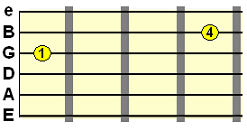 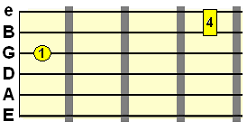 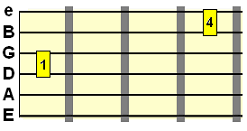 |
B string
root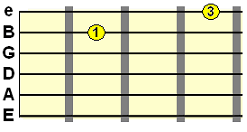 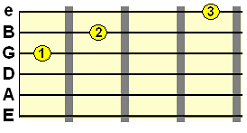 |
Open guitar power chords chart
As the name suggests, these power chord shapes make use of open strings, giving you a fuller voicing. Great for those big sounding rock and metal riffs.Open E
power chords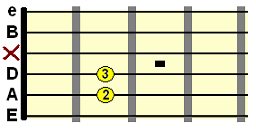 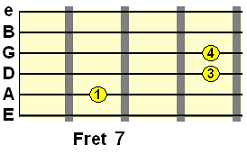 |
Open A
power chords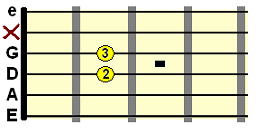 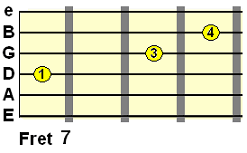 |
Open
D power chord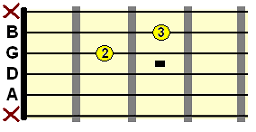 |
Open
G power chord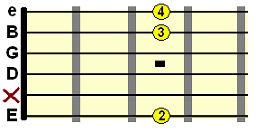 |
| |
Tweet |
Stay updated and learn more
Sign up to the newsletter for updates and grab your free Uncommon Chords book
Sign up to the newsletter for updates and grab your free Uncommon Chords book
More Guitar Chords



