


Home
> Scales
/ Theory
>
Mode Relationships

Need more help with the concepts shown in the video? Read on...
Let's say the backing chord was D minor.
From the other lessons in this series, we should know that we have 3 options in regards to which mode we can play over this chord, because are 3 minor modes - Dorian, Phrygian and Aeolian. Knowing which mode to use will be covered in another lesson (sorry, I can't cover everything in one lesson!).
I'm gonna choose Dorian for this example.
As the backing chord is D minor, our minor mode also needs to be rooted on that same note of D.
When starting out, it's easiest just to find this root note on the low E string and build your mode's basic box pattern from there.

We could find our root note of D at the 10th fret.
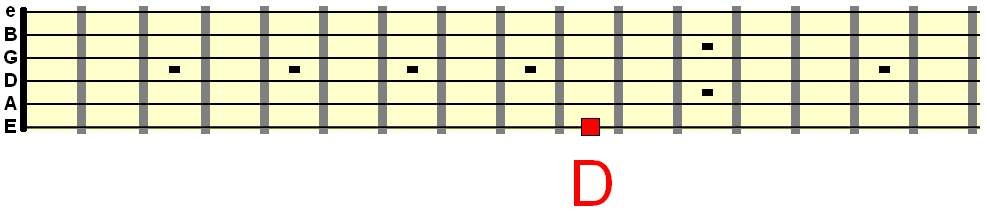
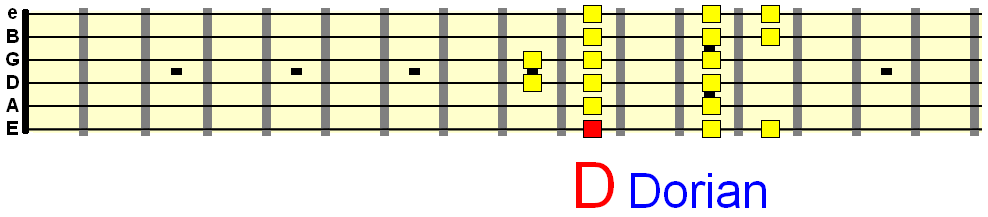
So, we now have a position for playing D Dorian over a D minor backing chord.
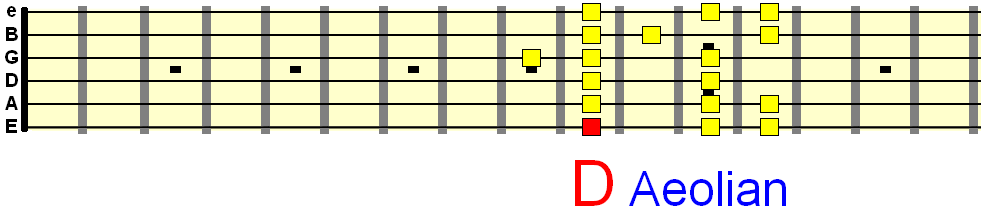
Of course we could have chosen Aeolian as our mode, in which case we'd simply build Aeolian's box pattern on that same D root note position.
If the chord was D major, we'd have chosen one of the major modes on that same root note position.
To stay focused let's just stick with that D minor, Dorian example.
To help visualise this, we can use our knowledge of the other relative mode patterns to expand our Dorian pattern across the fretboard.
We know that Dorian is the 2nd mode of the major scale and is therefore built on the 2nd degree of the major scale.
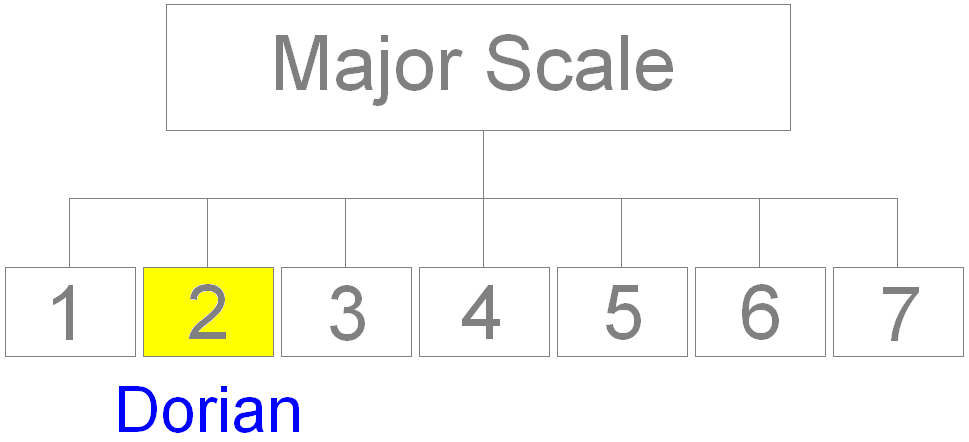
Using our knowledge of the intervals of this parent major scale, we should know, for example, where the 3rd degree would lie in relation to this 2nd degree note.
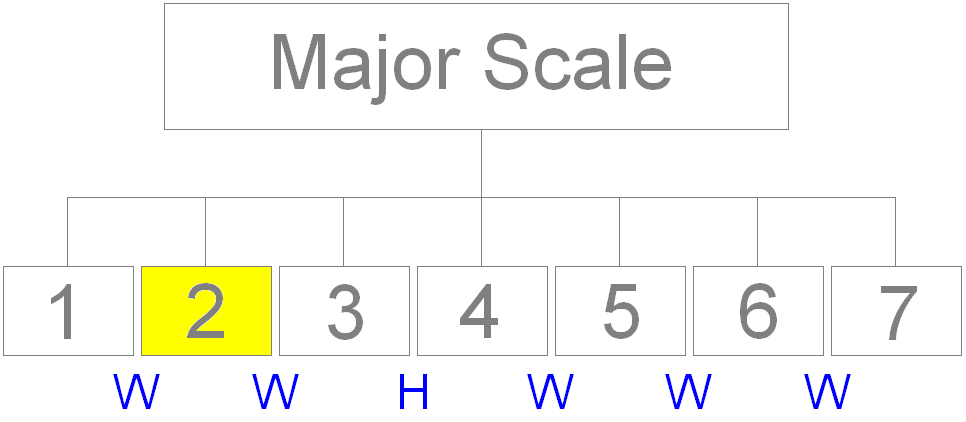
The 3rd degree is one whole step (W) higher than the 2nd.
On the fretboard we can visualise this whole step as two frets up from our D note.
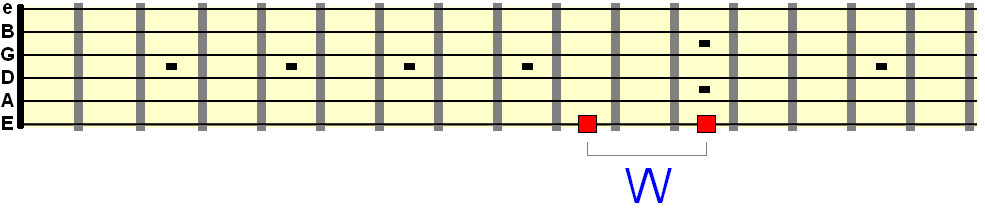
So our 3rd degree note would be E.
Now, just as the 2nd degree note corresponds with its 2nd mode, so too does the 3rd degree note correspond with the 3rd mode - Phrygian.
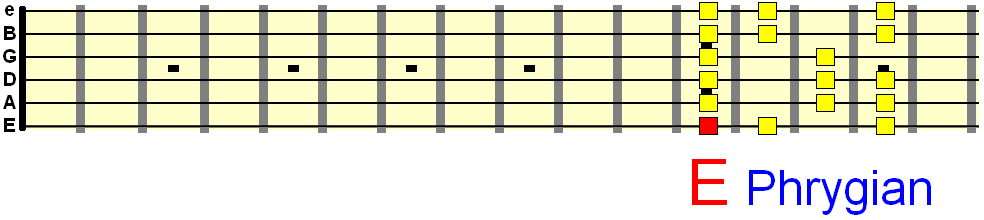
If we play phrygian's root box pattern from that 3rd degree note, we are essentially playing a related pattern of that D Dorian mode.
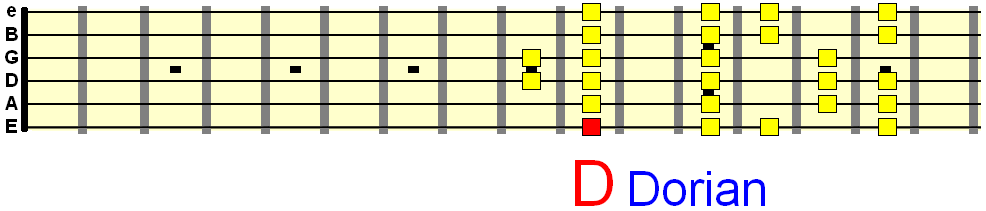
This is because the backing chord, as we established, is D minor, and because we chose Dorian as our mode on that D root note, all its related mode positions get put into that context.
So continuing, 4th mode Lydian's pattern would lie a half step up from the phrygian pattern based on its position in the major scale. As we're beyond the 12th fret, we could also visualise this pattern an octave lower

5th mode Mixolydian's pattern would lie a whole step from lydian, based on its 5th degree major scale position.

6th mode pattern aeolian would lie on the relative 6th degree position, and so on.

As you can see, we now have a large pattern based on that original D Dorian position. All these related mode patterns essentially become an extension of that D Dorian pattern.
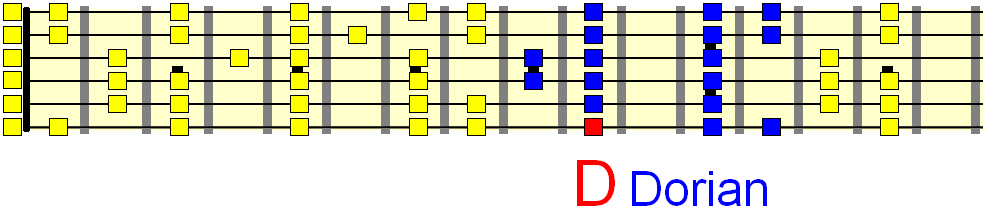
Now, here's where people tend to get confused about the role these related mode patterns play.
We're still playing in the context of D minor and D Dorian, so when we talk about playing "E phrygian" over a D minor chord, it won't sound like phrygian, it will sound like Dorian.
This is because the root note of that D minor chord corresponds to D Dorian in its related position.
E phrygian simply becomes an extension of that D Dorian pattern, because it uses the same notes (just from a different position). Strictly speaking it should not be called phrygian for that reason, but associating a pattern to its mode name can help you visualise its relative position.
Many musicians prefer to simply number these patterns as relative positions to the mode you're playing, therefore the "phrygian box pattern" would more accurately be the 2nd position of Dorian. Lydian, the next mode pattern, would be the 3rd position of Dorian and so on.
However, if it helps you to refer to each pattern by its modal name, even when you're not playing in that particular mode, then by all means use it.
The easiest way to understand this concept of related mode positions is to play over a chord backing track. Try playing the pattern (or any of the related box patterns) over the D minor track below, and you'll essentially be playing D Dorian.
 Download the Dm7 backing track here (right
click and "save as")
Download the Dm7 backing track here (right
click and "save as")
In a nutshell, if Dorian is our chosen mode over this D minor chord, then all its related modes will sound like D Dorian.
If you took those related patterns from earlier and simply played through their position root notes in the context of D minor, you would be playing... D Dorian.
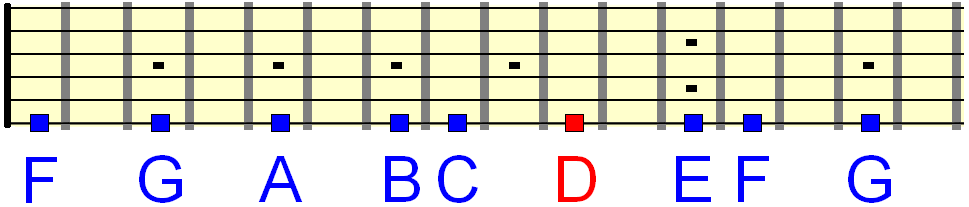
In fact, choose any string with the related patterns strung together from earlier and play it over D minor, and you'll be playing D Dorian.
When all the related mode patterns of your chosen mode are strung together in sequence on the fretboard, you essentially have a large pattern of your chosen mode!
So whatever mode you choose to play, find the root note that corresponds to the backing chord or bass note, build its box pattern on that root note position and then you can visualise the sequence of related mode patterns from that position.
To finish with, below is a table showing you how the modes relate to different major scale root positions.
Remember, Ionian shares the same root as its parent major scale, which is why you see people use Ionian/major scale interchangeably (although strictly speaking you should only call it Ionian when it's being used in a modal context).
Remember also that these related mode root notes are the same as the parent scale's degree notes. For example, the 5th degree note of C major is G, which is why its 5th mode Mixolydian is rooted on G. Play C major and you'll be playing exactly the same notes as G Mixolydian, or any of its related modes, just from a different position.
Share your thoughts...
Have any questions, thoughts or ideas about this lesson? Let us know using the comments form below.
Guitar
Modes Series
How to Play Guitar Modes Across the Entire Fretboard
Over the course of this guitar modes series, we've been introduced to the modes of the major scale.This lesson will further build on the intrinsic relationship between the 7 modes and how you can use this knowledge to map out any mode right across the fretboard.
Just a warning, however,
this is not for beginners.
You need to have a basic grasp of what modes are and how they
correspond to the intervals of their parent scale, in this case the
major scale.
Video lesson
Need more help with the concepts shown in the video? Read on...
Finding The Root Note For Your Chosen Mode
First, it's crucial to understand how the root note of your chosen mode or scale corresponds to the root note or key of the backing chord or chord progression.Let's say the backing chord was D minor.
From the other lessons in this series, we should know that we have 3 options in regards to which mode we can play over this chord, because are 3 minor modes - Dorian, Phrygian and Aeolian. Knowing which mode to use will be covered in another lesson (sorry, I can't cover everything in one lesson!).
I'm gonna choose Dorian for this example.
As the backing chord is D minor, our minor mode also needs to be rooted on that same note of D.
When starting out, it's easiest just to find this root note on the low E string and build your mode's basic box pattern from there.
We could find our root note of D at the 10th fret.
So, we now have a position for playing D Dorian over a D minor backing chord.
Of course we could have chosen Aeolian as our mode, in which case we'd simply build Aeolian's box pattern on that same D root note position.
If the chord was D major, we'd have chosen one of the major modes on that same root note position.
To stay focused let's just stick with that D minor, Dorian example.
Relative Mode Positions
As you progress as a guitarist and musician, you'll naturally want to break out of these "box patterns" and use more of the fretboard.To help visualise this, we can use our knowledge of the other relative mode patterns to expand our Dorian pattern across the fretboard.
We know that Dorian is the 2nd mode of the major scale and is therefore built on the 2nd degree of the major scale.
Using our knowledge of the intervals of this parent major scale, we should know, for example, where the 3rd degree would lie in relation to this 2nd degree note.
The 3rd degree is one whole step (W) higher than the 2nd.
| You should be confident with how intervals work on the guitar. I highly recommend this interactive software to help you with this and bring together many other important aspects of fretboard theory. |
On the fretboard we can visualise this whole step as two frets up from our D note.
So our 3rd degree note would be E.
Now, just as the 2nd degree note corresponds with its 2nd mode, so too does the 3rd degree note correspond with the 3rd mode - Phrygian.
If we play phrygian's root box pattern from that 3rd degree note, we are essentially playing a related pattern of that D Dorian mode.
This is because the backing chord, as we established, is D minor, and because we chose Dorian as our mode on that D root note, all its related mode positions get put into that context.
So continuing, 4th mode Lydian's pattern would lie a half step up from the phrygian pattern based on its position in the major scale. As we're beyond the 12th fret, we could also visualise this pattern an octave lower
5th mode Mixolydian's pattern would lie a whole step from lydian, based on its 5th degree major scale position.
6th mode pattern aeolian would lie on the relative 6th degree position, and so on.
As you can see, we now have a large pattern based on that original D Dorian position. All these related mode patterns essentially become an extension of that D Dorian pattern.
Now, here's where people tend to get confused about the role these related mode patterns play.
We're still playing in the context of D minor and D Dorian, so when we talk about playing "E phrygian" over a D minor chord, it won't sound like phrygian, it will sound like Dorian.
This is because the root note of that D minor chord corresponds to D Dorian in its related position.
E phrygian simply becomes an extension of that D Dorian pattern, because it uses the same notes (just from a different position). Strictly speaking it should not be called phrygian for that reason, but associating a pattern to its mode name can help you visualise its relative position.
Many musicians prefer to simply number these patterns as relative positions to the mode you're playing, therefore the "phrygian box pattern" would more accurately be the 2nd position of Dorian. Lydian, the next mode pattern, would be the 3rd position of Dorian and so on.
However, if it helps you to refer to each pattern by its modal name, even when you're not playing in that particular mode, then by all means use it.
The easiest way to understand this concept of related mode positions is to play over a chord backing track. Try playing the pattern (or any of the related box patterns) over the D minor track below, and you'll essentially be playing D Dorian.
Download the Dm7 backing track here (right
click and "save as")In a nutshell, if Dorian is our chosen mode over this D minor chord, then all its related modes will sound like D Dorian.
- E Phrygian over D minor will sound like Dorian.
- F Lydian over D minor will sound like Dorian.
- G Mixolydian over D minor will sound like Dorian.
- A Aeolian over D minor will sound like Dorian.
- B Locrian over D minor will sound like Dorian.
- C Ionian, or just C major (the parent scale), over D minor will sound like Dorian.
If you took those related patterns from earlier and simply played through their position root notes in the context of D minor, you would be playing... D Dorian.
In fact, choose any string with the related patterns strung together from earlier and play it over D minor, and you'll be playing D Dorian.
When all the related mode patterns of your chosen mode are strung together in sequence on the fretboard, you essentially have a large pattern of your chosen mode!
So whatever mode you choose to play, find the root note that corresponds to the backing chord or bass note, build its box pattern on that root note position and then you can visualise the sequence of related mode patterns from that position.
To finish with, below is a table showing you how the modes relate to different major scale root positions.
Remember, Ionian shares the same root as its parent major scale, which is why you see people use Ionian/major scale interchangeably (although strictly speaking you should only call it Ionian when it's being used in a modal context).
Remember also that these related mode root notes are the same as the parent scale's degree notes. For example, the 5th degree note of C major is G, which is why its 5th mode Mixolydian is rooted on G. Play C major and you'll be playing exactly the same notes as G Mixolydian, or any of its related modes, just from a different position.
| Major Scale Root | Ion Root | Dor Root | Phr Root | Lyd Root | Mixo Root | Aeo Root | Loc Root |
| C | C | D | E | F | G | A | B |
| C# | C# | D# | E# | F# | G# | A# | B# |
| D | D | E | F# | G | A | B | C# |
| Eb | Eb | F | G | Ab | Bb | C | D |
| E | E | F# | G# | A | B | C# | D# |
| F | F | G | A | Bb | C | D | E |
| F# | F# | G# | A# | B | C# | D# | E# |
| G | G | A | B | C | D | E | F# |
| Ab | Ab | Bb | C | Db | Eb | F | G |
| A | A | B | C# | D | E | F# | G# |
| Bb | Bb | C | D | Eb | F | G | A |
| B | B | C# | D# | E | F# | G# | A# |
| Was this
helpful? Please support this site. I really appreciate it! |
Stay updated
and learn more Sign up to the newsletter for updates and grab your free Uncommon Chords book |
Share your thoughts...
Have any questions, thoughts or ideas about this lesson? Let us know using the comments form below.
More Lessons
Guitar
Modes Series


