



Chord Phrasing - Part 2
In the first chord phrasing part, we looked at adding and removing notes from existing chord shapes to create more intricate chord phrasing. One of the ways we did this was to use hammer-ons and pull-offs within the chord.So how can we go that step further and make our chords and progressions even more dynamic? After all, the more diverse your range of guitar playing styles, the more diverse your music has the potential to be!
In this lesson, we're going to look at extending and floating 2-3 note phrases out beyond the intital chord shape to add more brush strokes to the chord pictures we paint.A little theory to start with
Most guitarists know of scales using one note at a time. Few guitarists understand chord scales. We'll be using these chord scales in this lesson to build phrases around the initial, basic chord shapes. The fact that they're part of the same key/scale means they can act as an extension of the root chord.
You have two choices: you can pop over to the guitar chord progressions section and learn all about how chord scales work (and then return to this lesson when you're ready), or you can trust your ears to experiment through trial and error without being tied down to diatonic "rules".
I recommend you do both!
How a simple chord phrase sequence could work
Observe the diagram and listen to the clip below. The first is a simple switch between A major and Asus4...
(Click the diagrams in this lesson to hear the clips)
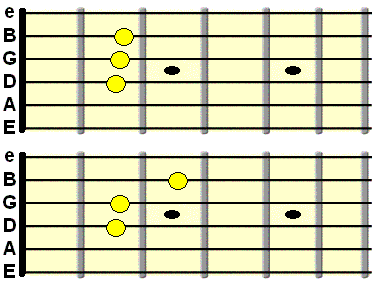
Now, we're just changing one note in the sequence above. If we apply the chord scale, we can involve more than one string and still keep it all in-key...
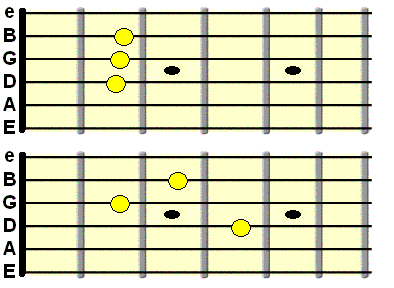
Look at that second part of the sequence again - notice it from anywhere?...
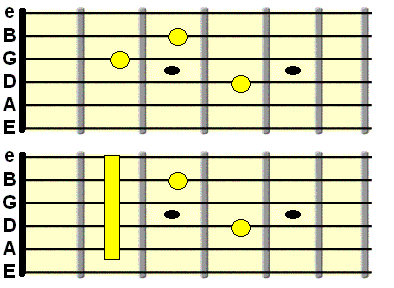
Yep - it's just a cut down version of the next chord in the A major chord scale. If you've studied the diatonic chord scale, you'll know that if A major was the tonic (I) chord, then Bm7 would be the "ii" chord (2nd chord in the scale).
So that's one way we can pull out these 2-3 note phrases. Why do we cut down the chord to just a few notes? Well, by including just the higher tones in the chord, it becomes less defined as an individual, separate chord, and flows more effectively as part of the initial chord - that's what we want for this "phrasing" effect. That's what makes it a flavour of the first chord in the scale sequence rather than a completely seperate chord.
Bear with me if you're not too sure about all this!
Let's try and further extend this A major sequence using more of the floating phrase technique.
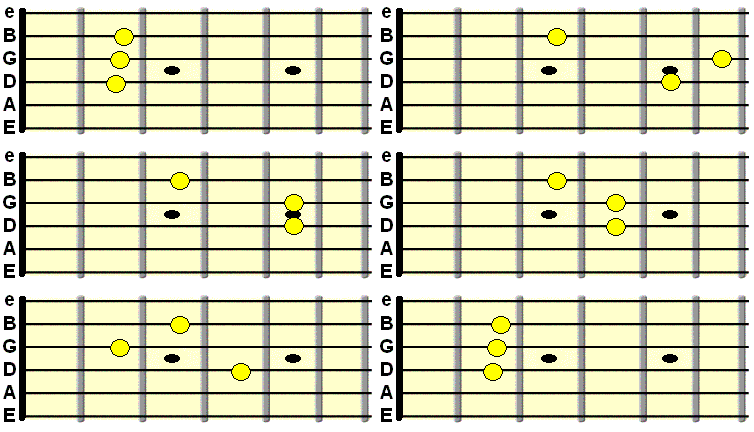
Now, we've only focussed on one particular key of chord phrasing (although you can experiment - it doesn't always have to fit into a modal key to sound good!), but the same concept also works on the other chord shapes, the only difference being the shape of the phrases on the fretboard changing depending on which chord shape it is.
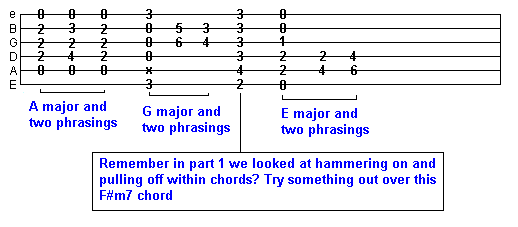
Try the exercise below, which makes use of simple phrasing based around the A, G, F#m and E chords. The tab doesn't dictate any rhythmic use of the phrases, but below is something I put together for an example. It'll also help you break down the different parts of a longer sequence.
Hammer-on / pull-off chord phrases
Whereas in part 1 we were hammering on single notes withing a chord, we can also hammer on multiple strings/notes to allow us more interesting use of rhythm...
Take a standard minor 7 shape on the A string...
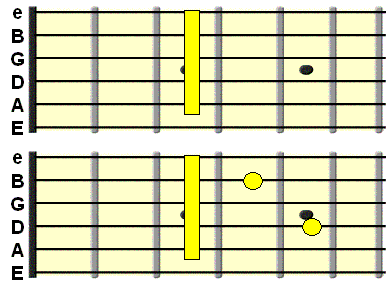
Because we barre our index finger, we can start off with just the barre and hammer-on the remaining part of the shape (you should try this with the other barre chord shapes too). You can also pull-off in a similar way. This gives a jumpy kind of rhythm that can inject energy into the chord progression...
Add in the same technique for the major barre shape on the A string...
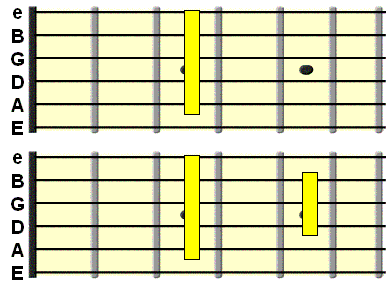
The other barre that flashes up could be made by either your ring finger or pinky finger, or however you feel comfortable playing this chord shape usually.
And we can slide up to apply the chord hammer-on, or pull-off...
See how just a bit of phrasing can really bring out the best rhythmic elements of your music? That's the great thing about chord phrasing, it inspires you to work it into a really expressive rhythm... preferably one that's unique to you!As always, the key is to experiment! Experiment with different chord shapes, hammering on various notes and phrases, floating phrases away from that root chord occasionally, and most importantly, building a chord progression that flows beautifully.
Yeh, I know, the audio examples I play aren't too spectacular, but that doesn't mean your's can't be!
At this point in writing up every lesson, I always feel like we've only just scratched the surface... I will come back to this in the near future and expand further on the techniques we've looked at.
Until then - pick up that guitar and create something!
| |
Tweet |
Sign up to the newsletter for updates and grab your free Uncommon Chords book
More Rhythm Guitar Lessons



