


Home
> Scales
/ Theory
> 7th
Arpeggios

As we're simply adding to the major and minor triad forms we learned in the other parts, we don't have to learn new arpeggio fingerings from scratch. We may just have to alter them slightly to accomodate this new 7th interval.
So, there are different types of 7th chord and their arpeggio equivalents use exactly the same intervals/tones. Where there's a chord, there's an arpeggio.
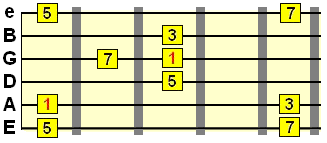
The major 7th tone lies one semitone (one fret) down from the root. So, wherever our root note is, we know the major 7th will sit just below it!
Major 7th arpeggios can be played over major 7th chords or regular major triad chords. For now, just play the arpeggios and get to know the sound they create.
E/D string root patterns
A string root patterns
You can learn more about major 7th arpeggios in their own lesson here.
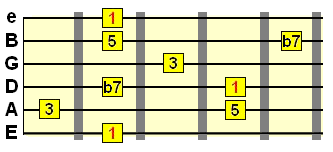
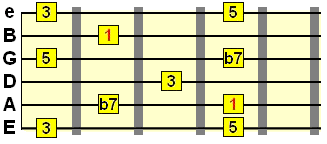
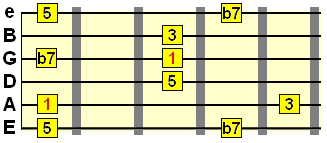
When you've learned the major 7th patterns, for dominant 7th all you need to do is move the 7th down one semitone/fret. As a result, this is known as a flat 7th or minor 7th (b7).
Dominant seventh arpeggios can be played over... yes you guessed it - dominant 7th chords or regular major triad chords (chords without any 7th).
Remember, you don't have to start these patterns on the lowest root string. You can use any part of the pattern to create, for example, smaller 2 and 3 string patterns.
E/D string root patterns
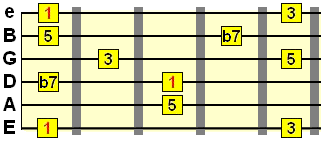
A string root patterns
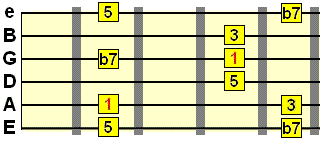
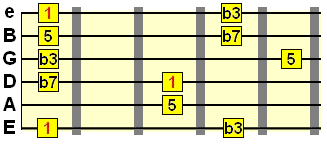
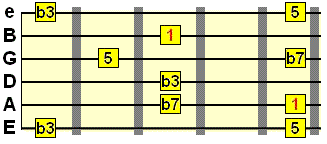
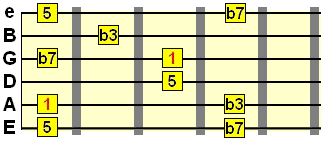
Similar concept to above, but this time the flat 7th is built on the minor triad patterns we learned previously.
Minor 7th arpeggios can therefore be played over minor 7th chords or used to extend regular minor triad chords (which don't use the 7th).
E/D string root patterns
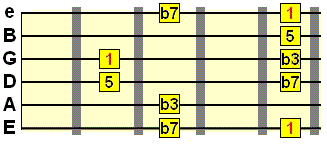
A string root patterns
D string root patterns
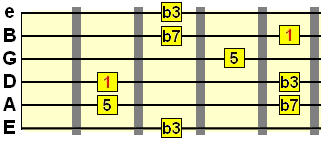
Now you know the main arpeggio patterns, try applying them over the different 7th chords you come across. Use them as lead-ins to larger scale phrases. Arpeggios are great for "connecting" lead phrases and because they only include the main chord intervals, they can help put any larger phrases and passing tones into context.
Remember, you don't have to use the 5 and 6 string arp patterns. even just repeating 2 or 3 string arps can give your solos enough flavour. We'll look at inventive ways to apply arpeggios in your solos in another part. For now, just work on getting physically comfortable with playing these patterns in part and full.
7th Guitar Chord Theory
Use 7th Arpeggios with Guitar Scales
More Guitar Theory Lessons
7th Arpeggios on Guitar
Just like 7th chords, 7th arpeggios contain four notes. All we're doing is adding an extra note to the major and minor triads (3 notes) we learned previously. This provides us with a fuller arpeggio sound that can be used to extend the basic major or minor sounds.As we're simply adding to the major and minor triad forms we learned in the other parts, we don't have to learn new arpeggio fingerings from scratch. We may just have to alter them slightly to accomodate this new 7th interval.
So, there are different types of 7th chord and their arpeggio equivalents use exactly the same intervals/tones. Where there's a chord, there's an arpeggio.
Major 7th arpeggio patterns
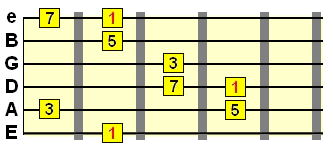
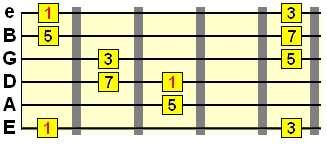
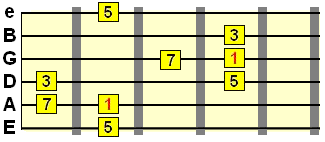
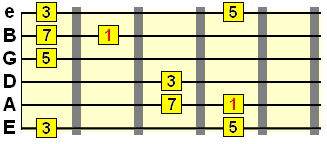
Root (1) - major 3rd (3) - 5th (5) - major 7th (7)The major 7th tone lies one semitone (one fret) down from the root. So, wherever our root note is, we know the major 7th will sit just below it!
Major 7th arpeggios can be played over major 7th chords or regular major triad chords. For now, just play the arpeggios and get to know the sound they create.
E/D string root patterns
A string root patterns
You can learn more about major 7th arpeggios in their own lesson here.
Dominant 7th arpeggio patterns
Root (1) - major 3rd (3) - 5th (5) - flat 7th (b7)When you've learned the major 7th patterns, for dominant 7th all you need to do is move the 7th down one semitone/fret. As a result, this is known as a flat 7th or minor 7th (b7).
Dominant seventh arpeggios can be played over... yes you guessed it - dominant 7th chords or regular major triad chords (chords without any 7th).
Remember, you don't have to start these patterns on the lowest root string. You can use any part of the pattern to create, for example, smaller 2 and 3 string patterns.
E/D string root patterns
A string root patterns
Minor 7th arpeggio patterns
Root (1) - minor 3rd (b3) - 5th (5) - flat 7th (b7)Similar concept to above, but this time the flat 7th is built on the minor triad patterns we learned previously.
Minor 7th arpeggios can therefore be played over minor 7th chords or used to extend regular minor triad chords (which don't use the 7th).
E/D string root patterns
A string root patterns
D string root patterns
Now you know the main arpeggio patterns, try applying them over the different 7th chords you come across. Use them as lead-ins to larger scale phrases. Arpeggios are great for "connecting" lead phrases and because they only include the main chord intervals, they can help put any larger phrases and passing tones into context.
Remember, you don't have to use the 5 and 6 string arp patterns. even just repeating 2 or 3 string arps can give your solos enough flavour. We'll look at inventive ways to apply arpeggios in your solos in another part. For now, just work on getting physically comfortable with playing these patterns in part and full.
| |
Tweet |
 Like This?
Subscribe & Learn More... Like This?
Subscribe & Learn More...Subscribe to the fretjam newsletter below for updates and extras, plus grab your free copy of Uncommon Chords: 101 Vibrant Voicings You Won't Find on a Typical Chord Chart. |
Related
7th Guitar Chord Theory
Use 7th Arpeggios with Guitar Scales
More Guitar Theory Lessons



